
Employer Defense Lawyers in California
Strategy | Tenacity | Results
Employment defense lawyers for companies across California. When a current or former employee files a claim against your business, or a lawyer’s demand letter arrives, our employer defense attorneys answer it for the company at every stage, from the reply to that letter to a verdict or an arbitration award.
For Employers
This practice group defends companies, owners and managers against claims that their own employees bring.
Every Kind of Forum
Superior and federal courts, arbitration, the Labor Commissioner, the Civil Rights Department and the EEOC.
Deadlines First
The first question on any paper served on a company is which deadline it starts, and the date that deadline ends.
Quick answer
Novian & Novian's employer defense attorneys answer for California businesses, and for the owners and managers named beside them, in PAGA actions, wage class actions and single-employee suits over bias, harassment, retaliation or a firing. The first step is usually a deadline that is already running: 10 days to send EDD the facts behind a separation, 30 days from service to move a Superior Court case to federal court, and 30 days past an arbitration invoice's due date to pay it. We stay with the case from the first agency response to a verdict or an arbitration award, wherever in the state it is heard.
Written by Nikku Khalifian, employment litigation attorney. Reviewed by Farhad Novian, Managing Partner. Last updated November 11, 2026. Attorney Advertising.
We defend California companies against the claims their own employees bring: wage and hour disputes, PAGA notices, discrimination and harassment complaints, retaliation and wrongful termination suits. The sections below set out the California rules behind each one, and the form at the end of the page goes straight to our employer defense team.
Answered for the employer
What Our California Employer Defense Attorneys Handle
Workplace Retaliation Defense
Most workplace retaliation claims we see pair a complaint with a later decision: a schedule cut, a write-up, a firing. As workplace retaliation defense lawyers, we rebuild the order of events from emails, schedules and the manager’s own notes, because the timeline usually decides whether the two are connected.

Disputes Over Employment Contracts
Offer letters, executive agreements, bonus plans and separation agreements are read against the Labor Code, which overrides contract terms that waive wage rights. We sort out which promises bind the company and which never could.

Wage & Hour Disputes and Class Claims
California pay rules go further than the federal FLSA in most places that matter: daily overtime, meal and rest premiums, itemized pay stubs. Wage claims usually come as one worker’s claim, a class action or a PAGA representative action, and each is answered differently.

Harassment Allegations Under FEHA
California’s Fair Employment and Housing Act treats harassment differently from discrimination: there is no minimum number of employees, and a supervisor’s conduct can bind the company. We test each allegation against the dates, witnesses and the company’s own response.

Discrimination Defense Attorney Work
A discrimination charge may be filed with the state Civil Rights Department, the federal EEOC or both. As discrimination defense attorneys, we build the comparison: who else did the same thing, and what happened to them.

Wrongful Termination Lawsuits
California keeps at-will employment, but wrongful termination suits get around it through public-policy theories, implied promises and the statutes above. We look at what the termination paperwork says the reason was, and whether the file supports it.

Union and Unfair Labor Practice Charges
For employers facing a union or an organizing drive, the forum depends on who the employees are: the NLRB for most private companies, the state Agricultural Labor Relations Board for farm work. Our labor law defense attorneys answer the charge where it is filed.
Who handles the defense
Employment Litigation Defense Lawyers for California Companies

Farhad Novian
Managing Partner
Farhad was admitted to the California Bar in 1985 and co-founded the firm three years later. Most of his clients are entrepreneurs and privately held companies, and his practice spans labor and employment, corporate and healthcare disputes. He studied economics and political science as an undergraduate, then took his J.D. in 1984, a year before his admission.
Read Farhad's full profile
Nikku Khalifian
Attorney
Nikku represents employers in class and PAGA representative actions and in single-employee cases, from pre-litigation through trial and arbitration in state and federal forums. She also runs workplace investigations and presents the mandatory harassment-prevention training. She came to the firm from Womble Bond Dickinson and earned her J.D. at Loyola Law School in 2019.
Read Nikku's full profile
Yasmin Khalifian
Attorney
Yasmin's employment work includes whistleblower and retaliation claims, and she investigates internal complaints so management has objective findings before it acts. She also reviews handbooks and drafts employment agreements for California compliance. She has worked at both a small firm and a national firm, and earned her J.D. at Pepperdine in 2021.
Read Yasmin's full profileLabor Law Defense Attorney Help Before a Claim Grows
A demand letter is cheaper to answer than a lawsuit, and a lawsuit is cheaper to answer than a class action. Send us what arrived and the date it was served, and we will tell you which deadline is running and what the next step costs.
Imported playbooks
Policies Brought In From Other States That California Rejects
Companies expanding into California, or run from an out-of-state headquarters, often roll out a national handbook. These are the provisions we most often find that do not work here, what California says instead, and what we change.
| The policy as written elsewhere | What California requires | What we change |
|---|---|---|
| Overtime only after 40 hours a week | Labor Code section 510 adds daily overtime after 8 hours, double time after 12, and premium pay on the seventh consecutive day of a workweek. | Timekeeping rules set to the day, not the week, and an approved alternative workweek where the schedule needs one. |
| No state pay report because the federal EEO-1 is filed | Private employers with 100 or more employees, or 100 or more workers through labor contractors, file a separate annual pay data report with the Civil Rights Department under Government Code section 12999. The report for 2025 was due May 13, 2026 (Civil Rights Department). | A headcount check each January that counts contractor-supplied workers, and a named owner for the filing. |
| Bereavement leave at the manager's discretion | Employers with five or more employees must allow up to five days of bereavement leave for a listed family member, taken within three months (Government Code section 12945.7), and up to five days after a reproductive loss (section 12945.6). | A written policy with the documentation the statute allows the employer to request, and nothing more. |
| Discipline for political activity outside work | Labor Code sections 1101 and 1102 bar rules or threats that control employees' political activities or affiliations. | Social media and outside-activity policies narrowed to conduct that actually affects the job. |
| Credit checks for every applicant | Labor Code section 1024.5 limits consumer credit reports to listed positions, such as managers and jobs with access to large sums of cash or confidential information. | Background-check workflows split by position, with the statutory reason recorded for each credit check. |
| A lie detector test after a theft or a leak | Labor Code section 432.2 bars private employers from demanding or requiring a polygraph or similar test, and requires written notice of that right before any test is even requested. | Investigation protocols that rely on records, interviews and access logs instead. |
| A rule against discussing pay | Labor Code section 232 protects employees who disclose or discuss their own wages. | Confidentiality clauses rewritten so they protect trade secrets without reaching pay. |
At a glance
Before the Merits: What Shapes a California Employee Claim
Some facts shape a California employment claim before its merits are argued: who supplied the worker, who pays the lawyers if a wage claim succeeds, how much the law adds to a small shortfall in pay, whether punitive damages can reach the company, and whether a jury will hear the case. The middle column says what each one means for a company answering a claim.
| What the company faces | What it means for an employer | Source |
|---|---|---|
| Workers supplied by a staffing agency or labor contractor | A company with 25 or more workers in all, and more than five supplied by contractors, shares liability for those workers' unpaid wages and for any missing workers' compensation coverage. The worker has to notify the company 30 days before suing it on that basis. | Labor Code section 2810.3 |
| A claim for unpaid wages other than minimum wage or overtime, such as vacation pay, commissions or a bonus | If either side asks for attorney's fees when the case is filed, the court must award fees and costs to the winner, but a company that wins recovers them only if the court finds the employee sued in bad faith. Unpaid wages also carry interest from the date they were due, at the 10 percent rate in Civil Code section 3289(b). Minimum wage and overtime claims follow their own one-way fee rule in section 1194. | Labor Code sections 218.5 and 218.6 |
| A former employee's small claims case for up to $12,500 | No lawyer may argue at the hearing, so the company appears through an officer or a regular employee. If the company loses, it has 30 days from the clerk's notice of the judgment to appeal, and the appeal is a new hearing in Superior Court where counsel can take part. The employee cannot appeal a loss on their own claim. | Code of Civil Procedure sections 116.221, 116.530, 116.540, 116.710, 116.750 and 116.770 |
| A shortfall below the minimum wage, of any size | The employee can recover the same amount again as liquidated damages, with interest, on top of attorney's fees and costs. A court or the Labor Commissioner may reduce that extra amount only if the company proves it acted in good faith on reasonable grounds. Overtime claims do not carry this doubling. | Labor Code sections 1194.2 and 1194 |
| A complaint that asks for punitive damages | The employee has to prove malice, oppression or fraud by clear and convincing evidence. A corporation answers for an employee's conduct only if an officer, director or managing agent knew of the person's unfitness and kept them on in conscious disregard of others' rights, authorized or ratified the conduct, or acted that way personally. Who made the decision also matters for insurance: an insurer is not liable for a loss caused by the insured's wilful act. | Civil Code section 3294; Insurance Code section 533 |
| A jury waiver in the handbook or offer letter | In a California civil case a jury can be waived only in the ways the statute lists, such as written consent filed in the case or consent in open court, so a clause signed at hiring does not take the case away from a jury; an enforceable arbitration agreement is the usual route to a non-jury forum. A side that wants a jury must pay a $150 fee by the initial case management conference, and the employee's payment does not protect the company's own right to one. | Code of Civil Procedure section 631 |
Each source link goes to the official text of the code section the row rests on. Where and how these claims are heard is set out in the forum section below.
Match what arrived to a row in the table
Send us the papers. We will tell you which of these rows applies to your company and what to do first.
Where the claim goes
From Superior Court to the WCAB: Which Forum Hears Each Kind of Employee Claim
The same firing can turn into four separate proceedings in four buildings. Knowing which forum has the case, and which one may still get it, shapes every early decision: what to say to an agency, whether to move to arbitration, and whether to keep the case in state court.

01The county where a FEHA lawsuit can be filed
A discrimination, harassment or retaliation suit under FEHA does not have to be filed where the company is based. Government Code section 12965 lets the employee sue in the county where the unlawful practice is said to have happened, where the relevant records are kept and administered, or where the employee would have worked. Only if the employer is not found in any of those counties can the suit be brought where it has its residence or principal office.
For a company with sites in several counties, that list often gives the employee a choice. Where the personnel files are administered can matter as much as where the employee worked, which is one reason HR records belong in a known, documented location.
02Wage claims before the Labor Commissioner
Unpaid wages, overtime and final-pay claims are often filed with the Labor Commissioner instead of a court. The agency lists 19 district offices, from Redding in the north to El Centro near the Mexican border (Labor Commissioner office list), so a company with staff in several regions can face the same complaint in two different offices.
Two procedural rules in Labor Code section 98 catch out-of-town employers. The employer may file an answer within 10 days after the notice and complaint are served, setting out where the claim is wrong. And there is no default: if the employer does not appear, the hearing officer still takes the employee's evidence and issues an award, and relief from that award has to be sought from the Labor Commissioner first, not from a court.
03Title VII charges and the CRD-EEOC dual filing
Federal Title VII covers employers with 15 or more employees (42 U.S.C. section 2000e). In a state with its own fair employment agency, the federal charge deadline stretches to 300 days (section 2000e-5(e)). California is such a state, and the EEOC explains that a charge filed with the state agency is generally also filed with the EEOC (EEOC guidance).
For a lawyer defending Title VII claims in California, that means one complaint can open two files. The position statement we write for one agency should be written as if the other will read it, because it often will.
04Removal to one of the four federal districts
California is split into the Northern, Eastern, Central and Southern Districts (28 U.S.C. section 84). A defendant who wants a case filed in Superior Court moved to federal court generally has 30 days from service of the complaint to file the notice of removal (28 U.S.C. section 1446(b)).
Wage class actions are often removed under the Class Action Fairness Act, which reaches classes of 100 or more members where more than $5,000,000 is in controversy (28 U.S.C. section 1332(d)). The removed case lands in the district that covers the county where it was filed, so a Fresno filing goes to the Eastern District and a Los Angeles filing to the Central District.
05Workers' compensation discrimination under Labor Code 132a
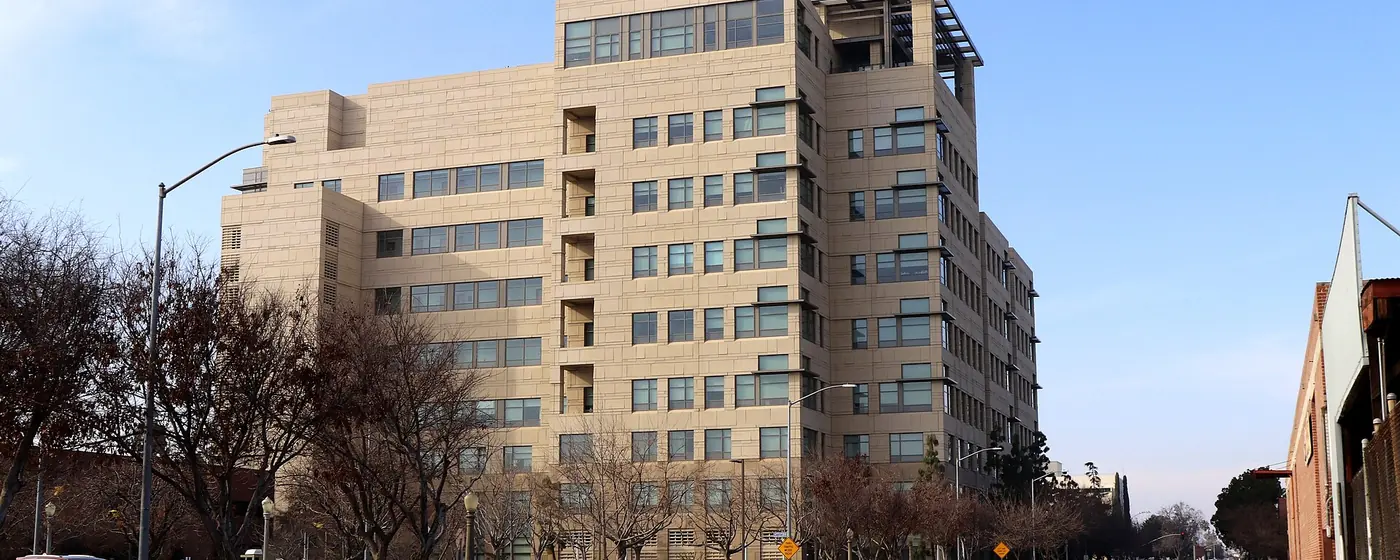
When an employee says they were let go or demoted for filing a workers' compensation claim, the case usually belongs to the Workers' Compensation Appeals Board, not to Superior Court. Labor Code section 132a gives the appeals board the power to decide these petitions, and the employee has one year from the discriminatory act or the termination date to file one.
Our defense of a 132a petition starts with two questions: when did the decision-maker learn of the comp claim, and was the same decision made for employees in the same role who never filed one.
06Union drives, the NLRB and the farm-labor board
Most private employers answer organizing and unfair labor practice charges to the National Labor Relations Board. Farm employers are different. California's Agricultural Labor Relations Act covers employees engaged in agriculture, a group the federal law leaves out (Labor Code section 1140.4), and those charges go to the state Agricultural Labor Relations Board.
For an employer with both packing-house and field crews, the first question is which workers fall under which board.

Papers from a court, or a letter from an agency
Tell us which office or court sent it and when it arrived, and we will map out the company's first response with you.
People, not buildings
Staff Who Work From Home, in Another County or Out of State
A company with people working from home, across county lines or from another state has one question to answer for each of them: which California rule reaches this person, given where they live, where they work and where they report. The chart sorts the rules this section covers by that question, and each one is explained below it.

Choice-of-law and forum clauses: Labor Code 925
Companies headquartered elsewhere often write their home state's law and courts into employment contracts. Labor Code section 925 blocks that for an employee who primarily lives and works in California: the employer may not require, as a condition of employment, a clause sending California claims to be decided outside the state or stripping away California law. Section 925 counts arbitration as adjudication, so an out-of-state arbitration seat is caught too.
The employee can void the clause, the dispute is then decided in California under California law, and the court may award the employee attorney's fees. The one exception is an employee who had their own lawyer negotiate the venue or choice-of-law term. The section applies to contracts signed, modified or extended on or after January 1, 2017.
Out-of-state employees who spend full days in California
The California Supreme Court held in Sullivan v. Oracle Corp. (2011) 51 Cal.4th 1191 that California's overtime rules apply to full days and full weeks of work performed in California by nonresident employees of a California-based employer. A trainer or engineer flown in from another state for a week of on-site work can earn California daily overtime for that week.
Pay stubs for employees based in California
In Ward v. United Airlines, Inc. (2020) 9 Cal.5th 732, the same court decided when California's pay stub statute, Labor Code section 226, reaches pilots, flight attendants and others who work across state lines. For a worker who does not spend more than half their time in any one state, the statute applies if they do some work here and California is where they report to start work. For traveling sales staff, technicians and crews, the "work state" setting in payroll therefore needs to follow where each person reports, not where the company is based.
Home internet and phone bills under section 2802
Labor Code section 2802 requires an employer to reimburse necessary expenses the employee incurs to do the job. In Cochran v. Schwan's Home Service, Inc. (2014) 228 Cal.App.4th 1137, the Court of Appeal held that when employees must use personal cell phones for work, the employer owes a reasonable percentage of the bill even if the employee's plan is unlimited.
For a remote workforce the same reasoning reaches home internet and other costs the job requires. A written reimbursement policy with a set stipend, and a route to claim more, is easier to defend than nothing at all. Section 2802 claims also carry interest and the employee's attorney's fees.
Which city's wage law follows a traveling worker
Local minimum wage ordinances attach to hours worked inside city limits, not to where the employer is based, and each sets its own minimum number of hours in the city before it applies. A delivery driver or technician who crosses three cities in a week can be owed three different hourly minimums, so the time records need to show where the hours were worked. An employee working from a home inside a city with its own ordinance raises the same question every day. The rates are in the local rules section below.
Staff in another state, or working from home?
Send us the employment agreement and the payroll "work location" settings. We check the forum clause, the pay stub format and the expense policy together.
Agreements to arbitrate
Arbitration Agreements With California Employees: What Holds Up and What Fails
Most large employers in the state now ask staff to sign an arbitration agreement. California courts enforce many of them, but the agreements fail in predictable ways, and some failures happen after the case has started.
The minimum terms an agreement must offer
In Armendariz v. Foundation Health Psychcare Services, Inc. (2000) 24 Cal.4th 83, the California Supreme Court set out what a mandatory arbitration agreement covering FEHA and other unwaivable claims must provide: a neutral arbitrator, enough discovery to prove the claim, a written decision that allows limited review, all remedies a court could award, and no requirement that the employee pay costs unique to arbitration. One-sided terms, such as forcing employees to arbitrate while the company keeps the courts, are the usual reason an agreement is struck.
The 30-day fee deadline
Once an employee starts an arbitration, the employer that drafted the agreement must pay the arbitration fees within 30 days of the due date. Late payment is a material breach: under Code of Civil Procedure section 1281.97 the employer waives its right to compel arbitration, and the employee may go to court or stay in arbitration with the employer paying fees and costs. Section 1281.98 applies the same rule to fees owed while the arbitration is running, and lets the arbitrator impose sanctions up to terminating sanctions.
In Hohenshelt v. Superior Court (Aug. 11, 2025, S284498), the California Supreme Court held that the statute survives federal preemption, but read it more narrowly than several Courts of Appeal had. A late payment forfeits arbitration automatically only when the nonpayment was willful, grossly negligent or fraudulent; an employer whose payment was late through a good faith mistake can ask for relief if it compensates the employee for the delay. That relief has to be argued and proved, so the safer course is still to pay on time.
Invoices are due on receipt unless the agreement sets a different period, and they often go to whoever opened the account with the provider rather than to counsel. Each arbitration invoice should go to one named person, with the due date on a calendar.
Sexual harassment claims and the federal carve-out
Since 2022, the federal Ending Forced Arbitration of Sexual Assault and Sexual Harassment Act lets the person bringing a sexual harassment or sexual assault claim choose court instead of arbitration, whatever the agreement says (9 U.S.C. section 402). A court, not the arbitrator, decides whether the carve-out applies. When a complaint pleads harassment alongside wage or retaliation claims, the fight is over how much of the case the carve-out pulls into court.

When a court can refuse to send the case to arbitration
Under Code of Civil Procedure section 1281.2, a California court ordering arbitration under the state act may refuse if the employer waived the right, if there are grounds to rescind the agreement, or if a party to the agreement is also in a pending lawsuit with a third party arising out of the same transactions and there is a possibility of conflicting rulings on a common issue. That third ground matters when a staffing agency, a manager or a related company is sued alongside the employer but did not sign the agreement.
When the court does order arbitration, section 1281.4 lets it stay the lawsuit, or only the part that is going to the arbitrator if the issues can be separated.
Moving to compel without waiving the right
Waiting can forfeit the agreement. In Quach v. California Commerce Club, Inc. (2024) 16 Cal.5th 562, the California Supreme Court dropped the old rule that the employee had to show prejudice before a court found waiver. Litigating in court, serving discovery or letting months pass can now be enough. Our practice is to raise the agreement in the first response and to move promptly.
Arbitration as a condition of hire
Labor Code section 432.6, passed in 2019, tried to bar employers from requiring arbitration as a condition of employment. In Chamber of Commerce of the United States v. Bonta (9th Cir. 2023) 62 F.4th 473, the Ninth Circuit held the statute preempted by the Federal Arbitration Act. Mandatory agreements governed by the federal act remain available, which makes the drafting rules above the real test.
An arbitration invoice just arrived?
Forward it to us the day it comes in. Under sections 1281.97 and 1281.98 the 30 days run from the due date on the invoice, and a missed payment can hand the case back to a court.
After a separation
When a Former Employee Files for Unemployment
Almost every termination produces an unemployment claim, and the employer's first written account of the separation is often the one it gives EDD. California's unemployment rules decide whether that account counts, whether the company's reserve account is charged, and how much the result matters later.
01The 10-day window after EDD's notice
When a former employee files, EDD sends a notice of the claim to the last employer. Under Unemployment Insurance Code section 1327 and section 1030, the employer has 10 days from the mailing of that notice to send any facts showing the person quit without good cause or was discharged for misconduct connected with the work. The director can extend that period for good cause, but a response that sits in a general mailbox for two weeks usually misses it.
02What silence means
Section 1256 presumes that a claimant was not discharged for misconduct and did not quit without good cause, unless the employer gave EDD written notice with facts enough to overcome the presumption. The reverse also works for employers: when an employee walks off without saying why, and the employer reports all the facts it has within the time allowed, section 1030(d) presumes the quit was without good cause.
03The company's reserve account
The ruling affects the employer's own unemployment tax account. If EDD rules that the employee quit without good cause or was discharged for misconduct, section 1032 keeps the benefits paid from being charged to that employer's reserve account. An employer that never sent the facts gives up that protection along with the ruling.
04Appealing a ruling
An employer may appeal an EDD ruling to an administrative law judge within 30 days after the notice is served, and section 1030(c) allows that period to be extended for good cause such as mistake or excusable neglect. The California Unemployment Insurance Appeals Board currently holds its hearings by phone unless a party asks to appear in person (CUIAB).
05Why the hearing does not decide the lawsuit
Section 1960 makes findings and decisions from these appeals non-binding in any later lawsuit or arbitration between the employee and the employer, and bars their use as evidence there. Winning the unemployment appeal therefore does not win a wrongful termination case, and losing it does not lose one. What matters is that the reason the company gives EDD is the same reason it gives everyone else, because witnesses can be asked about what they said in both places.
An EDD notice about a former employee
Send us the notice with the termination paperwork, and we will draft the company's response with you.
Local rules
City and County Pay Rules That Sit on Top of State Law
The state minimum wage is a floor, not the rate most urban employers actually owe. Dozens of cities and counties set their own higher rate, and many add their own sick leave and notice rules. A company with sites in several of them runs several payrolls under one handbook. The table shows the general rate in a few of the larger jurisdictions; San Diego's rules are covered on our San Diego employer defense page.
| Jurisdiction | Hourly rate | Effective | Source |
|---|---|---|---|
| California (statewide) | $16.90 | January 1, 2026 | Labor Commissioner |
| City of Los Angeles | $18.42 | July 1, 2026 | Office of Wage Standards |
| Unincorporated Los Angeles County | $18.47 | July 1, 2026 | County DCBA |
| Santa Monica | $18.47 | July 1, 2026 | City of Santa Monica |
| San Francisco | $19.61 | July 1, 2026 | SF Office of Labor Standards Enforcement |

Rates change on different dates
The state rate changes on January 1. Los Angeles City, unincorporated Los Angeles County, Santa Monica and San Francisco change theirs on July 1, each indexed to a consumer price index. A payroll calendar with a single annual update will be wrong somewhere for half of every year.
Sick leave, notices and records that differ by city
Local rules reach beyond the hourly rate. Santa Monica requires 40 hours of paid sick leave a year from businesses with 25 or fewer employees in the city and 72 hours from larger ones (City of Santa Monica). Los Angeles requires its wage and sick leave notice to be posted in English and in every language spoken by at least 5% of the employees at the site, and payroll records to be kept for four years (Office of Wage Standards).
A handbook written for the state minimums will be short in those cities, and the shortfall usually surfaces in an audit or a wage claim, not in a lawsuit.
Each city runs its own enforcement office
Local ordinances are enforced by local agencies with their own complaint, audit and penalty process: the Los Angeles Office of Wage Standards, the county's Department of Consumer and Business Affairs for unincorporated areas, and San Francisco's Office of Labor Standards Enforcement, among others. A city audit is a separate proceeding from any state wage claim and runs on its own timeline.
Sites in more than one city?
Send us the list of addresses and the hourly rates you pay at each. We check each one against the local rate and its effective date.
Questions
Employer Defense Attorney Questions From California Companies
Answers to the questions owners and HR teams across the state ask us most, with the code section behind each one.
How do I choose an employer defense attorney in California?
Start with who the firm represents. A lawyer who also takes employees' cases may have conflicts when your managers testify. Then ask who will handle the matter day to day, whether they have defended the claim you actually face (a PAGA notice is not a single-plaintiff harassment case), and how early work such as an agency response is billed.
Ask for the fee terms in writing even though the law may not require it. Business and Professions Code section 6148 requires a written fee agreement when fees and costs will foreseeably exceed $1,000, but it exempts clients that are corporations, so many business clients are never offered one unless they ask.
Does a complaint filed with the Civil Rights Department pause the deadline to sue?
Yes, under a change that took effect on January 1, 2026. Government Code section 12960(f) pauses the time to file the lawsuit from the day a complaint is filed with the department until the department files its own case, or until one year after it gives written notice that it closed its investigation. A complaint that sat at the department for a long time can therefore support a lawsuit later than many employers expect.
How far back can a former employee's wage claims reach?
Most wage claims rest on duties created by statute, and Code of Civil Procedure section 338(a) gives three years to sue on a liability created by statute. Complaints often add a claim under the Unfair Competition Law, which carries a four-year limit under Business and Professions Code section 17208. The payroll and time records we ask for at the start of a case therefore cover four years, not one.
If the company wins a FEHA lawsuit, can it recover its attorney's fees?
Rarely. Government Code section 12965(c)(6) lets a court award fees to the prevailing party, but a prevailing employer gets fees and costs only if the court finds the case was frivolous, unreasonable or groundless when it was filed, or the employee kept litigating after it clearly became so. The same subdivision overrides Code of Civil Procedure section 998, so a statutory settlement offer the employee rejected does not shift costs the way it would in an ordinary civil case. Defense budgets should assume each side pays its own way.
Can a manager be personally liable for a wage or harassment claim?
Yes, in two situations. Labor Code section 558.1 allows an owner, director, officer or managing agent who causes certain wage violations (minimum wage, overtime, final pay, pay stubs, meal and rest premiums, expense reimbursement) to be held liable as the employer. And under Government Code section 12940(j)(3), an employee who personally harasses a coworker is liable for that harassment, whether or not the company knew. Discrimination claims, by contrast, run against the employer.
Can an employee secretly record a meeting with HR?
Not lawfully, if the meeting is a confidential conversation. Penal Code section 632 requires the consent of all parties to record a confidential communication, and a recording made in violation of the section is not admissible in a court or administrative proceeding, except in a case about the recording itself. Investigation interviews should still be conducted as if every word could be repeated, because notes and later testimony are admissible.
What is the deadline to answer a lawsuit after it is removed to federal court?
After removal, federal rules govern. Federal Rule of Civil Procedure 81(c) gives a defendant who had not yet answered the longest of three periods: 21 days after receiving the complaint, 21 days after service of the summons, or 7 days after the notice of removal is filed.
How long can an employment lawsuit stay open in Superior Court?
Code of Civil Procedure section 583.310 requires a case to be brought to trial within five years after it is commenced against the defendant, subject to limited exceptions for periods when trial was impossible or impracticable. A case that has sat without progress for years is worth checking against that deadline before settlement talks.
Do we have to tell an employee anything in writing when the job ends?
Yes. EDD tells employers they must immediately give written notice when an employee is fired, laid off, goes on leave or has a change in status, and must give the "For Your Benefit" pamphlet (DE 2320) on unemployment benefits (EDD required notices). EDD lists the changes that need no written notice: a voluntary quit, a promotion or demotion, and a work stoppage caused by a trade dispute.
Is there a way to see whether other PAGA notices name our company?
Yes. PAGA notices are filed with the Labor and Workforce Development Agency, which publishes a PAGA case search where anyone can look up notices by the employer's name. Checking it early shows whether the same pay practice has been challenged by other employees, which affects both the settlement value and whether an earlier notice already covers the same violations.
What is the new annual workplace rights notice, and who has to send it?
Since January 1, 2026, Labor Code section 1553 requires employers to give each employee a stand-alone written notice of certain workplace rights by February 1, 2026 and every year after, and to new hires when they start. It can go out by email or text if it would normally arrive within one business day, and the Labor Commissioner publishes a template. Employers must keep proof of each notice for three years. A companion rule, section 1555, required employers to let existing employees name an emergency contact by March 30, 2026, and new employees at hiring.
Can an employee bring a claim over discipline for something done off the clock?
Yes. Under Labor Code section 96(k) the Labor Commissioner takes claims for lost wages caused by a demotion, suspension or firing for lawful conduct that happened during nonworking hours away from the employer's premises.
Do you defend employers outside Southern California?
Yes. Our office is in Century City, and we defend employers in Superior Courts, federal courts, arbitration and agency proceedings across the state. Many conferences and hearings can now be attended remotely, which keeps travel for out-of-area matters to the days that need it.
What Clients Say About Working With Farhad Novian’s Team

“Wow what an amazing experience working with this firm! I found Novian and Novian online, and after speaking to many firms, I knew they were going to be good fit. They honed in on the matter right away and knew exactly what to do to get a favorable resolution. I was very impressed and appreciative of the constant care, communication, and professionalism exhibited from the whole firm, specifically Nic and Farhad. Highly recommended defense team!”
“Thank you, Farhad, Sharon and your team of excellent lawyers. I highly recommend Novian and Novian LLP for all of your legal issues, this team is superior in their drive and commitment to protecting small business owners. There should be six stars available for firms like this one.”
“I have been a client of Novian & Novian for over 10 years and consider Farhad Novian as a highly experienced business and corporate litigator. His extensive legal experience and considerable success allows him to apply the most effective legal strategy, resulting in a successful outcome on a wide spectrum of litigation matters.”
Elona Brando posted her review on Google in February 2023; the reviews by Grant M. and Rick appear on novianlaw.com. Each one is reproduced exactly as its author wrote it. A client review is not a guarantee, warranty or prediction of the outcome of your matter.
Talk to a California Employer Defense Lawyer
Reading this page does not make us your lawyers, and it cannot account for the facts of a particular claim. To have an employer defense lawyer in California review what your company received, contact us:
1801 Century Park East, Suite 1201 Los Angeles, CA 90067
Pages by region
Employer Defense Pages Across California, Grouped by Region
Each city page below covers the local rules, agencies and courts that apply there. For a federal case, every Los Angeles County city listed here falls in the Central District's Western Division; San Diego sits in the Southern District, Santa Barbara in the Central District, and San Francisco, Oakland and San Jose in the Northern District (28 U.S.C. section 84).
