

Rear-end collision settlement examples range from $10,000 to over $3.2 million, depending on the severity of the injuries, medical expenses, lost income, and other damages. Minor injury settlements typically range from $10,000 to $50,000, while the average settlement for moderate injuries is approximately $38,859, though individual cases may be higher or lower. For example, one client with moderate injuries received a $45,000 settlement after a rear-end collision, while attorney Kenneth Adams secured a $405,000 settlement for a client who suffered a torn rotator cuff. In the most severe cases, such as those involving traumatic brain injuries, rear-end collision settlements can reach up to $3.2 million when the evidence supports extensive, long-term losses.
At Novian & Novian, we represent injured clients on a contingency fee basis, so you pay no attorney fees unless we recover compensation for you. Our attorneys have more than 35 years of experience handling catastrophic injury cases, and have secured life-changing settlements for clients. Our firm highlights more than $1 million recovered in settlements to date. If you suffered an injury due to negligence, contact us today for a free consultation.
This post will cover rear-end collision settlement examples. We will also discuss average rear-end personal injury settlements and the factors that impact the cost.
Table Of Contents
- What Is a Rear-End Collision?
- What Are the Average Rear-End Collision Settlement Amounts in the United States?
- What Factors Impact Rear-End Collision Settlement Amounts?
- The Novian 5-Factor Settlement Evaluation Framework
- Rear-End Collision Settlement Examples
- What Impacts Car Accident Settlement Amounts?
- How Do You Maximize Your Rear-End Collision Settlement?
- What Steps Should You Take After a Rear-End Collision to Protect Your Settlement?
- Need a Personal Injury Attorney to Maximize Your Settlement?
- Frequently Asked Questions
What Is a Rear-End Collision?
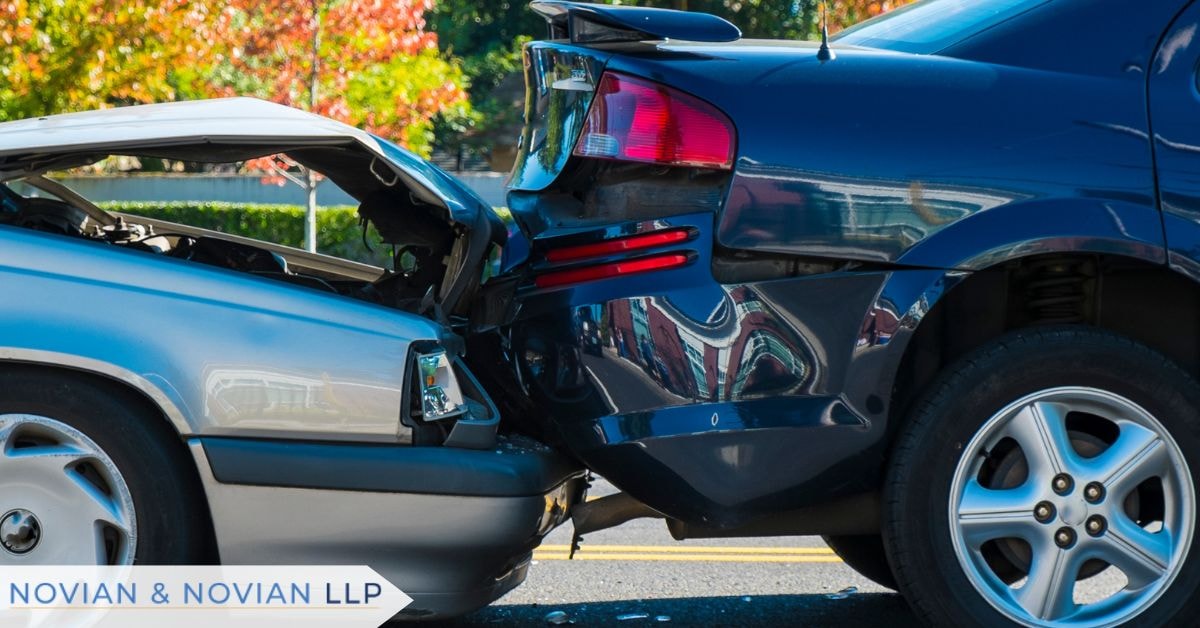
A rear-end collision occurs when one vehicle crashes into the back of another. It is among the most common types of traffic collisions and often results from the rear driver’s failure to maintain a safe distance or pay adequate attention to the road.
Rear-end collisions often occur due to negligent driving. This includes distracted driving, tailgating, sudden stops, speeding, and weather conditions. The impact of a rear-end collision often causes injuries, even in seemingly minor accidents. Common injuries include whiplash, back injuries, spinal cord injuries, head injuries, and soft tissue injuries.
According to the National Highway Traffic Safety Administration (NHTSA), rear-end collisions account for approximately 29% of all police-reported traffic crashes, making them one of the leading collision types nationwide. The Insurance Information Institute also reports that motor vehicle crashes continue to generate billions of dollars annually in insurance losses, highlighting the significant financial impact these accidents have on injured drivers and insurers alike.
What Are the Average Rear-End Collision Settlement Amounts in the United States?

There is no single national average that fits every case. Published estimates and industry data suggest that rear-end accident claims involving injuries often settle somewhere in the range of roughly $15,000 to $30,000, with minor cases landing lower and serious cases climbing well past six figures. Treat those numbers as general national figures, not a prediction for your claim. Injury severity, fault, insurance policy limits, and the state where the crash happened all shape the final settlement.
Injury severity is the strongest driver of settlement value. A minor soft-tissue strain and a spinal injury sit on opposite ends of the scale. Fault matters too. If liability is clear and the other driver hit you while you were stopped, the claim tends to be stronger than a disputed one. State law also affects the outcome, because comparative negligence laws decide how a shared-fault finding reduces your recovery. Below is a general look at how injury severity tracks with settlement value. For a wider view of non-crash cases, see our page on the average personal injury settlement.
The table below shows general, widely cited ranges for an average car accident settlement by injury type. These are national estimates drawn from published third-party data. They are not Novian results, and every case differs.
| Injury Type | Typical Settlement Range (General Estimates) | Common Injuries / Notes |
|---|---|---|
| Minor (Soft Tissue / Whiplash) | Roughly $3,000–$25,000 | Whiplash, neck and back strains, bruising, and other soft tissue injuries. Treatment is typically short-term, and a full recovery is expected. |
| Moderate | Approximately $25,000–$100,000+ | Herniated or bulging discs, joint injuries, fractures, or injuries requiring several months of treatment, rehabilitation, or minor surgery. |
| Severe (Back, Spinal, or Brain Injuries) | $100,000 to $1 million+, with some cases exceeding several million dollars | Spinal cord injuries, traumatic brain injuries (TBI), multiple fractures, permanent disability, chronic pain, or injuries requiring long-term or lifetime medical care. |
If you’re curious to calculate your own settlement, try our calculator:
Personal Injury Calculator

Do Settlement Amounts Vary by State?
Yes, settlement amounts for rear-end collisions can vary based on the state where the accident occurred, as different states have unique laws and systems for determining compensation. For example, California operates under a pure comparative negligence system. Here, settlements for rear-end collisions often reflect the shared responsibility of the parties involved, which is why understanding when a rear-end collision is not your fault can matter. You can expect amounts ranging from $3,000 to several million dollars from a car accident in California.
Similarly, Washington uses a comparative negligence system, and settlements often vary based on the extent of injuries sustained, vehicle repairs, and the at-fault driver’s liability. In Texas, settlements depend on the fault system. In this case, the at-fault driver’s insurance coverage plays a key role in determining compensation. Victims with significant injuries in rear-end car accidents often receive settlements that cover medical attention, physical therapy, vehicle repairs, and damages for emotional distress.
On the other hand, Florida operates as a no-fault state. This requires accident victims to rely on personal injury protection (PIP) for their initial medical expenses, but serious injuries often lead to lawsuits where settlement amounts reflect the severity of the damages.
Each state has its nuances in determining compensation for motor vehicle accidents, which is why accident victims should consult experienced car accident attorneys familiar with state laws. From skid marks at the accident scene to police reports and medical records, a thorough understanding of the legal process and evidence is essential for securing fair settlements.
What Factors Impact Rear-End Collision Settlement Amounts?
Several factors combine to set the value of a car accident settlement. No single one controls the result. A lawyer weighs them together when building rear-end collision claims. Medical treatment and injury severity carry the most weight. A soft-tissue case that heals in weeks is worth far less than one that needs surgery, injections, or ongoing therapy. Your past medical expenses, meaning the bills you have already run up, form the base of the claim, and future care adds to it.
More serious injuries such as spinal damage or a brain injury push the auto accident settlement higher because the medical picture is larger and lasts longer. Liability and fault shape the number as much as the injury does. If you share part of the blame, comparative negligence laws reduce what you recover. Here the state rule matters. Some states follow modified comparative negligence and bar recovery once a plaintiff is more than fifty percent at fault. California is different.
California uses pure comparative negligence, so an injured person can still recover even when more than half at fault, with damages reduced by their share of blame. That rule comes from the California Supreme Court decision in Li v. Yellow Cab Co. (1975) 13 Cal.3d 804. If you were rear-ended, fault often points at the driver behind you, but insurers still argue over it. Our page on a car accident settlement in California explains how these factors play out locally.
Money out of your pocket counts too. Lost wages significantly affect a motor vehicle accident settlement, especially when an injury keeps you off work for weeks or ends a career. Out-of-pocket expenses such as prescriptions, medical devices, and travel to appointments add up. Property damage and repair costs for your vehicle fold into the claim as well.
A settlement offer cannot easily exceed the at-fault driver’s policy limit, so a serious injury caused by a driver with minimal coverage creates a gap. This is where your own uninsured motorist coverage and underinsured motorist coverage matter. That coverage can step in when the other driver has too little insurance or none at all. Finally, negotiation shapes the final settlement. The first settlement offer from an insurer is rarely the last word, and the strength of your documentation drives how far it moves.
The Novian 5-Factor Settlement Evaluation Framework
At Novian & Novian, we evaluate every rear-end collision claim using five primary categories before recommending whether to negotiate or litigate. This framework helps us identify the factors that most influence settlement value, uncover potential weaknesses in a claim, and develop a strategy tailored to maximizing our client’s recovery.
- Medical Evidence – We examine emergency treatment, diagnostic imaging, specialist opinions, future care recommendations, and whether injuries are permanent.
- Liability Strength – Police reports, witness statements, vehicle damage, surveillance footage, and accident reconstruction determine how difficult it will be for the insurance company to dispute fault.
- Economic Losses – Medical expenses, lost income, reduced earning capacity, and property damage establish the measurable financial impact of the collision.
- Human Impact – Pain, emotional distress, lifestyle changes, and permanent limitations often represent a significant portion of the claim’s value.
- Insurance Recovery Options – We identify every available insurance policy, including liability, uninsured motorist, and underinsured motorist coverage, to maximize available compensation.
Looking at these five factors together provides a more accurate estimate than focusing on medical bills alone.
Rear-End Collision Settlement Examples
Settlements for rear-end collision accidents can vary widely depending on the severity of the injuries, property damage, and the circumstances of the accident. Victims of rear-end collisions are entitled to fair compensation for medical bills, lost wages, pain and suffering, and property repairs.
One rear-end collision case that stands out involved a client who initially believed they had only suffered a minor neck injury. During our first meeting, the insurance company had already offered a quick settlement before the client completed medical treatment. We advised waiting until the treating physicians understood the full extent of the injuries.
Over the following months, additional imaging revealed a herniated disc requiring significantly more treatment than originally expected. By documenting the client’s medical progress, lost wages, future treatment recommendations, and pain and suffering, we negotiated a settlement that was substantially higher than the insurer’s initial offer.
In our experience, this situation is common. Insurance companies frequently evaluate claims before the injured person fully understands the long-term effects of a rear-end collision. Waiting until the medical picture becomes clear often results in a more accurate valuation of the claim.
To protect client confidentiality, identifying details have been omitted. Every case is different, and past results do not guarantee future outcomes. Below are four examples illustrating typical settlements based on the extent of injuries and damages.
1. Minor Injury and Minimal Property Damage
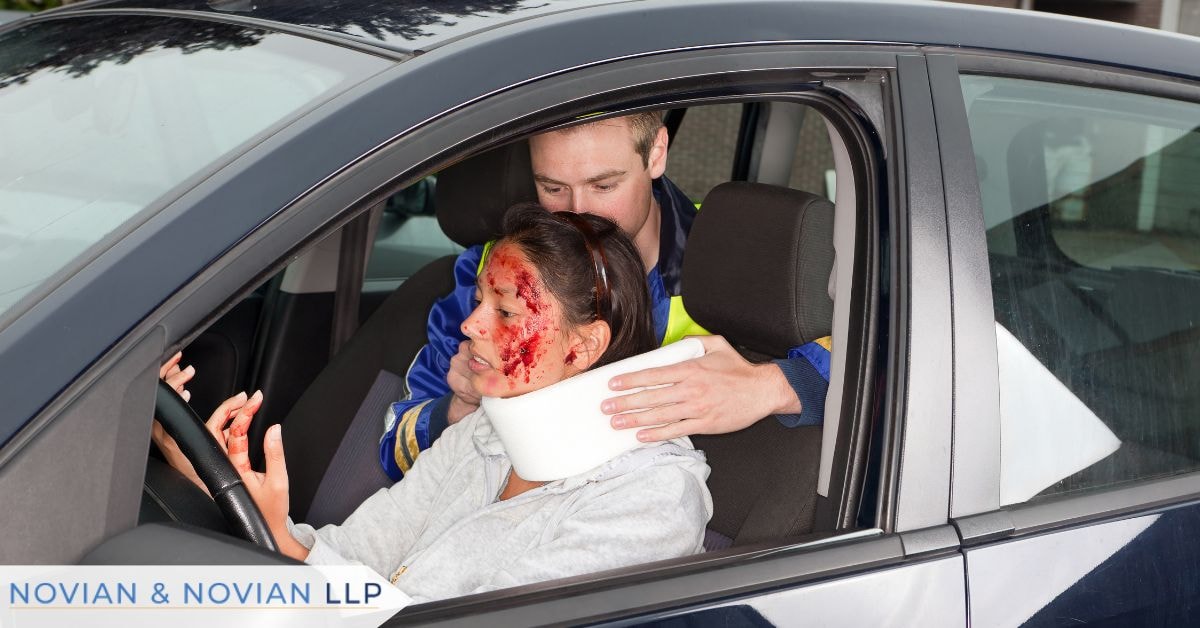
In cases involving minor injuries and limited property damage, settlements are typically lower. For example, Mary, a client of ours, suffered whiplash and minor neck strain after being rear-ended and required physical therapy for four weeks. The property damage was limited to cosmetic repairs to the rear bumper, with repair costs totaling $1,000.
The settlement in this case amounted to $8,000. Some of the key factors that determined the settlement amount include the lack of a dispute over fault, low medical expenses, and the victim’s quick recovery. Rear-end collisions like this, while less severe, still require victims to seek medical attention and consult experienced car accident attorneys to secure fair settlements for their medical expenses and vehicle repairs.
2. Moderate Injury with Lost Wages
Rear-end accidents resulting in moderate injuries often lead to higher settlements. For example, a former client of ours experienced soft tissue injuries, a concussion, and persistent back pain, requiring chiropractic care for three months after being in a rear-end collision.
He was unable to work for four weeks, resulting in $3,000 in lost wages. The vehicle was declared a total loss, with replacement costs of $15,000. The insurance company settled for $45,000, taking into account clear liability, detailed medical documentation, and verifiable lost income. Victims of such accidents should work with a personal injury attorney to ensure that their lost wages, medical bills, and property damage are fully covered by the at-fault driver’s insurance coverage.
3. Severe Injury Requiring Long-Term Treatment

Severe rear-end collisions often result in higher settlements due to the extensive medical bills and long-term impact on the victim’s quality of life. We once had a client who, following a rear-end collision, suffered a herniated disc that required surgery and ongoing physical therapy, leading to a permanent reduction in mobility.
He missed six months of work and faced reduced earning capacity for the future. His vehicle sustained significant damage, with repair costs of $10,000. The rear-end accident settlement amounted to $150,000, reflecting high medical costs, future damages for reduced earning potential, and expert testimony to support the claim.
4. Traumatic Brain Injury (TBI) with Cognitive Impairments
Rear-end collisions involving catastrophic injuries, such as traumatic brain injuries, result in some of the highest settlements. In one such case, one of our clients suffered a severe TBI, which led to memory loss, impaired speech, and difficulty performing daily tasks.
Our client was permanently unable to work in any capacity, and medical costs, including extensive hospitalization, rehabilitation, and psychological therapy, totaled $800,000. The settlement reached $3.2 million, factoring in expert opinions on cognitive impairments, high non-economic damages for pain and suffering, and future care costs.
These significant injuries demonstrate the importance of securing experienced legal representation to ensure victims receive compensation that covers all aspects of their recovery, including medical attention, emotional distress, and long-term financial security.
What Impacts Car Accident Settlement Amounts?

Car accident settlement amounts can vary widely, depending on several key factors that influence how compensation is calculated. These factors ensure that victims receive fair compensation for their injuries, financial losses, and emotional distress.
An example of such factors is the severity of injuries. The severity of injuries sustained in a car accident is one of the most significant factors in determining settlement amounts. Minor injuries, such as soft tissue damage, generally result in smaller payouts, while severe injuries, such as traumatic brain injuries, spinal cord injuries, or permanent disabilities, lead to substantially higher settlements. The extent of injuries also impacts the length of recovery and the victim’s ability to resume normal activities, which are key considerations in car accident claims.
Medical expenses also play a key role in settlement calculations. These include costs for emergency room visits, surgeries, physical therapy, and any required rehabilitation. If the victim requires ongoing or future medical treatment, these anticipated expenses are also factored into the settlement. Extensive medical bills and long-term care needs typically result in higher compensation amounts to ensure that accident victims are not financially burdened by their recovery.
Furthermore, lost wages due to time off work during recovery significantly impact car accident settlements. For victims who cannot return to their previous jobs or suffer a reduction in earning capacity, compensation may include the financial losses associated with future income. This is especially true for severe injuries that prevent the victim from maintaining their standard employment or require a career change with lower earning potential.
Car accident settlements often include compensation for pain and suffering, which accounts for the physical and emotional distress caused by the accident. Non-economic damages like anxiety, depression, and loss of enjoyment in life are evaluated based on the severity of the injuries and their impact on the victim’s overall quality of life. Severe injuries that result in long-term or permanent disability typically lead to higher pain and suffering compensation.
Insurance policy limits also play a significant role in determining the maximum payout a victim can receive. If the at-fault driver’s insurance policy has low limits, the settlement may be capped, even if the victim’s damages exceed those limits. In such cases, victims may need to pursue additional compensation through their own underinsured motorist coverage or by filing a personal injury lawsuit.
Additionally, the determination of fault and negligence can impact a settlement. If the at-fault driver’s liability is clear, such as in a rear-end collision, the settlement process may be more straightforward. However, if the fault is shared between parties, compensation may be reduced proportionally under comparative negligence rules. Having a police report and evidence from the accident scene can strengthen a victim’s case and ensure they receive the compensation they deserve.
How Do You Maximize Your Rear-End Collision Settlement?

To maximize the average payout of your rear-end collision settlement, you must seek medical attention. Even if your injuries appear minor, seeking medical attention promptly is important. Many injuries, such as whiplash, soft tissue injuries, or back injuries, may not manifest immediately but can worsen over time. Medical records serve as evidence in personal injury claims, proving the extent of injuries sustained and justifying your medical expenses. Insurance companies often challenge claims without proper documentation, making immediate medical care vital to your settlement process.
It is also helpful to gather and document evidence, as thorough documentation is key to building a strong case for your rear-end collision settlement. Start by collecting a police report, as it establishes an official account of the accident and often identifies the at-fault driver. Then, take photos of the accident scene, skid marks, and any visible injuries. Similarly, gather witness statements if possible, as these can corroborate your version of events. All evidence strengthens your claim, whether it’s for medical bills, property damage, or non-economic damages like emotional distress.
Importantly, consider legal representation. Rear-end collision accidents often involve complex negotiations with insurance companies, which may try to offer lowball settlements to close claims quickly. A personal injury attorney can help you navigate the legal process, evaluate your car accident case, and negotiate for fair compensation that accounts for lost wages, medical expenses, and pain and suffering. Legal representation ensures that accident victims don’t accept unfair offers and receive the maximum payout possible.
Although many rear-end collision claims settle without filing a lawsuit, litigation is sometimes the better option. If liability is disputed, the insurance company refuses to make a reasonable offer, or catastrophic injuries are involved, filing suit may ultimately produce a better outcome. Conversely, when liability is clear and injuries are well documented, settlement may allow both parties to avoid the cost and uncertainty of trial.
The Role of an Attorney in Rear-End Collision Cases
An attorney plays a critical role in securing fair settlements for accident victims. They handle the complex negotiations with insurance companies, ensuring that every aspect of your claim is addressed. Attorneys bring legal expertise to accurately calculate settlement amounts, considering not only medical expenses and property damage but also non-economic damages such as emotional and physical distress.
When searching for a personal injury lawyer, look for someone with a proven track record in rear-end car accidents. A reputable attorney will offer a free consultation to discuss your case and provide guidance on your legal options. Their knowledge of state laws, such as the pure comparative negligence system in states like California, ensures that your settlement reflects all aspects of your accident.
What Steps Should You Take After a Rear-End Collision to Protect Your Settlement?

The days right after a crash shape the strength of your claim. What you do, and what you avoid saying, matters. The steps below apply to accident settlements for car accidents generally.
Step 1 – Seek Medical Care and Report the Crash
See a doctor even if you feel fine, because injuries like whiplash and concussions surface days later. Call the police and get a report. That record ties your injury to the crash and gives an insurer less room to argue.
Step 2 – Document the Evidence
Photograph the vehicles, the road, and any visible injuries. Get names and numbers for witnesses and, when possible, short statements. Keep every bill, receipt, and pay stub, because they prove your past medical expenses, out of pocket expenses, and lost wages.
Step 3 – Communicate Carefully With Insurers
You do not have to give the other driver’s insurer a recorded statement, and it is usually wise not to. Do not accept a fast lowball settlement offer before you know the full extent of your injuries. An early check can look generous and still fall short of your real settlement value. Whether a rear-end crash is even your fault can be less obvious than it seems, so read our page on a rear-end collision not your fault in California.
Step 4 – Know When to Contact a Lawyer
If the injury is more than minor, if fault is disputed, or if the insurer drags its feet, talk to a rear end accident attorney early. Published research from the Insurance Research Council found that claimants with attorneys received larger average payouts than those without, which suggests representation can affect outcomes. That is a general finding about represented claimants, not a promise about your case, and every case differs. You can learn more about working with a rear-end accident lawyer. Past results do not guarantee future outcomes.
“One of the biggest mistakes we see is accepting an insurance company’s first offer before doctors know whether the injuries will require long-term treatment,” says Farhad Novian. “Once a release is signed, additional compensation is generally unavailable, even if the injuries become more serious.”
Need a Personal Injury Attorney to Maximize Your Settlement?
Many articles simply list average settlement figures without explaining why two seemingly similar rear-end collisions can produce dramatically different outcomes. This guide combines real settlement examples, national settlement data, legal principles, and practical insights from our firm’s experience handling catastrophic injury claims so you can better understand how insurers evaluate claims and what factors genuinely increase settlement value.
At Novian & Novian, our team of personal injury attorneys is dedicated to delivering results through strategic advocacy that protects your interests. We also provide personalized attention to each case and strive to build a relationship based on trust and transparency with all clients. Schedule a free consultation with us today!
Frequently Asked Questions
The answers below cover common questions about rear-end collision claims. They are general information, not a promised number, and past results do not guarantee future outcomes.
Do Insurance Companies Prefer to Settle Out of Court?
Yes, insurers usually prefer to settle out of court because a settlement controls their cost and removes the risk of a larger jury verdict. That preference does not mean the first offer is fair, since an early, fast offer is often lower than the claim is worth.
How Much Will I Get From a $50,000 Settlement?
Your net is less than the gross figure, because attorney fees, medical liens, and case costs come out of a settlement first. The exact take-home depends on your fee agreement and the bills tied to your care, so there is no fixed number that fits every case.
How Much Can I Expect From a Bad Rear-End Accident?
It depends on injury severity, medical costs, lost wages, fault, and the available policy limits. Serious injuries such as spinal or brain damage can reach six or seven figures, but every case differs and past results do not guarantee future outcomes.
What Is a Good Settlement Offer for a Back Injury?
A fair offer depends on the diagnosis, the treatment, whether surgery is needed, and whether the injury is permanent. A good offer covers your medical costs, lost income, and pain and suffering, and there is no single correct figure across cases.
Legal Disclaimer: This article is for general educational purposes only and is not legal advice. Reading it does not create an attorney-client relationship. Every case is different, and settlement ranges cited here are general national estimates from published third-party sources, not results obtained by Novian & Novian, LLP. Past results do not guarantee future outcomes. For advice about your situation, consult a licensed attorney in your state.

 CALL:
CALL: