
Quick answer
No single average exists. In California, minor car crash claims typically close for $2,500 to $15,000, slip-and-fall cases with small harm for less than $20,000, and catastrophic or permanent injuries can climb into the millions. Code of Civil Procedure Section 335.1 sets a two-year filing window, and any fault on your part lowers the recovery.
Most personal injury settlements are between $10,000 and $75,000, but the average amount can be very different. Claims for minor injuries may only be worth a few thousand dollars, but claims for more serious injuries that require surgery or long-term disability can be worth six figures or more. The final amount will depend on things like medical bills, lost wages, pain and suffering, and how strong the liability is. There is no set average for all personal injury claims because each one is different.
With over 35 years of experience and extensive knowledge, our personal injury attorneys at Novian & Novian have helped several clients navigate the process of filing their personal injury claims, negotiating fair compensation with insurance companies, and providing legal advice and guidance to the clients. Contact us today for a free consultation.
This guide explains personal injury settlements, what affects the amount you receive, and how to respond if you get a low offer.
Table Of Contents
- What Are Typical Personal Injury Settlement Amounts for Common Case Types in California?
- Real Case Example: How Settlement Value Changes Based on Evidence
- What Factors Influence the Average Personal Injury Settlement in California?
- The 5-Part Formula Insurance Companies Use to Value Your Case
- How Are Personal Injury Settlements Paid Out in California?
- Does a Personal Injury Settlement Include Medical Bills in California?
- What Common Mistakes Can Lower Your Settlement?
- What Should You Do if You Receive a Low Settlement Offer?
- What Steps Should You Take to Negotiate a Higher Settlement?
- Can You Reopen a Case After Accepting a Settlement?
- When and How Do You Receive a Personal Injury Settlement?
- Ready to Maximize Your Settlement Amount?
- Frequently Asked Questions
- What Factors Affect the Average Personal Injury Settlement in California?
- How Long Does It Take to Receive a Personal Injury Settlement?
- Are Medical Bills Always Covered in a Personal Injury Settlement?
- How Much Do Personal Injury Attorneys Charge in California?
- Can I Negotiate My Personal Injury Settlement Amount?
What Are Typical Personal Injury Settlement Amounts for Common Case Types in California?

When asking what is the average personal injury settlement in California, it helps to look at common case types and how a typical personal injury settlement varies based on the injuries sustained and other factors. In general, an injury settlement in California can range from a few thousand dollars to several million, depending on severity, liability, and evidence.
Car accidents are the most common claims, and a typical settlement in California for minor injuries ranges from $2,500 to $15,000. While moderate injuries, such as soft tissue damage or broken bones, can lead to $25,000 to $150,000. Cases involving more serious injuries, long-term treatment, or permanent disabilities often result in substantial settlements reaching $250,000 to millions, especially when future costs and ongoing care are involved. The increase in California’s minimum auto liability coverage in 2025 also means higher potential payouts in many cases.
Slip-and-fall cases vary widely, with smaller claims involving physical pain and minor injuries settling for under $20,000. While slip and fall accidents involving significant injuries or unsafe property conditions can exceed $100,000. Back and spinal injuries tend to produce higher actual settlement values because they often involve chronic pain, reduced mobility, and costly rehabilitation.
According to data from the United States Courts, only about 2% to 3% of federal civil cases are resolved through trial. This means the overwhelming majority are resolved through settlements or dismissals.
In medical malpractice claims, settlements are often higher due to the complexity and severity of harm. These cases frequently involve serious injuries, long-term complications, or permanent disabilities, and can result in six- or seven-figure outcomes. In rare cases of very bad behavior, punitive damages may also apply. This can raise the total amount of the settlement above the amount of compensatory damages.
But the real value of a settlement depends on a number of things. Economic damages include things like medical bills, lost wages, and future costs. Non-economic damages cover things like emotional pain and physical pain. The outcome of a settlement can be greatly affected by your insurance limits, the strength of your legal team, and how well you gather evidence like medical records and witness statements.
California’s comparative negligence rule also plays a major role, meaning your compensation can be reduced based on your percentage of fault. Additionally, under the California Code of Civil Procedure Section 335.1, you generally have two years to file a claim.
Since every case is different, working with a skilled personal injury lawyer is often critical to maximizing a personal injury settlement. A qualified attorney can evaluate the injuries sustained, calculate actual settlement values, and negotiate effectively with insurers to pursue fair compensation.
Settlement Amount Range Table by Injury Type
The value of a personal injury settlement depends heavily on how serious the injury is, the cost of treatment, and the long-term impact on daily life and earning ability. The table below provides a general breakdown to help you understand how settlement amounts typically vary by injury severity.
|
Injury Type |
Average Settlement Range (Low-High) |
Key Factors Influencing the Amount |
|
Minor injuries |
$2,000 – $15,000 |
Short recovery time, limited medical treatment, minimal lost wages |
|
Moderate injuries |
$15,000 – $75,000 |
Ongoing treatment, physical therapy, time off work, and stronger medical documentation |
|
Severe injuries |
$75,000 – $250,000 |
Surgery, long-term rehabilitation, significant loss of income, lasting pain |
|
Catastrophic injuries |
$250,000 – $1,000,000+ |
Permanent disability, lifetime care needs, major loss of earning capacity, extensive medical costs |
Outliers: Extremely High or Low Settlements
While the average personal injury settlement ranges from a few thousand dollars to several hundred thousand, there are exceptions. For example, low settlement cases that involve minor injuries and damages often settle for smaller amounts, sometimes under $10,000. These settlements cover basic medical expenses and lost wages but may not involve compensation for pain and suffering.
On the other end of the spectrum, high settlement cases involving catastrophic injuries or gross negligence can result in multi-million dollar settlements. These cases often involve significant medical bills, long-term disability, and a profound impact on the victim’s quality of life.
The national average settlement for personal injury cases can vary widely depending on the nature of the case. For example, average settlements for car accidents or slip-and-fall injuries can fall between $15,000 and $30,000, while medical malpractice cases often average significantly higher due to the complexity and severity of injuries involved. Typically, personal injury settlements can also differ considerably by state or region due to various factors such as cost of living, jury verdict trends, and state laws. This is why consulting with local personal injury attorneys who understand the nuances of your area is important for obtaining a fair settlement. Higher-value claims can reach seven figures — see examples of million-dollar settlements.
Real Case Example: How Settlement Value Changes Based on Evidence

In one case we handled, a client initially received a $28,000 offer after a rear-end collision involving soft tissue injuries. The insurance company argued the injuries were minor and temporary.
However, after gathering detailed medical records, obtaining a specialist evaluation, and documenting ongoing physical therapy needs, we were able to demonstrate long-term impact. The case ultimately settled for $135,000. This example shows how strong documentation and persistence can significantly increase a settlement, even in cases that may appear straightforward at first.
What Factors Influence the Average Personal Injury Settlement in California?
When seeking compensation in a personal injury claim, several critical factors determine the settlement amount. One of these factors is the severity of the injuries. The more severe the injury, the higher the potential settlement.
Injuries like traumatic brain injuries (TBI), spinal cord injuries, or severe burns often result in larger settlements because of the significant physical, emotional, and financial impact on the victim. These injuries usually require extensive medical treatment, rehabilitation, and long-term care, making them costly for both the injured party and the at-fault party.
Another factor that determines the amount is medical expenses. This includes current medical bills like hospital visits, surgeries, medications, and rehabilitation. This is particularly important for injuries that require ongoing treatment or care, such as spinal cord injuries or chronic pain conditions.
The higher the medical costs, the larger the settlement is likely to be, as compensation is designed to cover both past and future expenses. In cases involving long-term injuries, future medical costs are also factored into the settlement. As Farid Novian often explains, “The difference between an average settlement and a high-value settlement usually comes down to documentation and negotiation strategy, not just the injury itself.”
In addition to medical costs, lost income and earning capacity play a role in calculating settlements. If the injury has forced you to miss work, your lost wages will be included in the compensation. Furthermore, if the injury affects your ability to work in the future, reducing your earning capacity, this, too, will increase the settlement amount. For example, if you suffer a permanent injury that prevents you from returning to your previous job, the settlement will account for future lost income as well.
Pain and suffering damages also determine the amount that will be paid. They compensate for the emotional distress, mental anguish, and diminished quality of life caused by the injury. If you suffer from conditions like PTSD, chronic pain, or depression due to the accident, these non-economic damages can significantly raise the settlement amount. Unlike medical expenses or lost wages, pain and suffering damages are subjective and more difficult to calculate.
Examples of pain and suffering settlements include a car accident victim experiencing chronic back pain and PTSD who could receive an additional $50,000 to $200,000 in pain and suffering compensation. Another example is that of a burn victim facing permanent disfigurement and emotional trauma who may receive well over $500,000 in non-economic damages alone.
Furthermore, the degree of liability and fault play a role in determining settlement amounts. In cases where comparative negligence applies, the settlement could be reduced based on the injured party’s percentage of fault. For example, in California, if you are found to be 20% at fault for the accident, your settlement might be reduced by 20%.
In cases where liability is clear and the other party is entirely at fault, the settlement will likely be higher. These negligence settlement amounts depend heavily on how fault is distributed and how effectively your attorney can argue your case.
Another factor that affects the settlement amount is the insurance company, as the at-fault party’s insurance policy limits can cap the amount you receive in a settlement. Even if your injuries are severe and your medical expenses are substantial, if the at-fault party’s insurance coverage is limited, your settlement might not cover all your damages.
However, having an experienced attorney can help you explore additional avenues for compensation, such as underinsured motorist coverage or the personal assets of the at-fault party. Finally, other factors like clear documentation, strong evidence, and adherence to deadlines matter. Under California law, you generally have two years to file a personal injury claim, and missing this window can eliminate your chance at any personal injury settlement entirely.
The 5-Part Formula Insurance Companies Use to Value Your Case

In our experience, most insurance companies use the same set of rules when looking at claims. This knowledge can help you figure out how much your settlement might be:
-
Medical Costs – The foundation of your claim value
-
Income Loss – Lost wages and reduced earning capacity
-
Pain Multiplier – A factor, typically 1.5x–5x, applied to economic damages
-
Liability Strength – A clear fault increases settlement value significantly
-
Insurance Limits – The maximum available payout often caps recovery
We have found that claims with strong documentation in all five areas consistently result in higher settlement outcomes.
How Are Personal Injury Settlements Paid Out in California?
Personal injury settlements in California are paid as either a lump sum or structured payments. A lump sum provides the full final settlement at once, while structured payments are more common in serious cases like medical malpractice claims.
After an agreement is signed, payment is usually issued within a few weeks, though delays can happen due to paperwork or liens. Clear documentation, such as police reports, witness statements, and consistent medical records, provides better negotiating leverage for settlements and can speed up the process.
Before receiving funds, deductions are made for attorney fees, medical bills, and liens, especially if you hired an experienced personal injury lawyer. Economic damages are quantifiable financial losses directly resulting from an accident, including medical bills, lost wages, and property damage repair costs, while non-economic damages compensate for intangible losses such as pain and suffering, emotional distress, and loss of enjoyment of life.
California comparative negligence rules also affect settlement outcomes. California follows a pure comparative negligence system, meaning that a plaintiff’s settlement can be reduced by their percentage of fault in the accident. California’s minimum auto liability coverage requirements were significantly increased effective January 1, 2025, marking the first increase since 1985, which aims to provide better insurance coverage for accident victims.
Personal Injury Calculator
Does a Personal Injury Settlement Include Medical Bills in California?

In California, a personal injury settlement typically includes compensation for medical bills related to your injury. This could include emergency care, hospital visits, medication, and ongoing treatment like physical therapy. Health insurance may initially cover some costs, but insurers can place liens on your settlement to be reimbursed later.
Legal representation is often important because attorneys negotiate these medical liens and work to ensure your final payout accounts for all treatment expenses. The amount you recover can also be affected by comparative negligence under California rules, which may reduce your compensation if you are partly at fault. Actual settlement values depend on the severity of injuries, total medical costs, and how well these expenses are documented and negotiated.
What Common Mistakes Can Lower Your Settlement?
One of the biggest mistakes you can make is delaying or avoiding medical treatment after an accident. Insurance companies will use this as evidence that your injuries aren’t serious or that they were not caused by the accident. It is best to seek immediate medical care and follow through with all recommended treatments to ensure your injuries are properly documented. Failing to do so can significantly reduce your personal injury settlement.
After an accident, many victims feel pressured to accept the first settlement offer from the insurance company. However, this initial offer is often much lower than the actual value of your claim. Settling too quickly can result in inadequate compensation, especially if the full extent of your injuries or future medical expenses is not yet clear. It is always best to wait until you have a comprehensive understanding of your injuries and damages. This ensures that you receive a fair settlement.
In our experience, one of the most costly mistakes is underestimating future medical needs. We recommend keeping a detailed record of all treatments, symptoms, and medical recommendations, as this documentation often becomes critical during negotiations. Another practical tip is to avoid giving recorded statements to insurance adjusters without legal guidance, as these statements can be used to minimize your claim.
Furthermore, you should not go through a personal injury claim without consulting an experienced personal injury attorney. Attorneys understand how to calculate pain and suffering damages, gather crucial evidence, and effectively negotiate with insurance companies to maximize your settlement amount. Without expert legal guidance, you are more likely to accept a lowball offer or make critical mistakes in your case.
What Is the Role of a Skilled Personal Injury Attorney?
A good attorney thoroughly evaluates your case. They ensure that all aspects of your injuries, including severe injuries, medical bills, lost wages, and pain and suffering, are accounted for when calculating the settlement.
Another role of a skilled personal injury attorney is evidence collection and presentation. Attorneys gather and present the necessary evidence to support your case. This evidence includes medical records, accident reports, and witness statements. They increase your chances of securing a higher personal injury settlement amount.
Furthermore, these attorneys bring expert knowledge of laws and regulations. Their deep understanding of state laws and personal injury regulations helps you navigate the complex legal process and avoid pitfalls that could jeopardize your claim.
Additionally, a personal injury lawyer has effective negotiation skills. They negotiate with insurance companies and opposing legal terms on your behalf. This ensures you receive fair compensation for both economic and non-economic damages.
At Novian & Novian, our experienced attorneys are committed to securing the best possible settlement for you. With a proven track record of successful personal injury settlements, we provide expert legal guidance and advocacy every step of the way.
What Should You Do if You Receive a Low Settlement Offer?

If you receive a low settlement offer, do not accept it right away. Insurance companies often start with a lower amount to minimize payouts, so it’s important to carefully review the offer and compare it to your actual damages.
Take time to evaluate your losses, including medical expenses, lost income, and any ongoing treatment needs. Economic damages are quantifiable financial losses directly resulting from an accident, while non-economic damages cover pain, suffering, and other intangible impacts. Both should be fully considered before responding.
Next, gather additional evidence to strengthen your position. Clear documentation, such as medical records, expert opinions, and proof of expenses, can justify a higher demand and improve your negotiating power.
It’s also wise to consult an experienced personal injury lawyer who can assess whether the offer is fair and help you prepare a counteroffer. If necessary, your attorney can negotiate on your behalf or escalate the matter, increasing the likelihood of a more reasonable settlement.
What Steps Should You Take to Negotiate a Higher Settlement?
Negotiating a higher settlement requires a strategic approach and strong supporting evidence. By following the right steps and leveraging legal guidance, you can improve your chances of securing fair compensation from the insurance company.
-
Step 1: Consult with a personal injury lawyer. An attorney will assess the offer, determine a fair value, and guide you on how to respond to the insurance company.
-
Step 2: Gather strong supporting evidence. Provide thorough documentation such as medical records, expert opinions, and proof of lost wages or other costs to strengthen your claim.
-
Step 3: Submit a counteroffer. Work with your attorney to present a higher demand backed by solid evidence, increasing your chances of successful negotiation.
-
Step 4: Be prepared to escalate. If negotiations stall, preparing to file a lawsuit can put pressure on the insurance company to offer a fair settlement.
While pursuing a higher settlement is important, it’s also essential to weigh the risks. Not every case will justify prolonged negotiations or litigation, especially if liability is unclear or insurance limits are low. A balanced approach ensures you make decisions based on both opportunity and risk.
Can You Reopen a Case After Accepting a Settlement?
Once you accept a settlement offer and sign a settlement agreement, you cannot reopen the case or claim additional compensation, even if your injuries worsen later. This is why it’s essential to consult with a personal injury attorney before accepting any offer.
Your attorney will ensure the settlement accounts for future medical costs and other potential long-term damages. If the settlement does not reflect these factors, they will help negotiate a better deal.
When and How Do You Receive a Personal Injury Settlement?
You typically receive a personal injury settlement within a few weeks to a few months after reaching an agreement. Payment is made either as a lump sum or through scheduled payments over time.
How Are Personal Injury Settlements Paid?
Settlements are usually paid as a lump sum, which provides the full amount at once. This is the most common option and is ideal for covering immediate expenses like medical bills, lost wages, and property damage.
In larger or more complex cases, structured settlements may be used. These provide payments over time and are often chosen when ongoing medical care is required. They can also offer long-term financial stability.
When Are Settlements Paid?
Most settlements are paid within weeks after the agreement is finalized, but some take a few months, depending on the case. Simpler cases with clear liability are paid faster, while complex cases or those involving liens, disputes, or large payouts may take longer.
In certain situations, payouts can be expedited if there are no delays from paperwork or outstanding claims. Pre-settlement funding may also be available if you need early access to funds, but it can reduce your final compensation.
Ready to Maximize Your Settlement Amount?
A lot of online guides give general averages without explaining how settlement values are really figured out. This guide goes even further by giving you real case ranges, explaining what affects compensation, and giving you useful tips on how to get more money in your settlement. When you combine legal knowledge with real-world examples, you get a better and more useful idea of how much your case might really be worth.
If you’ve been injured and are ready to pursue a personal injury claim, our expert team of personal injury attorneys in Los Angeles at Novian & Novian is here to help. With our comprehensive legal knowledge and experience in personal injury cases, we will work to ensure you receive the compensation you deserve. Schedule a free consultation today!
Frequently Asked Questions
Below are some of the most common questions people have about personal injury settlements in California. These answers will help you better understand how settlements work, what affects your payout, and what to expect during the process.
What Factors Affect the Average Personal Injury Settlement in California?
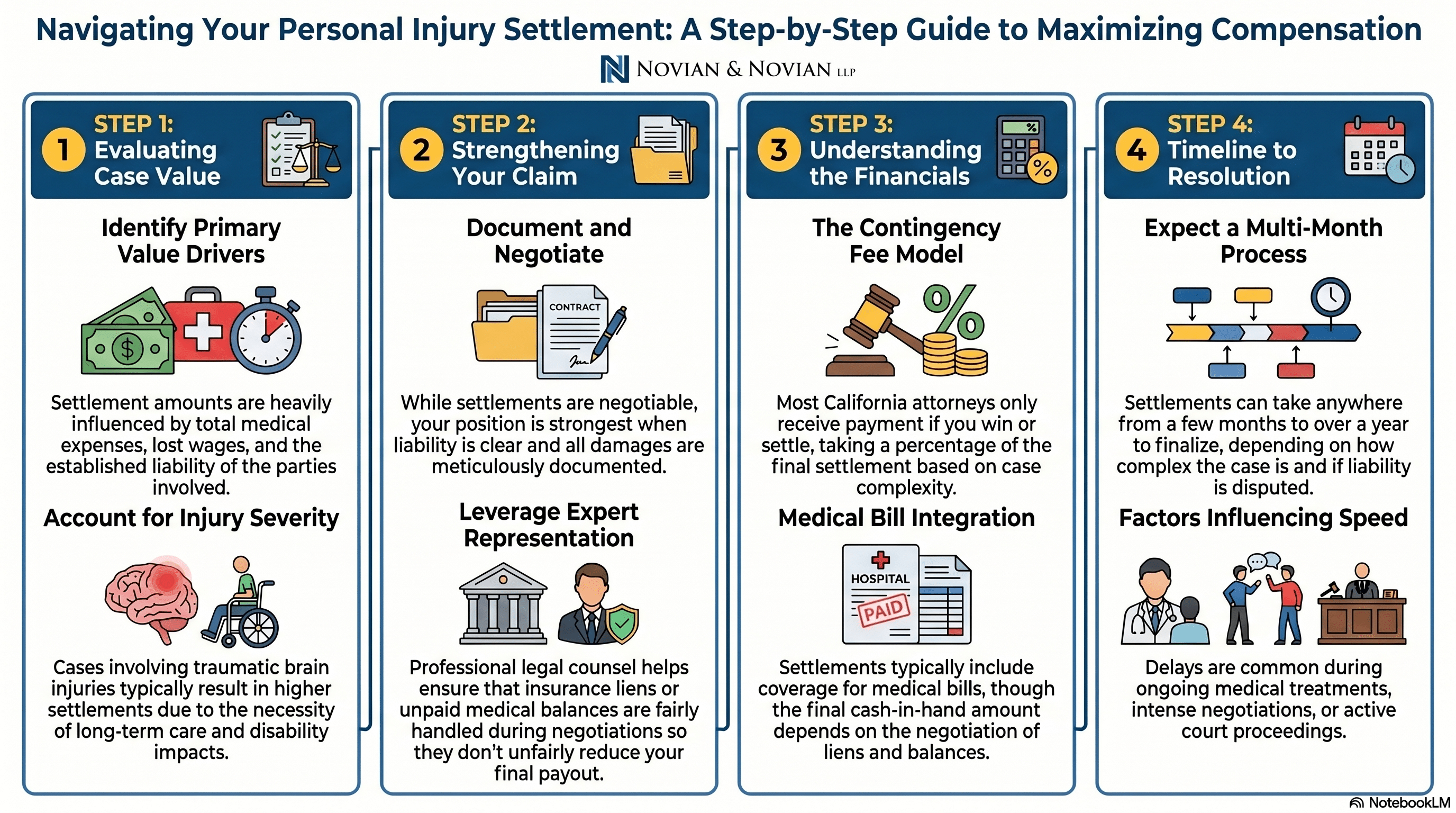
The average personal injury settlement in California depends on factors such as medical expenses, lost wages, liability, and the severity of the injury. Cases involving traumatic brain injuries often result in higher settlements due to long-term care and disability impacts.
How Long Does It Take to Receive a Personal Injury Settlement?
It can take anywhere from a few months to over a year to receive a personal injury settlement, depending on case complexity and whether liability is disputed. Delays often occur when negotiations, medical treatment, or court proceedings are still ongoing.
Are Medical Bills Always Covered in a Personal Injury Settlement?
Medical bills are typically included in a settlement, but the final amount may be reduced by insurance liens or unpaid balances. Proper legal negotiation helps ensure these costs are fairly accounted for in the final payout.
How Much Do Personal Injury Attorneys Charge in California?
Most personal injury attorneys in California work on a contingency fee basis, meaning they only get paid if you win or settle your case. The fee is usually a percentage of the settlement, which can vary depending on the complexity of the case.
Can I Negotiate My Personal Injury Settlement Amount?
Yes, personal injury settlements are often negotiable, especially when liability is clear and damages are well documented. Strong evidence and legal representation can significantly improve your negotiating position.