
Quick answer
TBI settlements run from the low six figures into the millions, and how badly the victim is impaired sets the figure. Concussion claims often resolve for $100,000 to $150,000. Cases with lasting cognitive loss sit far higher; one rear-end crash victim who could not return to work settled for more than $2.8 million, covering future treatment and lost earning capacity.
The average settlement for a traumatic brain injury in California typically ranges from about $100,000 to $5 million, depending largely on the severity of the injury. Mild cases often fall on the lower end, while severe or catastrophic injuries involving long-term care and disability can result in significantly higher payouts. Compensation usually includes both economic damages and non-economic damages. The final settlement amount is influenced by factors such as the extent of medical treatment required, the impact on the victim’s ability to work, and the level of negligence involved.
At Novian & Novian, we have a team of expert catastrophic injury lawyers with over 35 years of experience, ready to work with you to get the best settlement possible. As such, if you or a loved one has suffered a traumatic brain injury, contact us today to schedule a free consultation.
This blog post will explain traumatic brain injuries (TBIs), highlight the average settlement amount for TBI cases in California, and discuss the factors that influence the eventual settlement outcome.
Table Of Contents
- What Are Traumatic Brain Injuries (TBIs)?
- What Is the Average Settlement for a Traumatic Brain Injury Case?
- Real-World Example of a Traumatic Brain Injury Settlement
- What Evidence Do You Need in a Traumatic Brain Injury Claim?
- Factors Affecting Traumatic Brain Injury Settlement Amounts
- The TBI Claim Value Framework
- How Are Traumatic Brain Injury Settlements Paid Out in California?
- What Is the Life Expectancy of Someone With a Traumatic Brain Injury?
- How Long Does It Take to Reach a Settlement?
- Tips for Maximizing a TBI Settlement
- What Legal Steps Should You Take After a Traumatic Brain Injury in California?
- What Are the Common Types of Traumatic Brain Injury Cases in California?
- How Legal Representation Affects Settlement Value?
- Need a Traumatic Brain Injury Lawyer?
- Frequently Asked Questions
What Are Traumatic Brain Injuries (TBIs)?
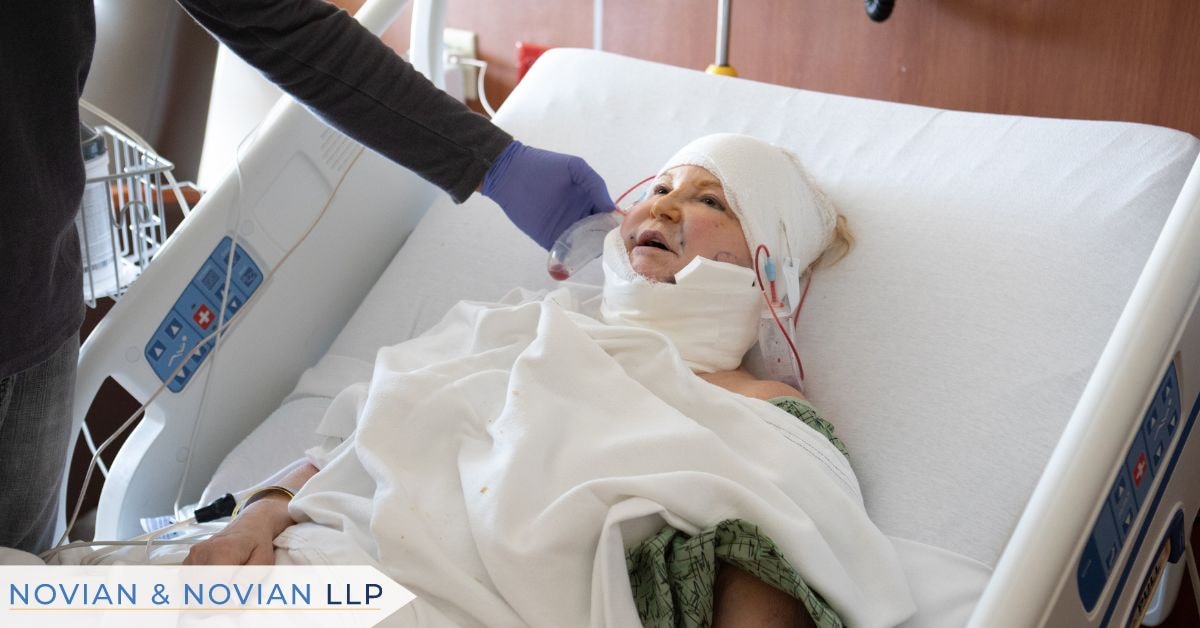
A traumatic brain injury (TBI) is an injury that disrupts the brain’s normal function. It could be mild, moderate, or severe. It could be a mild concussion or even an injury that leads to paralysis.
Common causes of traumatic brain injuries in California include car accidents, sports injuries, and slip-and-fall accidents. Violence and blasts that are common in military settings are also causes of traumatic brain injuries, as they can lead to both direct and indirect brain injuries.
Mild traumatic brain injury, also referred to as a concussion, is an injury that usually results in temporary brain dysfunction. Symptoms may include headaches, dizziness, and confusion, which often resolve within weeks. However, even mild TBIs can lead to long-term issues if not properly treated.
Typically, moderate traumatic brain injuries are more severe than mild TBIs. Moderate TBIs may result in unconsciousness lasting from a few minutes to hours. These injuries often cause longer-lasting symptoms such as persistent headaches, memory problems, and behavioral changes.
Furthermore, severe TBIs can cause permanent damage and lead to disabilities that require lifelong care. Victims may experience loss of physical coordination, cognitive decline, and emotional instability. The impact on daily life is profound, affecting not only the individual but their family as well.
Why Is Compensation Important for TBI Victims?
Traumatic brain injuries can have a devastating impact on both the victim and their family. The physical, emotional, and financial toll is immense on TBI victims as they often face mounting medical bills, costly rehabilitation, and loss of income due to the inability to return to work. Compensation for a TBI helps cover medical expenses and lost wages. It also covers non-economic damages like compensation for pain and suffering, emotional distress, and loss of quality of life. The same principles guide spinal cord injury cases, which often involve similarly high lifetime costs.
What Is the Average Settlement for a Traumatic Brain Injury Case?

TBI settlement amounts can vary depending on the severity of the injury, its impact on the victim’s life, and the specific circumstances surrounding the accident. On average, they can range anywhere between $100,000 and $5 million.
For example, settlements for mild traumatic brain injuries, such as concussions, could range between $100,000 and $150,000. However, when it gets to the moderate stage, settlements will go higher and range from $150,00-$500,000. If it is a severe traumatic brain injury that could lead to permanent disabilities and the need for long-term care, it would exceed $1 million, with some cases reaching as high as $5 million or more.
When it comes to settlements, it could be for economic or non-economic damages, much like back injury settlements and other serious injury claims. For example, economic damages are quantifiable costs directly related to the injury. They include medical bills, lost wages, and loss of earning capacity. On the other hand, non-economic damages compensate the victim for intangible losses. These could include pain and suffering, loss of enjoyment of life, and emotional distress.
According to the Centers for Disease Control and Prevention, TBI is a major cause of death and liability, with over 69,000 TBI-related deaths recorded in the United States in 2021. One major high-value case that stands out is a slip and fall case where the victim suffered a severe traumatic brain injury that resulted in a permanent loss of mobility and speech. There was a $5 million settlement compensation for loss of earning potential, pain and suffering, and the costs of round-the-clock care.
| TBI Severity | Average Settlement Range | Common Damages Included | Typical Recovery Time |
| Mild | $20,000 – $80,000 | Medical bills, minor rehabilitation costs, short-term lost wages, limited pain and suffering | Weeks to a few months |
| Moderate | $100,000 – $700,000 | Ongoing medical treatment, rehabilitation, lost income, reduced earning capacity, pain and suffering, emotional distress | Several months to a few years |
| Severe | $1 million – $10 million+ | Long-term medical care, nursing assistance, loss of earning capacity, significant pain and suffering, loss of enjoyment of life, and other non-economic damages | Years to lifelong care |
This comparison shows how the severity of a traumatic brain injury directly affects the settlement value. More serious cases get more money because they need long-term medical care, have lasting disabilities, and have bigger financial and emotional effects.
If you’re curious to calculate your own settlement, try our calculator:
Personal Injury Calculator

Real-World Example of a Traumatic Brain Injury Settlement

In one California case handled by a catastrophic injury law firm, a client suffered a severe traumatic brain injury after a rear-end auto accident. The victim experienced long-term cognitive impairment, memory loss, and an inability to return to work. The case initially involved disputed liability, but after medical imaging confirmed brain tissue damage and expert testimony supported long-term disability, the insurance company agreed to settle.
The final settlement exceeded $2.8 million, covering future medical care, lost earning capacity, and non-economic damages such as emotional distress and loss of enjoyment of life. This example highlights how personal injury cases involving TBIs can significantly increase in value when strong evidence and expert legal representation are present.
What Evidence Do You Need in a Traumatic Brain Injury Claim?

The most critical form of evidence in a traumatic brain injury case is medical documentation. Hospital records, doctor’s notes, diagnostic tests, MRIs, CT scans, and neuropsychological assessments serve as proof of the injury’s severity. These records can demonstrate the presence of brain injuries, detail the medical expenses incurred, and document any permanent disability caused by the injury.
Expert testimony is another form of evidence often used in TBI cases to explain complex medical issues. Here, medical experts such as neurologists or neuropsychologists can testify about the severity of the injury, the expected recovery process, and how the injury will negatively affect the victim’s life. Experienced personal injury attorneys may also consult vocational experts to assess how the injury impacts your ability to work, which can influence lost wages and future earning potential in the settlement.
For accidents like car accidents, motorcycle accidents, or commercial vehicle accidents, obtaining a police report or an incident report from the scene is important. These reports help establish fault and provide details about the circumstances surrounding the accident such as liability percentage and whether someone else’s negligence caused the injury. This evidence is critical for proving comparative negligence in cases where multiple parties may be at fault.
Additionally, eyewitnesses who saw the accident or incident that led to the traumatic brain injury can provide valuable testimony. These eyewitness statements can corroborate your version of events and may offer insight into how the accident occurred. Eyewitness testimony is especially useful in cases involving auto accidents, slip-and-falls, or violent incidents.
Visual evidence, such as photos or videos of the accident scene, can also provide powerful support for a TBI claim. For example, images of a car accident scene, closed head injuries, or unsafe conditions that led to a fall can illustrate the severity of the accident. Video footage may also capture the accident as it occurred. This can be persuasive in proving liability and negligence.
To claim compensation for lost wages and loss of earning capacity, you need to provide documentation of your work history and income. Work and wage records can help calculate the financial losses you’ve suffered due to being unable to work after the injury. If the TBI has caused long-term physical disabilities or permanent disability, these records can be used to estimate future lost earnings and secure a more significant settlement.
Factors Affecting Traumatic Brain Injury Settlement Amounts
Several factors play a crucial role in determining the settlement amount for a traumatic brain injury (TBI) case. They include the severity of the brain injury, lost wages, pain and suffering, etc.
The Severity of the Brain Injury
The severity of a traumatic brain injury is one of the most important factors in determining the settlement amount. The compensation depends on whether the injury is classified as mild, moderate, or severe.
For example, mild traumatic brain injuries would range from $100,000 to $150,000, while moderate TBIs would be between $150,000 to $500,000. Severe traumatic brain injuries that can cause permanent impairments or disabilities would often exceed $1 million.
Medical Expenses
One of the most significant factors influencing a settlement is the medical expenses incurred by the victim. This includes immediate medical bills for hospital stays, surgeries, medications, and rehabilitation, as well as anticipated future costs for ongoing care.
Severe TBIs often lead to long-term disability, requiring specialized medical equipment, therapy, and home modifications. These expenses can push settlements into the millions of dollars when lifelong care is needed.
Lost Wages and Earning Capacity
A traumatic brain injury can typically impact a victim’s ability to work. This results in lost wages and reduced earning potential. In severe cases, the injury may prevent the victim from ever returning to work, leading to a substantial claim for loss of earning capacity.
Therefore, future financial needs, including compensation for future lost wages, are usually factored into the settlement. This is particularly important for younger victims whose long-term financial prospects are heavily affected by the injury.
Pain and Suffering
Pain and suffering of brain injury victims’ compensation addresses the physical, emotional, and mental toll the injury has on the victim’s life. This includes both the immediate pain from the injury and the long-term suffering from ongoing symptoms such as headaches, memory loss, and emotional distress.
The more severe the brain injury and the greater the impact on the victim’s quality of life, the higher the compensation for non-economic damages such as pain and suffering.
Long-Term Disability
For victims who experience permanent impairments due to their brain injury, settlement amounts are usually higher. Long-term disabilities such as loss of cognitive function or physical abilities often require lifelong care, which increases the payout.
Settlements for severe injuries involving permanent disability often exceed $1 million because they must cover not only medical costs but also ongoing care, specialized treatments, and lost earning potential.
Insurance Coverage
The insurance coverage of the at-fault party plays a key role in determining the final settlement amount. In many cases, the settlement may be limited by the insurance policy limits of the party responsible for the injury. However, if the at-fault party has insufficient insurance coverage, victims may need to pursue other avenues of compensation, such as personal injury lawsuits, to recover the full amount.
The TBI Claim Value Framework

It can be hard to understand how much a traumatic brain injury (TBI) settlement is worth, especially since no two cases are the same. For example, two people may have the same injuries but get very different amounts of money based on medical evidence, lost wages, and legal responsibility.
To make this process clearer, we use a structured approach that breaks down the key factors that influence settlement value. This framework helps explain how insurers, attorneys, and courts evaluate a TBI claim from start to finish and why the outcome can vary so widely from one case to another.
- Step 1: Injury Severity Assessment – Medical classification of mild, moderate, or severe brain injury based on imaging and symptoms.
- Step 2: Financial Impact Calculation – Total documented costs, including medical bills, rehabilitation, lost wages, and future earning loss.
- Step 3: Non-Economic Impact Evaluation – Assessment of pain and suffering, emotional distress, and loss of enjoyment of life.
- Step 4: Liability Strength Review – Determining how clearly negligence can be proven in the accident.
- Step 5: Insurance and Recovery Limits – Evaluating policy limits and additional sources of compensation.
This framework helps explain why two seemingly similar TBI cases can result in dramatically different settlement outcomes.
How Are Traumatic Brain Injury Settlements Paid Out in California?
In a brain injury lawsuit or broader personal injury lawsuit, how you receive compensation can matter just as much as how much compensation you recover. Whether the case involves a mild brain injury or a catastrophic injury, the payout structure is designed to reflect both immediate and long-term needs. Most traumatic brain injury settlements are paid either as a lump sum or through a structured settlement.
A lump sum provides the entire settlement at once, which can be beneficial for covering large upfront expenses like medical bills, rehabilitation, or debts from a car accident case or motorcycle accident. In contrast, structured settlements distribute payments over time. This is because it ensures continuous financial support for future care, especially in cases involving post-traumatic stress disorder or permanent disability.
Before the injured party receives any funds, several deductions are typically applied. These may include attorney fees owed to a personal injury lawyer or law firm, medical liens from healthcare providers, and outstanding treatment costs tied to the injuries sustained. These deductions can significantly impact the net recovery, even in cases where the average settlement for traumatic brain injury appears high.
For example, the average verdict in California TBI claims can reach around $1.6 million, and average settlements often range from $700,000 to $1.2 million. The actual payout depends on factors involved, such as liability, insurance limits, and total documented damages.
The timeline for receiving settlement funds varies but generally takes a few weeks to a few months after a case resolves. Once a fair settlement is reached in a personal injury case, the insurance company issues payment, liens are resolved, and the remaining balance is disbursed to the client. Delays can occur if there are disputes over medical liens or if the case involves complex damages, such as those seen in penetrating brain injury or closed head injury claims.
Proper settlement structuring is especially important in TBI claims due to the long-term and sometimes lifelong nature of these injuries. A more severe injury often requires ongoing care, therapy, and assistance, making it critical to plan beyond immediate expenses. Economic damages like medical bills, lost wages, and rehabilitation costs must be balanced with non-economic damages such as pain, suffering, and loss of enjoyment of life to ensure the settlement truly reflects the full impact of the injury.
Since traumatic brain injuries can range widely, working with an experienced professional in personal injury law is key to securing significant compensation. Strong evidence, including medical records and expert testimony, plays a crucial role in maximizing recovery and ensuring that the final payout structure supports both current and future needs.
What Is the Life Expectancy of Someone With a Traumatic Brain Injury?

The most critical form of evidence in a traumatic brain injury case is medical documentation. Hospital records, doctors’ notes, diagnostic tests, MRIs, CT scans, and neuropsychological assessments serve as proof of the injury’s severity. These records can demonstrate the presence of brain injuries, detail the medical expenses incurred, and document any permanent disability caused by the injury.
Expert testimony is another form of evidence often used in TBI cases to explain complex medical issues. Here, medical experts such as neurologists or neuropsychologists can testify about the severity of the injury, the expected recovery process, and how the injury will negatively affect the victim’s life. Experienced personal injury attorneys may also consult vocational experts to assess how the injury impacts your ability to work, which can influence lost wages and future earning potential in the settlement.
For accidents like car accidents, motorcycle accidents, or commercial vehicle accidents, obtaining a police report or an incident report from the scene is important. These reports help establish fault and provide details about the circumstances surrounding the accident, such as liability percentage and whether someone else’s negligence caused the injury. This evidence is critical for proving comparative negligence in cases where multiple parties may be at fault.
Additionally, eyewitnesses who saw the accident or incident that led to the traumatic brain injury can provide valuable testimony. These eyewitness statements can corroborate your version of events and may offer insight into how the accident occurred. Eyewitness testimony is especially useful in cases involving auto accidents, slip-and-falls, or violent incidents.
Visual evidence, such as photos or videos of the accident scene, can also provide powerful support for a TBI claim. For example, images of a car accident scene, closed head injuries, or unsafe conditions that led to a fall can illustrate the severity of the accident. Video footage may also capture the accident as it occurred. This can be persuasive in proving liability and negligence.
To claim compensation for lost wages and loss of earning capacity, you need to provide documentation of your work history and income. Work and wage records can help calculate the financial losses you’ve suffered due to being unable to work after the injury. If the TBI has caused long-term physical disabilities or permanent disability, these records can be used to estimate future lost earnings and secure a more significant settlement.
How Long Does It Take to Reach a Settlement?
The time it takes to reach a settlement for a traumatic brain injury (TBI) case can vary depending on various factors. On average, the timeline from injury to settlement can range from a few months to several years.
The factors that influence the duration of traumatic brain injury settlements include the severity of the injury, medical evaluations, legal proceedings, and negotiations with insurance companies. In some cases, the need for expert testimony may also influence the duration.
Tips for Maximizing a TBI Settlement
One of the most important tips for maximizing a TBI settlement is hiring an experienced personal injury attorney. A skilled lawyer understands the intricacies of brain injury cases and can navigate the complexities of insurance companies, legal proceedings, and non-economic damages like pain and suffering. An experienced TBI lawyer will advocate for your rights and fight to ensure that you receive the full compensation you deserve for your medical bills, lost wages, and future care.
Another important tip is thoroughly documenting medical treatments and keeping detailed records. These documents include hospital visits, diagnostic tests, medication, and ongoing rehabilitation and physical therapy. Having detailed records of these documents would help you build a strong case.
“The value of a traumatic brain injury case is rarely about the initial diagnosis. It’s about long-term impact, future care needs, and how well the injury is documented over time,” says Matthew Novian. This perspective highlights why early medical documentation and expert evaluation are critical in maximizing settlement value. In our experience handling TBI cases, one of the most common mistakes is accepting early settlement offers before the full extent of the injury is known.
While it may sometimes make sense to accept a first offer in minor injury cases where damages are limited, TBI claims are often more complex. However, delaying settlement is not always beneficial either, especially if medical expenses are already overwhelming. Each case depends on severity, financial need, and clarity of long-term prognosis.
We often see clients underestimate long-term symptoms such as cognitive impairment, emotional changes, or delayed complications, which can significantly affect settlement value later. We recommend always waiting until medical professionals fully evaluate the long-term prognosis before negotiating a final settlement.
What Legal Steps Should You Take After a Traumatic Brain Injury in California?
It can be hard to deal with the aftermath of a traumatic brain injury, especially with all the medical, legal, and financial issues that come up. In personal injury cases, it’s very important to do the right things early on. This can protect your health, make your case stronger, and give you a better chance of getting fair compensation.
Step 1: Seek Immediate Medical Attention and Document Your Condition
Your health should always come first, so it’s essential to get prompt medical care even if symptoms seem mild at first. Medical records, diagnostic imaging, and physician notes will serve as crucial evidence in proving the extent of your injury and its impact.
Step 2: Report the Injury and Preserve Evidence
Whether the injury resulted from a car accident, a fall, or a workplace incident, report it to the appropriate authorities or parties as soon as possible. Gathering evidence such as photos, witness statements, incident reports, and surveillance footage can significantly strengthen your case.
Step 3: Consult a Personal Injury Attorney Experienced in TBI Cases
An experienced attorney can evaluate your situation, explain your legal rights, and guide you through the complexities of traumatic brain injury claims. Working with a professional ensures that all aspects of your case are handled effectively.
Step 4: File Your Claim and Comply With California Deadlines
In California, personal injury claims are generally subject to a statute of limitations, meaning you have a limited time to file your case. Filing promptly and accurately is essential to preserving your right to compensation and avoiding unnecessary delays or dismissal of your claim.
What Are the Common Types of Traumatic Brain Injury Cases in California?
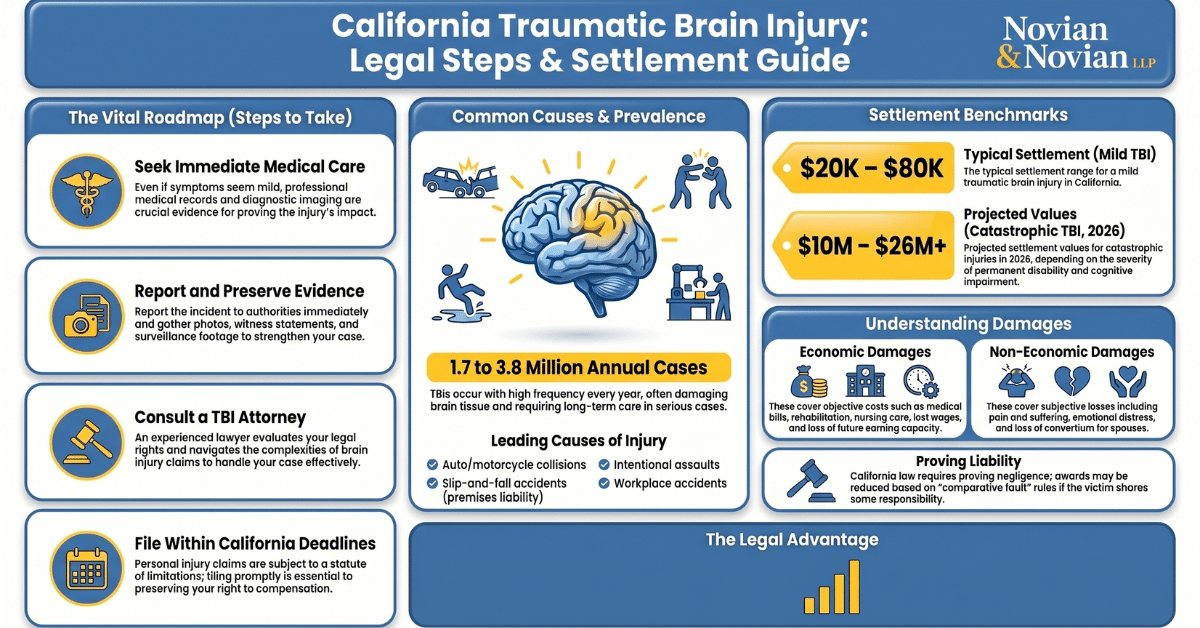
Traumatic brain injuries happen in a lot of personal injury cases, and knowing the most common causes can help you figure out if you can get money for your injuries. Between 1.7 and 3.8 million people get TBIs every year. These injuries often damage brain tissue and, in more serious cases, have devastating consequences that require long-term care.
One of the leading causes is auto accident collisions, including car and motorcycle crashes, where the force of impact can result in a closed head injury or a penetrating brain injury. These cases often involve insurance disputes and comparative fault issues, which can affect how much compensation a client suffered or is entitled to recover, especially when multiple parties are involved.
Slip-and-fall accidents are another frequent source of TBIs, particularly in premises liability claims. A woman injured in a fall at a store or on unsafe property may pursue compensation if negligence can be proven, and these cases often rely heavily on evidence like surveillance footage and incident reports.
Assault-related TBIs also occur, where intentional acts of violence lead to serious head trauma. In these situations, legal claims may involve both criminal and civil proceedings, and compensation can include significant non-economic damages for pain, emotional distress, and loss of enjoyment of life, which are generally higher for severe injuries.
Another major category is workplace accidents, which can occur frequently in construction or industrial settings. Falls, broken equipment, and being hit by things can all cause serious head injuries. Workers’ compensation may cover some losses, but if another person’s carelessness caused the injury, a third-party claim may also be possible.
In all of these cases, the value of a claim depends on several other factors, such as the severity of the injury, the documented costs, and the strength of the evidence. Economic damages, like medical bills, rehabilitation, nursing care, lost wages, and loss of earning capacity, are very important. Non-economic damages, on the other hand, cover pain and suffering, emotional distress, and loss of consortium for spouses. Objective proof, such as advanced medical imaging and expert testimony, can greatly increase the value of a settlement, especially if the injury causes long-term disability.
Even within similar case types, outcomes vary widely. The amount of money you get for a mild traumatic brain injury is usually between $20,000 and $80,000. However, if the injury is more severe and causes permanent disability or cognitive impairment, the amount of money you get can be much higher, depending on the full extent of the damages and liability.
How Legal Representation Affects Settlement Value?
When pursuing a settlement for a traumatic brain injury (TBI) case, having strong legal representation can significantly affect the outcome. A knowledgeable personal injury attorney with experience in TBI cases not only guides you through the legal process but can also help you secure a much higher settlement amount. They do this through expert negotiation, comprehensive evidence collection, and expert witnesses.
Typically, most personal injury attorneys work on a contingency fee basis. This means that the lawyer only gets paid if they win your case or secure a settlement. For TBI victims, this is an advantage as there are no upfront costs, and the attorney’s fees are deducted from the settlement amount. This arrangement makes legal representation accessible to injury victims without adding financial burden during an already challenging time.
By working on a contingency basis, attorneys are motivated to achieve the best possible outcome, as their payment depends on the settlement value. This creates a strong incentive for them to fight for the highest compensation possible. If you’re dealing with a traumatic brain injury and seeking compensation, hiring an experienced attorney can make all the difference. Reach out to Novian & Novian for expert guidance on your case.
Need a Traumatic Brain Injury Lawyer?
If you or a loved one has suffered a traumatic brain injury (TBI), securing the right legal representation is crucial to ensuring you receive fair compensation. Several key factors influence the value of a TBI settlement, including the severity of the injury, medical expenses, lost wages, and non-economic damages.
Hiring an experienced personal injury attorney can make a significant difference in how much you recover. Legal professionals understand the complexities of traumatic brain injury cases and know how to gather the evidence, negotiate with insurance companies, and present expert testimony that maximizes the settlement.
If you have been involved in an accident, our expert team of catastrophic injury attorneys in Los Angeles at Novian & Novian is here to help. With our comprehensive legal knowledge and experience in personal injury cases, we will work to ensure you receive the compensation you deserve. Schedule a free consultation today!
Frequently Asked Questions
Below are some of the most common questions people have about the average settlement for TBI in California. These answers will help you better understand what to expect during the process.
What Is the Average Settlement Amount for a Traumatic Brain Injury in California?
In 2026, TBI settlement amounts typically range from about $20,000 for mild cases to over $10 million for catastrophic injuries, with some cases exceeding $26 million depending on severity and impact. Total documented costs, along with non-economic damages like pain and suffering and emotional distress, significantly drive up the final value.
How Long Does It Take to Receive a TBI Settlement?
The recovery and legal process can take months or even years, as serious injuries often require time to fully assess long-term complications and care needs. While many cases settle before trial, delays can occur if liability is disputed or if a fair settlement cannot be reached.
What Damages Can I Claim in a Brain Injury Case?
You can claim economic damages such as medical expenses, lost wages, and ongoing care, as well as non-economic damages including pain and suffering, emotional distress, loss of enjoyment of life, and loss of consortium for spouses. In some cases involving extreme negligence, punitive damages may also be available to further increase compensation.
How Does California Law Affect TBI Settlement Amounts?
California law requires proving liability by showing negligence from a responsible party, which directly impacts how much compensation you can recover. Comparative fault rules may reduce your award, while other factors like insurance limits and the severity of the injury also influence the outcome.
Should I Accept the First Settlement Offer?
Initial offers are often lower than what your claim is truly worth, especially in cases involving long-term effects like cognitive impairments or physical disabilities. An experienced TBI lawyer can help evaluate the offer and negotiate for a fair settlement that reflects the full extent of your damages.