
Strategy | Tenacity | Results
Pasadena, CA Personal Injury Attorney
Practicing law in Los Angeles since 1988.
Knocked down in a crosswalk, tripped by a lifted sidewalk slab, or hurt in a crash on Colorado Boulevard? Our Pasadena personal injury lawyers take over the insurers, the Medicare paperwork and the filing deadlines while you recover. The first consultation is free.
Quick answer
Pasadena personal injury lawyers at Novian Law help people injured in vehicle collisions, falls and other negligence cases recover economic losses plus pain and suffering. Many serious crashes happen on the 210 and 134 freeways or in Rose Bowl traffic. Claims here take 6 months to 1 year to settle, though Rose Bowl-related cases may take 2 years.
From the Census and the state crash file
Pasadena's Census Profile: an Older City That Walks and Often Lives Alone
This page is written for the people in the table: grandparents who walk to Lake Avenue, tenants in older apartment buildings, and the sons and daughters who end up handling the claim for them. Each row links to the part of the page where a Pasadena personal injury attorney deals with it.
| Share or rank | Who it describes | Where this page covers it | Source file |
|---|---|---|---|
| 17.4% | of Pasadena residents are 65 or older, about 23,800 people. Countywide the share is 15.2%, and the city's median age is 40.1 against 38.2. | Liens; trial preference | Census ACS 2020-2024, DP05 |
| 11.9% | of Pasadena households consist of one person 65 or older living alone, compared with 9.1% countywide; most are women (8.1% of households, against 3.8% for men). | Family checklist; care at home | Census ACS 2020-2024, DP02 |
| 4.2% | of working residents walk to their job, against 2.4% across Los Angeles County. | Crash section: right-of-way | Census ACS 2020-2024, DP03 |
| 9.4% | of Pasadena households own no car, truck or van. | Crash section: hit while walking | Census ACS 2020-2024, DP04 |
| 57.5% | of occupied homes are rented. | Falls: landlord duties | Census ACS 2020-2024, DP04 |
| 1st of 62 | is Pasadena's statewide peer rank for walkers 65 and up killed or hurt: 19 of them in 2023, more than in any comparable city, and about a quarter of everyone hurt on foot here that year, against 3 children under 15. | Crash data: other rankings | California OTS crash rankings, 2023 |

How these were chosen: Census Bureau American Community Survey 5-year estimates (2020 to 2024) for the city of Pasadena and for Los Angeles County, read on November 2, 2026, plus the state's 2023 ranking file. We picked the figures that change how an injury claim is handled, not the ones that flatter the city.
Pasadena Personal Injury Lawyers for Older Residents and Pedestrians
We can meet you by phone, by video call or in person, and a relative may join if you want help following the details. Most first meetings turn on three kinds of paper.
Useful at the first meeting
The Police or CHP Report
Inside city limits the Pasadena Police Department writes the collision report. The CHP's Altadena Area office on Windsor Avenue covers the 134, parts of the 210 and unincorporated neighborhoods such as Altadena, Chapman Woods and East Pasadena. A report number alone lets us order the full copy.
Medical Records and Your Insurance Cards
Discharge papers from the emergency room, the names of every doctor and therapist since, pharmacy receipts, and the Medicare, Medicare Advantage or private health card that paid the bills.
Anything an Insurer Sent You
Letters, a check, an early offer or a medical authorization form. Adjusters like a recorded statement and a signature on a broad records release in the first weeks. Let us read them before you answer. California's Fair Claims Settlement Practices Regulations set the insurer's own clock: acknowledgment of a claim within 15 calendar days (10 C.C.R. section 2695.5), and acceptance or denial within 40 calendar days of proof of claim (section 2695.7(b)). Any letter that reasonably calls for a reply must get a complete answer within 15 calendar days, until a lawsuit is filed.
Google Reviews Left by Novian & Novian Clients


Pasadena Car Crash and Pedestrian Claims, From Colorado Boulevard to the 210
Most of what decides a Pasadena pedestrian claim sits in one chapter of the California Vehicle Code, the part titled Pedestrians' Rights and Duties, plus two signal rules from the chapter before it. The chapter opens with a statement of state policy in section 21949: safe and convenient travel for people on foot, in a wheelchair, with a walker or pushing a stroller. Each rule below answers a question an adjuster will ask about the seconds before impact.
Painted stripes or a bare corner: who goes first
Vehicle Code section 21950 puts the burden on the motorist: someone crossing on the painted stripes, or at a street corner with no paint at all, goes first. The same section asks walkers not to step off the curb into the path of a car too close to stop, and an insurer will reach for that sentence in almost every Pasadena pedestrian case. A Pasadena personal injury lawyer answers it with signal timing, the driver's speed and whatever a nearby shop camera recorded.
Subdivision (c) of the same section is the part adjusters skip. A driver approaching anyone inside a crosswalk has to use all due care and slow down, or take whatever other action is needed, to keep that person safe. A driver who held speed because the walker "should have waited" is still in breach of (c).
Turning on a green light across a crosswalk
A green ball lets a driver go straight or turn, but Vehicle Code section 21451(a) adds that any driver, turning ones included, must yield to people lawfully within the intersection or an adjacent crosswalk. The same duty applies to a driver on a green arrow under subdivision (b). Left turns across a busy crosswalk are where this rule earns its keep: the driver is watching for a gap in oncoming cars, and the walker who stepped off on the WALK symbol is already in the lane the car is turning into.
When the countdown runs out halfway across
Vehicle Code section 21456 reads the signal heads literally. A flashing upraised hand with a countdown means a person may still start across but must finish before the countdown ends. A flashing hand without a countdown, or a steady one, means do not start; anyone already partway across on the walking-person symbol is told to keep going to a sidewalk or a safety zone.
For a slower walker this matters. Someone who left the curb on the walking-person symbol and was still in the street when the hand went steady was crossing lawfully, and the turning or arriving driver still owed them the care described above. The countdown number on the signal, and how many lanes were left to cover, belong in the claim file.
The car behind the car that stopped
When one vehicle stops at a marked crosswalk, or at an unmarked crosswalk at an intersection, to let someone cross, Vehicle Code section 21951 forbids a driver coming up from behind from passing it. On a two-lane-each-way street the stopped car hides the walker from the next lane, and the passing driver hits the person the first driver saw. Section 21951 makes that pass unlawful in itself, whatever the second driver says about visibility.
A car crossing the sidewalk
Vehicle Code section 21952 requires a driver about to cross a sidewalk to yield to any pedestrian approaching on it. That is the rule for cars nosing out of driveways, alleys and parking garages, which is where a slow walker on the sidewalk is easiest to miss. The driver who says the walker "came out of nowhere" was the one obliged to wait.
A white cane or a guide dog
Vision loss is common among older walkers, and California gives them extra protection. Under Vehicle Code section 21963, a totally or partially blind pedestrian carrying a predominantly white cane, with or without a red tip, or using a guide dog, has the right-of-way, and a driver who fails to yield or to take all reasonably necessary precautions commits a misdemeanor punishable by up to six months in jail or a fine of $500 to $1,000.
A car parked across the crosswalk
Vehicle Code section 21970 forbids stopping a vehicle unnecessarily so that it blocks a marked or unmarked crosswalk or a sidewalk. A walker forced around a car sitting in the crosswalk and into a traffic lane did not choose that path, and the driver who blocked the crossing can share the fault for what happened next.
Right on red
A right turn on a red light is legal only after a full stop, and Vehicle Code section 21453(b) then requires the driver to yield to pedestrians lawfully within an adjacent crosswalk. Drivers making that turn tend to look left for traffic, away from the person stepping off the curb on their right.
Walking outside any crosswalk
Away from the striped crossings and street corners, Vehicle Code section 21954 flips the order: the walker gives way to any vehicle near enough to be an immediate hazard. Subdivision (b) keeps the driver's own duty of due care toward any pedestrian on the roadway, so a crossing outside the lines shifts part of the fault argument but does not hand the driver a defense.
Freeways and the Arroyo Seco Parkway
Traffic here runs on three kinds of road. The city arterials carry buses, shoppers and people on foot. The Foothill Freeway (I-210) and the Ventura Freeway (SR-134) meet on the west side of town. The Arroyo Seco Parkway (SR-110) ends at Glenarm Street; it opened in 1940, and the National Park Service calls its on- and off-ramps woefully short by modern standards.
When the driver drives away
Vehicle Code section 20001 obliges any motorist in an injury crash to stop. When one speeds off down Lake Avenue instead, the first hours decide whether the car is ever found: the exact corner, the time, a partial plate, and which storefronts face the intersection. A Pasadena car accident lawyer works from those details and the police report to find the driver and the driver's insurer.
Signal facts we pin down after a crosswalk crash
- Which face the pedestrian signal showed: the walking person, a flashing hand with a countdown, a flashing hand without one, or a steady hand.
- How many seconds the countdown still showed when the person stepped off, and how many lanes remained.
- Whether the car was turning, and from which approach, so section 21451 can be applied to the right driver.
- Whether another vehicle had already stopped for the walker in the next lane.
- How far the impact point was from the nearest crosswalk, marked or not, which decides whether section 21954 applies.
Hit while crossing? Talk to us before you tell the driver's insurer where you stepped off the curb. Insurers build the fault argument on that answer.
Call about a crosswalk crash
Pasadena Slip and Fall Lawyer for Sidewalks, Stores and Apartment Stairs
More than one older adult in four falls each year, the CDC reports, and under half mention it to their doctor. Plenty of those falls are nobody's fault. The ones that are someone's fault start with a hazard: a torn stair tread in an apartment building, a puddle under a grocery store cooler, a missing handrail at a clinic entrance.
A landlord, shop or clinic owes visitors ordinary care in running its property, and Civil Code section 1714 makes it pay for harm caused by a lapse in that care. For a tenant, the shared parts of a building (stairs, lobbies, laundry rooms, garages) stay the landlord's job, and so does a hazard the landlord knew about and left in place. A store or a restaurant in Old Pasadena is judged on whether its staff should have found the spill or the broken tile before you did. A fall on a hard floor often hurts a knee first, and our knee injury slip-and-fall settlement guide walks through how torn ligaments and fractures are valued. Our Pasadena slip and fall lawyers start by asking who controlled the spot where you went down.
Lifted sidewalk slabs, broken curb ramps and potholed crosswalks are city property. The City of Pasadena answers only for a dangerous condition under Government Code section 835, and its municipal code sends claims against the city to its risk and insurance administrator, who investigates them and sends the notices. Where that claim is filed, and by when, is answered in the questions near the end of this page.
What counts as a dangerous condition of public property
Government Code section 830(a) defines it as a condition that creates a substantial risk of injury when the property, or property next to it, is used with due care in a way that is reasonably foreseeable. Two parts of that definition decide many Pasadena cases. The person must have been using the sidewalk or crosswalk with due care, and the use must be foreseeable, which walking to a bus stop in the evening plainly is. Under subdivision (c), the property also has to be owned or controlled by the public entity; an encroachment such as a private planter that sits on city land without being city property does not count against the city.
A raised slab is not automatically a dangerous condition
Government Code section 830.2 lets a judge decide, as a matter of law, that a defect was so minor, trivial or insignificant that no reasonable person would see a substantial risk in it. A city can raise it before trial. The size of the lip is only part of the analysis; the statute looks at the surrounding circumstances, which is why we record the lighting, any shadow from a street tree, whether the edge was painted, and the angle a person walking toward it would have seen. A tape measure held against the edge in a photograph does more than any description.
Who keeps up the sidewalk in front of a house or a shop
Streets and Highways Code section 5610 places the duty to maintain a sidewalk on the owners of the lots that front it, so that it will not endanger people or property. A fall outside a home on a residential Pasadena street can therefore involve the homeowner and the homeowner's insurer as well as the city, and we check title records for the fronting parcel before any claim is drafted. The same section carves out conditions created under a permit or right granted by the city, which puts the permit holder, such as a utility that cut and patched the walk, under the same duty.
Fell on a city sidewalk? The city claim window opened the day you fell. Call and we will count the days left with you.
Count my daysWhen Your Parent or Grandparent Is the One Who Got Hurt in Pasadena
Most calls about an older client come from a son, a daughter or a neighbor. Print this and tick it off in the first weeks; it is cheaper for a personal injury lawyer in Pasadena to protect a claim than to rescue one later.
- Get them examined today, even if they insist they are fine. The CDC warns that a brain injury can be missed in an older adult because its signs overlap with conditions such as dementia, and that the danger is greater for anyone on blood thinners. Ask the doctor to write the fall or the impact into the chart.
- Photograph the place, keep the shoes and note who helped. Building cameras record over themselves within days and spills get mopped. The day you call, we write to the owner asking that the footage and the incident report be kept.
- Keep the TAP card, the ride receipt or the Dial-A-Ride booking. If they were hurt on a bus, a train or a paratransit van, the fare record shows which agency carried them, and that decides where the claim must be filed.
- Start a dated notebook of the help they now need. Who drives them, who shops and cooks, how many hours a week. Those entries turn into the evidence for the home-care losses described below.
Already have a letter from Medicare or an insurer? Send a photo of it with your question, and a Pasadena personal injury lawyer will explain what it asks of you.
Send the letterWho Gets Repaid From a Pasadena Settlement Before the Client: Medicare and Medi-Cal
In Pasadena 15.7% of residents 65 and older live below the poverty line, against 14.6% countywide (Census ACS 2020-2024, DP03). For an older client the gross settlement and the money that actually reaches them can be far apart, because several payers have a legal right to be repaid first. Each one follows its own statute, and each one has to be resolved before the check is split.
Original Medicare and its conditional payments
When Medicare pays for treatment that a liability insurer should cover, CMS calls it a conditional payment, and the amount comes back out of any settlement, judgment or award. After a settlement, the documents go to Medicare's Benefits Coordination and Recovery Center, which issues a final demand letter. Payment is due within 60 days of that letter, and interest runs from the letter's date if it is late. We ask for the itemized conditional payment list early and challenge charges for care that had nothing to do with the accident.
Medicare Advantage plans follow a federal rule
Many Pasadena retirees are enrolled in a Medicare Advantage plan instead of Original Medicare. Those plans recover under federal Medicare Secondary Payer rules, and 42 C.F.R. section 422.108(f) says those rules supersede any state law that would cut back the plan's right to bill a liability payer. That is why a California argument that works against a private health insurer may not work against an Advantage plan, and why we identify the plan type on day one. Subsection (d) lets the plan bill the liability insurer directly, or the member to the extent the member has already been paid for those medical expenses.
Medi-Cal's 30-day notice and its share of the money
When Medi-Cal paid, Welfare and Institutions Code section 14124.73 requires written notice to the Department of Health Care Services within 30 calendar days of filing the action or claim. Under section 14124.76, no settlement is final until the department has had notice and a chance to perfect its lien, and its recovery is limited to the part of the settlement that pays for medical care. If the department will not agree on that share in advance, a court decides it. When the beneficiary brought the claim and pays the lawyer, section 14124.72(d) cuts the reimbursed lien by 25 percent as the department's share of attorney's fees, plus a proportional share of litigation costs, and subdivision (c) applies the same lien to a settlement for the death of a Medi-Cal beneficiary.
Medicare's discount for fees and costs
Medicare does not take its conditional payments back in full when the claim was disputed and the client paid to win it. Under 42 C.F.R. section 411.37, Medicare works out the ratio of procurement costs, meaning attorney's fees and case costs, to the total settlement, applies that ratio to its own payments, and subtracts the result. On a settlement where fees and costs come to 40%, Medicare's claim drops by 40%. Under section 411.24(c), Medicare can recover twice its payment from a primary payer it has to sue, which gives every insurer a reason to see the Medicare claim resolved before it pays.
Medi-Cal's ceiling after fees
Welfare and Institutions Code section 14124.78 caps the Medi-Cal recovery: the department can never take more than the beneficiary keeps after attorney's fees and litigation costs come out of the settlement, judgment or award. On a small recovery with large Medi-Cal bills, that cap is what leaves the client anything at all.
Billed charges versus what was actually paid
In Howell v. Hamilton Meats & Provisions (2011) the California Supreme Court held that a plaintiff whose care was paid by private insurance recovers, as past medical damages, no more than the amounts actually paid or still owed, not the higher list price on the bill. We build the medical damages from payment records, not invoices, so the demand does not collapse when the defense raises it.
Locking in Medicare's number before settling
Medicare's own regulation gives a way to stop the figure moving. Under 42 C.F.R. section 411.39(c), up to 120 days before an expected settlement, the beneficiary or the lawyer may notify CMS once, through its web portal, that a settlement is coming. CMS then answers with a final conditional payment amount, and it may take an extra 30 days when claims have to be filtered by hand. We time that notice so the number is final when negotiations close.

When the Injured Person Is 70 or Older, Frail, or Unable to Manage the Case
California procedure has several rules written for exactly this client. Used early, they keep a claim from outlasting the person who brought it.
Asking the court to move the trial up
A party over 70 may ask for trial preference under Code of Civil Procedure section 36. The court must grant it when the party has a substantial interest in the case and their health makes a delay prejudicial. Subdivision (c)(2) allows the motion whenever a party reaches 70 while the case is pending. Once it is granted, subdivision (f) sets trial within 120 days, and continuances are capped at 15 days each, with only one for a party's or lawyer's physical disability.
The supporting affidavit does not have to come from the doctor. Section 36.5 lets the lawyer sign it on information and belief about the diagnosis and prognosis, and the affidavit cannot be used for any other purpose in the case. Subdivision (e) adds a catch-all: a court may grant preference to any party whose showing persuades it that the interests of justice will be served.
Age is not the only door. Under subdivision (d), a court may grant preference to a party of any age when clear and convincing medical documentation concludes that an illness or condition raises substantial medical doubt the person will survive beyond six months, and the interests of justice favor it. A younger spouse with a terminal diagnosis can use it.

Saving the testimony on video
Code of Civil Procedure section 2025.620(c) lets any party use a deposition at trial for any purpose if the witness has died or cannot attend because of physical or mental illness or infirmity. For a client in fragile health we schedule the client's own videotaped deposition early, so the jury can still hear the account in the client's words if the client cannot come to court. The same subdivision covers a witness who lives more than 150 miles from the courthouse, which matters when the neighbor who saw the fall has since moved in with family out of state.
If the injured person dies before the case ends
The claim does not die with them. Code of Civil Procedure section 377.20 keeps it alive for the estate. What can be recovered changes, though: section 377.34 allows damages for the person's own pain, suffering or disfigurement only in cases granted trial preference before January 1, 2022, or filed from January 1, 2022 through December 31, 2025. For a case filed after that window, the estate recovers economic losses and any punitive damages, but not the pain the person lived through, which is one more reason to file promptly and ask for preference.
When the injured person cannot make decisions
Someone who lacks the legal capacity to make decisions, or who has a conservator, appears in a lawsuit through a guardian ad litem or the conservator under Code of Civil Procedure section 372. A family member can apply to be appointed, and we set that up at the start rather than when a settlement needs signing.
Neglect in a care home or assisted living facility
If the injury came from physical abuse or neglect by a caregiver, the Elder Abuse and Dependent Adult Civil Protection Act can change the remedies; under Welfare and Institutions Code section 15610.27 it protects any California resident aged 65 or older. Where recklessness, oppression, fraud or malice is proven by clear and convincing evidence, Welfare and Institutions Code section 15657 requires the court to award attorney's fees and costs, including a conservator's fees for the litigation, and lifts the section 377.34 limit on what an estate can recover.
Neglect has a statutory meaning. Section 15610.57 covers the negligent failure of a caregiver to exercise the care a reasonable person in that position would, and lists failures to help with hygiene, food or clothing, to provide medical care, to protect from health and safety hazards, and to prevent malnutrition or dehydration. A fall from an unattended bed or an untreated pressure sore is measured against that list.
Dog Bites in Pasadena: Strict Liability and the Pasadena Humane Report
There is no one-bite allowance for dogs under California law. Civil Code section 3342 makes the owner answer for the injury whether it happened on a sidewalk, in Victory Park or on the owner's driveway while you had a right to be there, and whatever the dog's history. A letter carrier on a route or an invited guest has that right.
Bites inside city limits are not reported to the county. Los Angeles County's Veterinary Public Health program sends Pasadena cases to Pasadena Humane, the city's animal control provider, at 626-792-7151. That report fixes the date, the place and where the dog lives, and it starts the 10-day observation that rules out rabies.
Once a dog has bitten, Civil Code section 3342.5 requires its owner to take reasonable steps to remove the danger to other people. Our Pasadena dog bite attorneys photograph the wounds as they heal, pull the Humane report and the medical chart, and track down the owner's homeowner or renter policy. Victims who want the legal detail can read how California's dog bite statutes work.

Pasadena Brain Injury Lawyer for Concussions and Head Trauma
A head injury from a crash, a fall or a bicycle accident can look minor at the scene. According to the CDC, some signs arrive at once and others surface later, among them headaches, forgetfulness, poor sleep, mood swings and a new intolerance for bright light or loud rooms. Insurers lean on any gap between the accident and treatment, so go back to the doctor when something new appears.
Huntington Hospital in Pasadena runs the largest emergency department in the San Gabriel Valley and a Level II trauma center. A Pasadena brain injury lawyer builds the traumatic brain injury claim on that paper trail, which runs from the scans to the neurologist's notes and, if symptoms persist, a neuropsychologist's test results.
For older adults the CDC adds two warnings: falls cause nearly half of all TBI-related hospital stays, and people in this age group are more likely than any other to be hospitalized or die after a brain injury.
Pasadena Wrongful Death Lawyer: Who Sues and What the Family Recovers
When someone's wrongful act or neglect causes a death, Code of Civil Procedure section 377.60 decides who may sue: a surviving spouse or domestic partner and the children or, if there are none, the people who would inherit. Stepchildren, parents and a putative spouse may also sue if they depended on the person who died.
A Pasadena wrongful death lawyer can seek the financial support and household help the person would have given, and the loss of their love, companionship and guidance. When a grandparent died, the help they gave with childcare or errands counts too. Read about the chances of winning a wrongful death suit and wrongful death lawsuit examples.
Two separate claims usually arise from one death, and Code of Civil Procedure section 377.62 lets the estate's survival claim be joined with the family's wrongful death claim. They do not overlap: under section 377.61, the wrongful death award cannot include what the estate recovers under section 377.34, and the court divides the award among the people entitled to it.
Cases Our Pasadena Personal Injury Attorneys Accept, by Type of Harm
Crashes With Cars, Buses and Ride-Shares
Side-impact, head-on and rear-end collisions with cars, trucks, ride-share vehicles and Metro or Pasadena Transit buses, and riders hurt as passengers.
Falls on Someone Else's Property
Wet floors, broken stairs, dark parking structures and uneven walkways, whether in a shop, a medical office or the building you live in.
Medical Errors and Birth Injuries
Care that fell below the accepted standard, including a missed diagnosis after a fall and injuries to a mother or baby during delivery.
Job-Site Harm Caused by Someone Other Than Your Employer
An employer's workers' compensation carrier pays for most job injuries, but a contractor, property owner or driver from outside your company can face a separate injury claim of its own.
Dog Attacks and Knock-Down Falls
Bites, scratches and knock-down falls caused by a dog on a leash or loose, in Brookside Park or on a neighbor's driveway.
Claims After a Family Member's Death
Claims brought by a family after a fatal crash, fall, workplace accident or medical error.
Permanent, Life-Altering Injuries
Lost limbs, deep burns, paralysis or other harm that never fully heals. A catastrophic injury claim is usually priced through a life-care plan the treating doctors help write.
Spinal Cord Damage
Surgery and months of rehab come first, then ramps or wider doorways at home, and our spinal cord injury attorneys price each of those into the demand.
Building-Site Accidents
Scaffold and ladder falls, trench collapses, struck-by accidents and equipment failures on a building site.
Pasadena Personal Injury Attorneys Matthew Novian and Brandon Sadigh
Both lawyers below handle Pasadena files from intake to trial as the firm's personal injury attorneys, and each answers client calls himself.

Partner Matthew Novian
Matthew co-leads two of the firm's groups, catastrophic injury and class actions, and works on defective-product and mass tort claims alongside injury cases. He earned his J.D. at UCLA in 2018; California bar number 324144.
Read Matthew's profile
Associate Brandon Sadigh
Brandon litigates civil cases with a focus on serious and catastrophic injury. He finished Southwestern Law School in 2018 and joined the California bar in 2019, number 327193.
Read Brandon's profileThe Pasadena Courthouse on Walnut Street, and Where Else Your Case Can Land
A 2026 change to Local Rule 2.3(a)(1)(A) ties an unlimited injury suit to the district where the harm happened, which for Pasadena is the Northeast District. When a Pasadena personal injury lawyer types ZIP 91101 into the Superior Court's locator, it gives three answers.
| Claim size | Where it is heard | Street address | LASC district |
|---|---|---|---|
| Unlimited civil, over $35,000 | Pasadena Courthouse or Alhambra Courthouse | 300 East Walnut Street, Pasadena; 150 West Commonwealth Avenue, Alhambra | Northeast |
| Limited civil, $35,000 or less | Stanley Mosk Courthouse | 111 North Hill Street, downtown | Central |
| Small claims | Pasadena Courthouse | 300 East Walnut Street, Pasadena | Northeast |
Results as returned by the Superior Court's online locator for downtown Pasadena.
Hours, phone and the new courtroom numbers
The Pasadena building opens at 8:00 a.m. and its clerk's office at 8:30, both closing at 4:30 p.m. on court days; the main number is (626) 396-3300. From November 2, 2026, the Superior Court is moving to a new department numbering system, so a hearing notice printed earlier may show a courtroom number that has since changed.
Asking the court for a disability accommodation
For days that require the trip to the Pasadena Courthouse, California Rule of Court 1.100 lets a person with a disability ask the court's ADA coordinator for an accommodation, orally or in writing, at least 5 court days ahead, with the medical information kept confidential. Disability is common among older Pasadena residents: 31.9% of those 65 and up report one (Census ACS 2020-2024, DP02).
An interpreter in a civil case
In Pasadena, 41.9% of residents aged five and older speak a language other than English at home, and 15.0% speak English less than very well (Census ACS 2020-2024, DP02). Evidence Code section 756 has the Judicial Council fund court interpreters in civil cases for a party who does not speak or understand English proficiently. When funds run short, courts must serve listed case types first, so we request the interpreter as soon as a hearing is set.
Records Desks and Transit Operators Behind a Pasadena Claim
These are the local desks that hold the evidence or receive the paperwork, with what each one charges or requires.
Pasadena Police records
Collision reports written by Pasadena officers can be requested through the city's online portal, in person at the Police Department Records Section, or by mail with the department's request form. The department's fee schedule lists what each record costs, and photos or recordings tied to a report must be requested in writing. The department keeps most reports for 10 years. Many reports are not released to the public at all; a civil subpoena served on the custodian of records is the route for those.
- Police report copy: $10
- Photos linked to a report: $84
- Audio or video recordings: $85
- Civil subpoena for records: $15 deposit with the subpoena
Buses, Dial-A-Ride and the A Line
A rider hurt on a bus, a paratransit van or a train has to start with the operator's name, because the city's own claim form warns claimants to make sure the claim is against the City of Pasadena and not another public entity. Pasadena Transit and Dial-A-Ride are run by the city's Department of Transportation; Pasadena Unified School District, listed by the city as an affiliated agency, is a separate public entity with its own governing board. The list below sorts the rest.
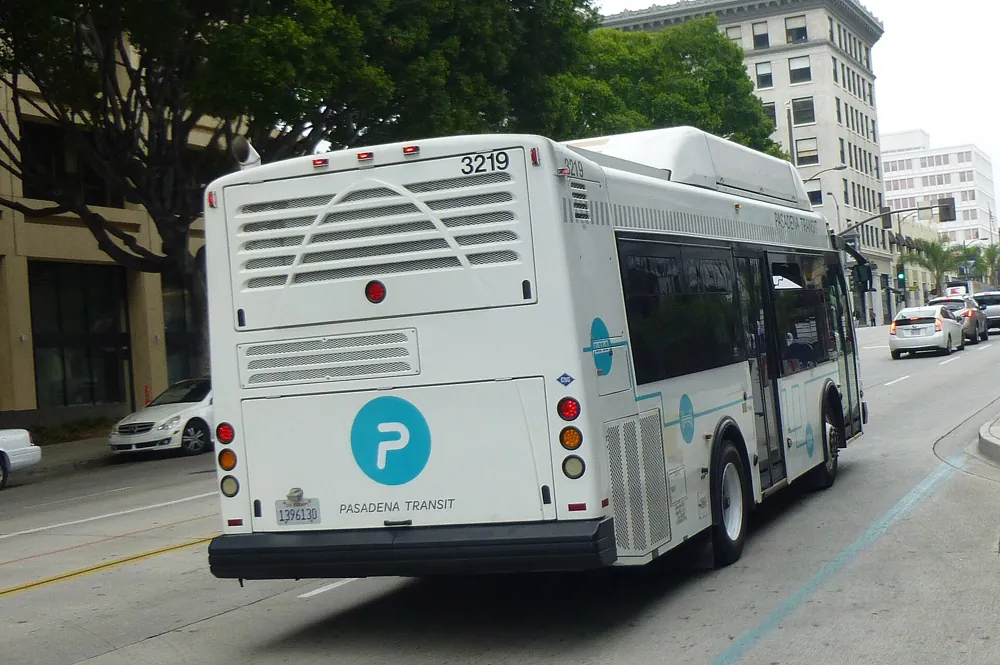
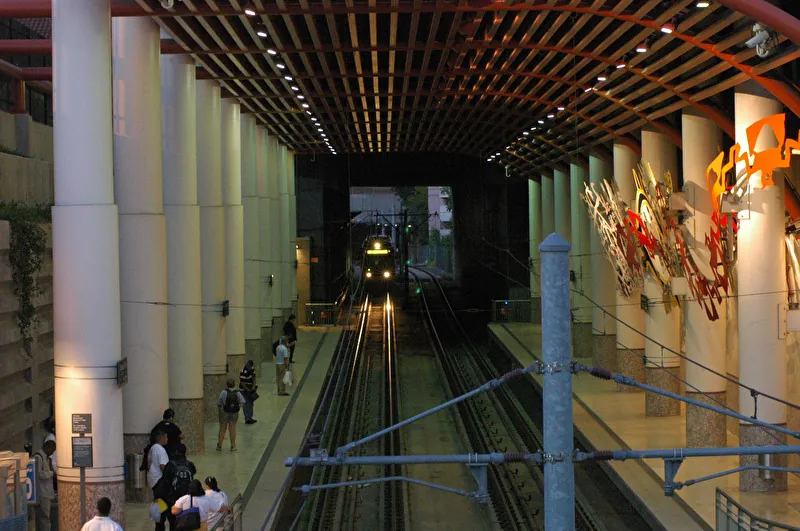
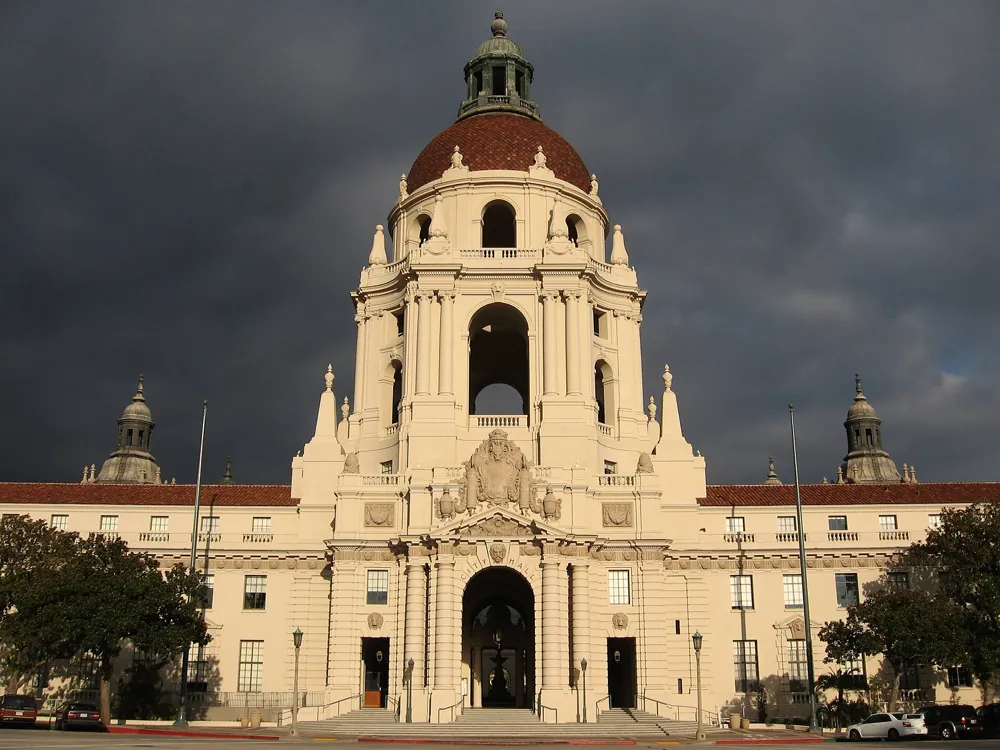
Where a claim goes, by who runs the road or vehicle
- Streets and sidewalks inside city limits, plus the two city-run transit services: the City of Pasadena.
- Metro buses and A Line trains and stations: the Los Angeles County Metropolitan Transportation Authority.
- The 210, 134 and 110 freeways and their ramps: the State of California, through the Department of General Services.
- Roads in unincorporated Altadena and East Pasadena: the County of Los Angeles.
- A private parking lot, store or apartment building: its owner and operator, with no government claim needed.
State and federal crash files
Where Pasadena Ranked Among 62 Peer Cities for Traffic Injuries in 2023
California's Office of Traffic Safety sorts cities into population bands and ranks them on crash reports from their own police departments. Pasadena's 2023 band held 62 cities, and first place there is the worst place to be.
Freeway lanes patrolled by the CHP fall outside those counts, so we checked the federal fatal-crash census as well. Its 2022 to 2024 files show 14 fatal crashes and 16 deaths in Pasadena, five of the crashes on the 210, the 134 or the 110. Seven of the dead were pedestrians and three of those were 69 or older, among them a person struck at Colorado Boulevard and Oakland Avenue in 2024. Numbers for all of Los Angeles County sit in our county-by-county fatality table.
After dark
All seven pedestrian deaths in those federal files happened after dark: four on lit streets, three where there was no street lighting. The three victims aged 69, 72 and 94 were struck between 6 and 8 p.m. in October, November and January, on Fair Oaks Avenue, Walnut Street and Colorado Boulevard. For an older walker's claim, the lighting at the spot, the driver's headlights and what the driver could see at that hour become central evidence. Those early-evening hours fall before the state's nighttime category even begins at 9 p.m.

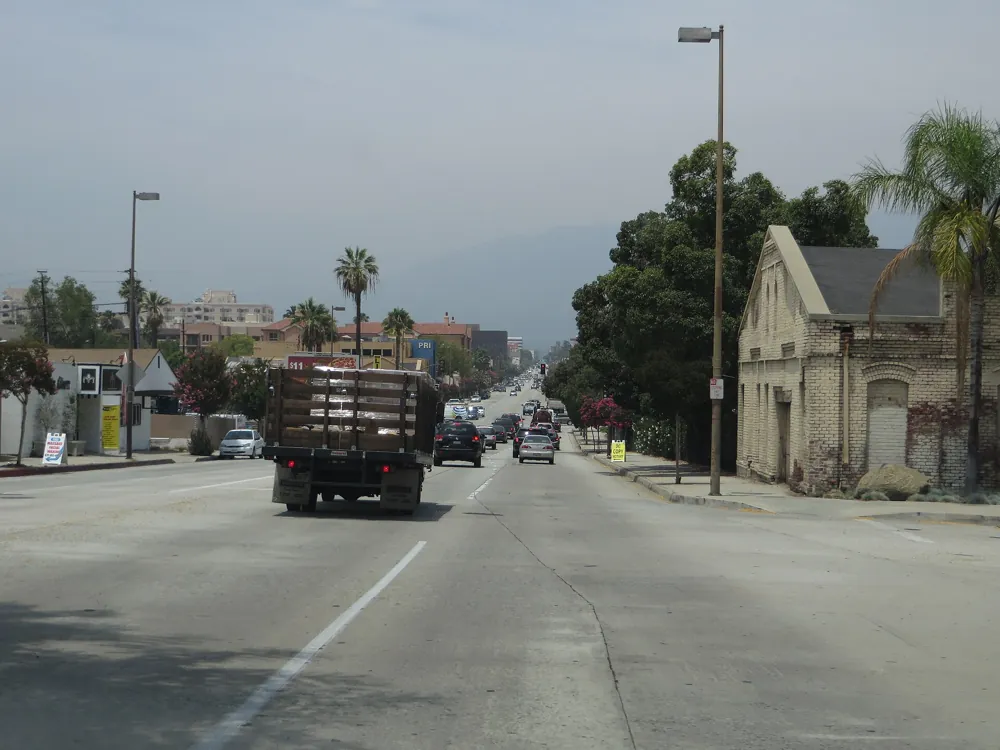
Ranking file: OTS, Pasadena, 2023. Fatal-crash records: NHTSA FARS for 2022 through 2024.
Losses a Pasadena Injury Settlement Can Cover, From Home Care to Punitive Damages
Medical Costs and Lost Income
Ambulance, emergency room and hospital bills, therapy, future treatment, missed paychecks and the earning power the injury takes from the years ahead.
Care and Help at Home
A home health aide, rides to appointments, meal delivery, or a family member who now does the shopping and housework you used to do yourself. For a retired client this is often the largest economic loss.
Pain and Lost Independence
Physical pain, fear of going out alone, lost sleep and lost time with grandchildren. California sets no price list for this; we document it through the family members and neighbors who see the change every day.
Extra Damages to Punish Malice
When the conduct was deliberate, or showed conscious disregard for other people's safety, a jury may add a punitive sum on top (Civil Code section 3294). Against a store chain or a property management company, subdivision (b) also requires that an officer, director or managing agent knew of, authorized or ratified the conduct.
Questions Pasadena Clients Ask Us
Where exactly does a claim against the City of Pasadena go, and by when?
The City Clerk's Office is the address, and the six-month window of Government Code section 911.2 is the limit. You can file through the city's online claims portal, or deliver or mail the city's claim form to the City Clerk, 100 North Garfield Avenue, Room S228, Pasadena, CA 91101. The form is addressed to the City Council, which forwards it to the Liability, Claims and Insurance Division in the City Manager's office for investigation; that division's line is (626) 744-6773. The city's instructions require every blank on the form to be filled in and the claim to be signed and dated. Two warnings on the city's information sheet are worth reading before filing: a claim number does not waive the city's right to object that the claim is late or incomplete, and the city says it will seek its defense costs under Code of Civil Procedure sections 128.5, 1021.7 and 1038 if a later lawsuit is found not to have been brought in good faith and with reasonable cause.
If my mother stepped out early, is her claim lost?
It reduces it but does not bar it. California replaced contributory negligence with pure comparative fault in Li v. Yellow Cab Co. (1975), so a walker found 20% responsible for stepping out early still recovers the other 80%. The percentage is the jury's call, made from the evidence of what each person did, and an insurer's opening number is only a negotiating position. Even a person found mostly at fault keeps the share caused by the other side.
Who answers for an injury in an unsafe Pasadena parking lot?
Usually the owner or the company that runs the lot or garage. Potholes, missing wheel stops, broken lights and dark stairwells are ordinary upkeep failures. An assault in a lot is a harder case: in Ann M. v. Pacific Plaza Shopping Center (1993) the California Supreme Court balanced the foreseeability of crime against the burden of preventing it, and said hiring security guards will rarely, if ever, count as a minimal burden. So a claim that a lot needed guards usually depends on earlier, similar crimes on the same property.
Can a large award against a doctor or hospital be paid in installments?
It can. Under Code of Civil Procedure section 667.7, in a case against a health care provider, either side can ask the court to order that future damages be paid periodically rather than in a lump sum, if the award includes at least $250,000 in future damages. The court sets the payment amount, and a defendant without adequate insurance has to post security. For an older client facing years of paid care, the structure of those payments matters as much as the total.
Can police ask the DMV to retest a driver who seemed unfit after a crash?
Yes. Vehicle Code section 21061 lets a traffic officer issue a notice of reexamination to a driver who broke a traffic rule and, at the time, showed evidence of incapacity, meaning a serious physical injury or illness, mental impairment or disorientation that the officer could see. The notice sends the driver back to the DMV. It does not decide the injury claim, but the officer's observations recorded with it can become evidence about the driver's condition.
Does California's dog bite law apply to a police dog?
Not always. Civil Code section 3342(b) blocks a strict-liability suit against a government agency whose dog bit while defending itself from an annoying, harassing or provoking act, or while helping an officer apprehend or hold a suspect, investigate a crime, execute a warrant or defend someone. A bystander bitten outside those situations is not barred by subdivision (b): subdivision (c) keeps the claim for a person who was not part of, or suspected of, the conduct that prompted the dog's use, and subdivision (d) applies the exemption only if the agency has a written policy on police dog use.
The accident happened in unincorporated Altadena or East Pasadena. Who gets the claim?
If a public road or sidewalk was involved, the County of Los Angeles, not the City of Pasadena. Government Code section 915(a) requires a claim against a local public entity to be delivered to its clerk, secretary or auditor, or mailed to one of them or to its governing body at its principal office, and the six-month limit still applies. The CHP's Altadena Area office takes most crash reports there, so the report request also goes to the CHP rather than to the Pasadena Police.
What if the freeway, a ramp or another state property caused the crash?
Then the claim is against the State of California. Under Government Code section 915(b), a claim against the state is delivered to an office of the Department of General Services or mailed to the department's principal office, again within six months for an injury. Interstate 210 and State Routes 134 and 110 are state highways, so a claim about a missing guardrail, a broken ramp signal or a pothole on those roads follows the state route.
Does the two-year deadline pause if my parent could not make decisions when hurt?
Yes, for most claims. Code of Civil Procedure section 352(a) stops the clock for any period during which the person entitled to sue lacked the legal capacity to make decisions at the time the claim arose. Subdivision (b) excludes claims that require a government claim first, so a fall on a city sidewalk or a crash with a city bus gets no pause, and the six-month claim deadline runs regardless of the person's condition.
Can the defense make my mother see its own doctor, and where?
Yes, once without asking the court. In a personal injury case, Code of Civil Procedure section 2032.220 lets a defendant demand one physical examination of the plaintiff, provided it involves no painful, protracted or intrusive test and takes place within 75 miles of the plaintiff's home. The demand must name the doctor and describe the exam, and the exam has to be set at least 30 days after the demand is served. We review every demand, and for a frail client we push for a location and time she can manage.
Can settlement money for a parent with a disability go into a special needs trust?
It can, through the court. Probate Code section 3600 and the sections after it govern money paid under a court-approved compromise, or a judgment, for a person with a disability, and section 3604 lets the court order that money into a special needs trust. The court reviews and approves the trust's terms, keeps continuing jurisdiction over it and supervises it to the extent it decides. If no one asked for the trust when the settlement was approved, a parent, conservator or other interested person can petition for it later, with at least 15 days' notice of the hearing.
Can my landlord raise the rent or push me out because I complained about the stairs?
Not within 180 days, if the rent is paid. Civil Code section 1942.5 bars a landlord who retaliates for a tenant's habitability complaint from evicting the tenant, forcing them out, raising the rent or cutting services within 180 days of an oral complaint to the landlord, a written notice under section 1942, or a complaint to a public agency the landlord knows about, and the same window follows an inspection or citation that results. Keep a copy of the complaint and the date you made it, because the 180 days run from that date.
A city bus or a city truck hit my father. Do we sue the driver personally?
Usually the City. Government Code section 815.2 makes a public entity liable for injury caused by an employee acting within the scope of employment, whenever the employee would be liable personally, and it shields the entity only where the employee is immune. So a claim about a Pasadena Transit bus or a city work truck is presented to the City first, within the six months, and the driver is named in the later lawsuit only when there is a reason to.
My father uses a motorized wheelchair. Does the law treat him as a pedestrian?
Yes. Vehicle Code section 467(b) counts as a pedestrian a person who operates a self-propelled wheelchair, motorized tricycle or motorized quadricycle because a physical disability keeps them from moving about on foot, and subdivision (a) includes anyone using a human-powered conveyance other than a bicycle, such as a manual wheelchair or a walker. Every crosswalk and right-of-way rule on this page therefore protects him in the chair just as it would on foot.
Where will my mother have to go to give her deposition?
Not far. Unless the court orders otherwise, Code of Civil Procedure section 2025.250(a) requires a person's deposition to be taken within 75 miles of her residence or, at the noticing party's option, within the county where the case is pending and within 150 miles of her home. For a Pasadena resident in a Los Angeles Superior Court case, that keeps it in the county. If travel is hard for her, the court can be asked under section 2025.260 to set a different place.
Why is my mother's Medicare Advantage plan sending her questions about the accident?
Because federal rules require it to ask. Under 42 C.F.R. section 422.108(b), each Medicare Advantage organization must identify any payer that is primary to Medicare, work out what that payer owes, and coordinate benefits, reporting what it learns to CMS. The questionnaire is the plan finding out whether a liability insurer should be paying. Answer it accurately, send us a copy, and do not sign any release of the plan's rights without a lawyer reading it first.
Describe Your Pasadena Accident to a Personal Injury Lawyer
Sending the form or calling does not hire us, and no web page can predict how your case comes out. The page on California personal injury attorney fees spells out what we charge and when.
