
Strategy | Tenacity | Results
Insurance Litigation Lawyers Near Palmdale
Novian & Novian represents Palmdale homeowners, commuters and the businesses that build and supply aircraft around Air Force Plant 42 when an insurance company denies, delays or underpays a claim, or refuses to defend a lawsuit. We handle business insurance claims (including employment practices liability policies and demands for indemnification), director and officer liability claims, property insurance claims and bad faith suits, and disputes over specialized policies. The first consultation is free.
The form on our contact page takes a short description of the loss; the phone line is 323-455-2498.
Quick answer
In Palmdale, the policy that fails people most often is the one they rely on daily: a homeowners policy on a house built between 1980 and 2009, an auto policy on a car that covers a long SR-14 commute, or a contractor's liability policy that a prime contractor at Plant 42 asked to see. Each one has its own California rules. A house past its tenth year usually means a fight with your own carrier over what caused the damage, not a claim against the builder. A long commute can shape both the premium and the dispute over a totaled car. And a certificate of insurance handed to a prime contractor proves nothing about coverage on its own.
The Palmdale figures behind the claims on this page
| Figure | Why it matters to a claim | Source |
|---|---|---|
| 76.0% of Palmdale housing units were built between 1980 and 2009; 4.6% were built in 2010 or later | Most homes are past the 10-year period for suing a builder under the Right to Repair Act, so the dispute is usually with the homeowner's own insurer | ACS 2020-2024, DP04 |
| 66.2% of occupied homes are owner-occupied (Los Angeles County: 45.9%) | Homeowners policies, earthquake offers and flood coverage decide more household finances here than in most of the county | ACS 2020-2024, DP04 |
| 29.6% of workers who leave home for work travel 60 minutes or more (California: 11.1%) | Annual mileage is the second rating factor California law puts on an auto policy; long commutes change premiums and invite disputes over what the application said | ACS 2020-2024, S0801 |
| 13.6% of those workers leave home before 5:00 a.m. (California: 6.7%) | Dark-hour driving on SR-14, where the CHP Antelope Valley Area, not the sheriff, writes the crash report | ACS 2020-2024, S0801 |
| 11.8% of employed residents work in manufacturing (California: 8.8%) | Supplier and subcontractor coverage disputes tied to aerospace work are a local matter, not a rare one | ACS 2020-2024, DP03 |
| Plant 42 covers more than 5,800 acres and is the Antelope Valley's second-largest employer | Work inside a government installation brings federal insurance clauses into private contracts | Air Force Test Center |
| Faults in the city include the San Andreas, Nadeau, Cemetery, Little Rock and Leona Avenue | A homeowners policy does not cover earthquake damage; the separate earthquake offer and its deductible decide what is paid | City of Palmdale Safety Element (draft) |
Who calls us from Palmdale, and about which policy
Palmdale's insurance disputes follow the way people here live and work. Census figures show a city of owned, detached houses (78.5% of housing units are single-family detached, against 47.3% countywide), long drives to work and a manufacturing base well above the state's. Those three facts produce three kinds of calls, plus a fourth from the companies whose officers get sued.
The owner of a tract house built before the 2010s
Three of every four homes in Palmdale went up between 1980 and 2009. Roofs, supply lines, water heaters and slab plumbing in those houses are now old enough that an adjuster can call almost any leak "wear and tear." The claim is usually not against the developer, whose statutory window has long closed. It is against the homeowner's own carrier, and it turns on cause: what started the damage, and whether that cause is covered. We take that apart in the section on older homes.
The household that commutes on State Route 14
Palmdale's mean travel time to work is 39.9 minutes, against 28.7 for California, and almost three in ten workers spend an hour or more getting there. Fewer than one in ten work from home (9.1%, half the state's 17.2%). Those miles show up in the auto policy twice: when the premium is set from an estimated annual mileage, and when a totaled vehicle has to be valued against cars for sale in a local market that is thinner than the San Fernando Valley's. See SR-14 commuters and their auto carriers.
The shop or subcontractor that works for a prime contractor
Machinists, fabricators, electricians, cleaning crews and software firms around Palmdale sign subcontracts with the companies that build and maintain military aircraft at Plant 42. Those subcontracts carry insurance clauses copied from federal acquisition rules, indemnity promises and demands for certificates. When an injury, a damaged part or a delayed delivery turns into a claim, the question is whether the subcontractor's policy actually answers it. See Contractors and suppliers at Plant 42.
Corporate officers and business owners named in a suit
A shareholder, lender, regulator or former employee can sue a company's officers personally over what they decided while running it, and director and officer liability insurance exists to pay for that defense and any covered loss. Employment practices liability insurance answers claims by employees. Both are written on terms that reward fast, complete notice and punish late or partial tenders. We tender the demand to the insurer, press the claim under the policy and, when the insurer refuses, sue it. For a corporate client, the policy application deserves the same scrutiny as the claim. California lets an insurer rescind over material misstatements in an application, and carriers raise that defense in D&O claims as well as auto claims (see the rescission rules below). We check what the application asked and what was answered before we tender, so the tender does not invite a rescission letter.
Specialized policies and events nobody planned for
Insurers write narrow forms for nearly every trade, building and deal, and plenty of Palmdale disputes begin with a form nobody at the company had read closely. We help clients work out what coverage they need and what the policy they hold actually says, and we advise on force majeure, the "act of God" clauses that can release a party from contract duties when an unforeseen event strikes. How California treats business interruption and force majeure claims is set out on our California insurance litigation page; this page stays with what is particular to Palmdale.
Can't tell which of these describes your situation? Tell us which policy is involved and what the carrier has done so far, using the contact form. If talking is easier, the number is 323-455-2498.
A tract house 20 to 45 years old: wear, sudden damage and the cause that counts
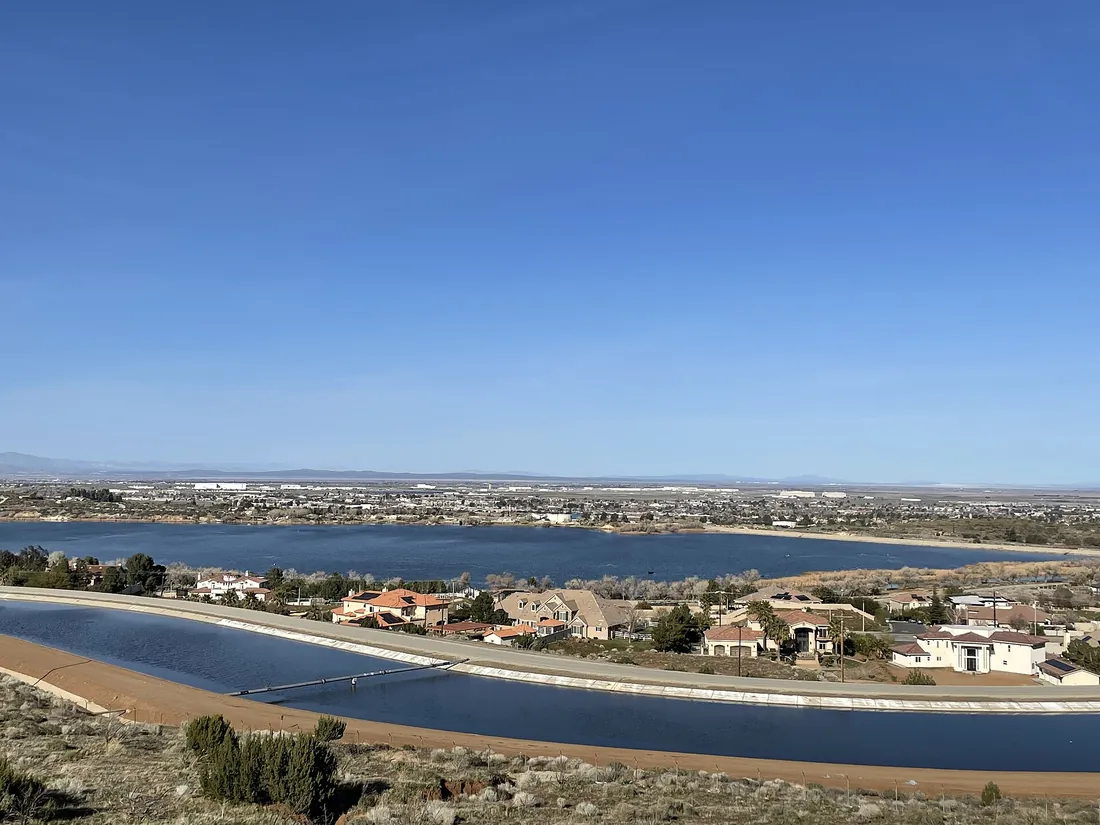
The census numbers explain why so many Palmdale property claims look alike. One third of the city's housing (33.0%) was built in the 1980s, another 22.3% in the 1990s and 20.7% between 2000 and 2009. Only 4.6% was built in 2010 or later. Original roofs and plumbing in the older two groups are well into the age where carriers argue deterioration, while the newest houses are the only ones still inside the builder's statutory period.

Why the fight is usually with your own carrier
For a house built in 1994, the developer's exposure for latent defects ended years ago. The general 10-year limit for latent construction deficiencies in Code of Civil Procedure section 337.15 runs from substantial completion, and that date cannot be later than the final public inspection, the recorded notice of completion, the date the house was first occupied, or one year after work stopped. When a roof fails or a slab line bursts in a house that age, the homeowner's policy is the only realistic source of payment, and the insurer's opening position is often that the loss came from age, not from a covered event.
A broken line under compacted fill
When a denial mixes a covered event with an excluded one, the general rule on which cause counts is explained on our Lancaster page. One older California Supreme Court case matters most for Palmdale slab homes, because it began with a house built on poorly compacted fill. In Sabella v. Wisler (1963) 59 Cal.2d 21, the policy excluded settling, and the house did settle. The court still found coverage because a sewer line, broken through a third party's negligence, emptied waste water into the loose fill and set the settling in motion. Graded desert lots with slab-on-grade homes are exactly where a leaking line and moving soil show up together, so we read every "earth movement" or "settling" denial in Palmdale against that holding.
The permit file as the roof's birth certificate
An insurer that blames age has to know the age. Many Palmdale houses have had their original roof or water heater replaced, sometimes twice. The City of Palmdale's building permit records show when, and by whom. Under the California Public Records Act, a city must make identifiable public records promptly available on request for the direct cost of duplication (Gov. Code § 7922.530) and must tell the requester within 10 days whether it holds disclosable records and when they will be ready (§ 7922.535). A permit showing a 2015 reroof is a quick answer to a denial that treats the roof as 30 years old.
Told the damage is "long-term deterioration"? Before you accept that, send us the denial and any photos the adjuster took. A lawyer can check the cause analysis against California law. Our intake form takes uploads, and 323-455-2498 reaches the office directly.
Bought new from a Palmdale builder? The Right to Repair Act clock
For the newest houses in the city, the other side of the dispute may be the builder and the builder's insurers and subcontractors, not the homeowner's own carrier. California's Right to Repair Act, sometimes called SB 800, sets out what a new home must do, how long the owner has to complain, and a prelitigation process that has to come before a lawsuit.
Which homes are still inside the 10 years
An action under the Act cannot be brought more than 10 years after substantial completion, measured no later than the recording of a valid notice of completion (Civ. Code § 941). In practice that covers homes finished roughly from 2016 onward. The Act applies to original construction intended to be sold as an individual dwelling (§ 896), and its definition of "claimant" reaches owners of single-family homes, owners of attached units and homeowner associations (§ 895(f)).
Standards that read like a water-loss checklist
Section 896 lists the functions a home must meet, and the water standards come first. Roofs, roofing systems, chimney caps and ventilation components must not let water enter the structure. Plumbing, sewer and utility lines must not leak or corrode in a way that cuts short their useful life. Showers, baths and their waterproofing must not leak into walls or floors. Stucco and exterior walls must not let unintended water pass their moisture barriers. Foundations and slabs must not let water or vapor in so as to damage another component. Anything the list does not address is still actionable if it causes damage (§ 897).
Shorter windows hidden inside the statute
The 10-year limit is not the only clock. Several standards in section 896 carry their own, shorter periods measured from the original close of escrow. Once one of them passes, the builder and its insurers are out of the picture for that item, and the homeowner's own policy is the only place left to claim, which is where the rest of this page picks up:
- Plumbing and sewer systems that fail to operate properly: four years (§ 896(e)).
- Electrical systems that fail to operate properly: four years (§ 896(f)).
- Cracked driveways, walkways and patios with significant vertical displacement: four years (§ 896(g)(1)).
- Untreated steel fences that corrode unreasonably: four years (§ 896(g)(9)).
- Paint and stain that deteriorate early: five years (§ 896(g)(10)).
- Untreated wood posts set in soil, landscaping that fails to survive and dryer ducts not installed to specification: two years (§ 896(g)(8), (12), (14)).
- Irrigation and drainage that damage landscaping: one year (§ 896(g)(7)).
Separately, the builder must give a written warranty of at least one year on the fit and finish of cabinets, mirrors, flooring, walls, countertops, paint and trim; if it does not, the law supplies a one-year warranty anyway (Civ. Code § 900).

When the builder misses its own inspection dates
The prelitigation process starts with a written notice that is served the way section 910 prescribes, and the builder then has 14 days to acknowledge it in writing (§ 913) and another 14 to inspect, paying for the inspection and any damage it causes (§ 916(a)). The parts owners tend to miss come next. A second round of inspection or testing is allowed only if the builder explains in writing, within three days of the first, why it is needed, and that round must be finished within 40 days (§ 916(c)). A builder that lets its inspection window close releases the owner from the procedure, and the owner may file suit while the building standards still apply (§ 916(d)). Once a homeowner has a lawyer, the builder must copy that lawyer on every substantive communication (§ 913).
Repair offers, and time that does not run out during them
A builder that chooses to fix the problem has 30 days from the last inspection to put a repair offer in writing, and that offer must describe each violation, the scope and location of the repair and a completion date, name the licensed contractors who will do it, and tell the owner they may ask for up to three other contractors (§ 917). If the statute of limitations would otherwise expire during this process, section 927 extends it to 100 days after the repair is completed. If the builder ignores the claim or skips the process, the extension runs to 45 days after its response time expired.
Where the builder's insurers and subcontractors come in
A builder that wants a subcontractor, product manufacturer or supplier (including that party's insurer or warranty company) to share responsibility must invite it to the inspection; that duty does not extend to the builder's own insurer (§ 916(e)). Between builder and subcontractor, Civil Code section 2782(d) voids clauses in residential contracts signed after January 1, 2009 that make a subcontractor insure or indemnify the builder for the builder's own negligence or for work outside the subcontractor's written scope. Under section 2782(e), a subcontractor owes no defense or indemnity on a defect claim until the builder sends a written tender with everything the homeowner provided. For an owner, these rules explain why a builder's "we are waiting on our trades" answer can stall a claim, and why the notice should be complete from the start.
Homes outside the Act, and one rule that helps owners
Claims about older homes, or claims that fall outside the Act, go back to the general limits. Patent defects, those visible on reasonable inspection, ordinarily carry a four-year limit under CCP section 337.1, but subdivision (f) says that limit does not apply to an owner-occupied single-unit residence. With two thirds of Palmdale homes owner-occupied, that exception matters here more than in most of Los Angeles County.
Living in a house finished after 2016 with a leak the builder won't fix? Getting the written notice right the first time keeps every later deadline intact; we can prepare it, or you can reach us at 323-455-2498.
Living on the San Andreas: earthquake coverage disputes in Palmdale
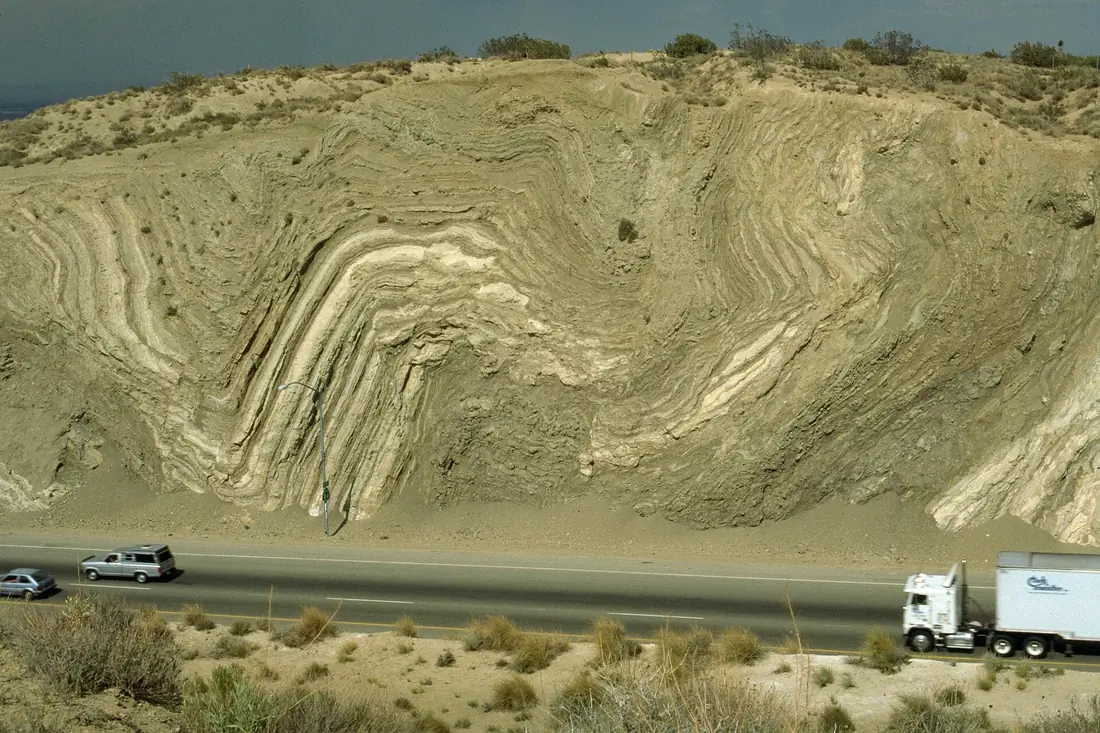
The City of Palmdale's own planning documents say it plainly. Faults in the city include the San Andreas, Nadeau, Cemetery, Little Rock and Leona Avenue, all considered active or potentially active. The draft Safety Element estimates that large, potentially destructive earthquakes occur on the San Andreas about every 130 years, says the fault is estimated capable of magnitude 8.0 or greater, and notes that the city's proximity to it puts Palmdale at the highest level of ground-shaking hazard (Palmdale Safety Element, chapter 13). It also lists liquefaction risk along Little Rock Wash, Anaverde Creek and areas along the fault. None of that damage is covered by a standard homeowners policy.
The offer letter that comes every other year
California requires every insurer that writes residential property insurance to offer earthquake coverage (Ins. Code § 10081). The offer must state, in boldface, that the homeowners policy does not cover earthquake damage, and it must list the dwelling limit, deductible, contents limit, additional living expense limit and estimated premium. If the homeowner does not accept within 30 days of mailing, the insurer may treat the offer as declined, and it must then repeat the offer every other year (§ 10083). After a quake, the questions are practical: was the offer made, was it mailed to the address on the policy, and can the insurer prove it.
Minimum coverage and the 15% deductible ceiling
The law sets a floor. The required offer must cover the dwelling, contents of at least 10% of the covered dwelling loss or $5,000, and at least $1,500 of additional living expense, and the deductible on the dwelling and contents cannot exceed 15% of the dwelling coverage (§ 10089). Insurers may sell broader policies with approval. The California Earthquake Authority, which sells through participating home insurers, offers deductibles of 5%, 10%, 15%, 20% and 25%; the lowest choice drops to 15% only for homes valued over $1 million or homes built before 1980 on a raised foundation without a verified retrofit (California Department of Insurance earthquake guide). Since most Palmdale houses date from 1980 or later, most owners here have had the full range of choices, and the deductible they picked will frame any later dispute.

Fire after the shaking stays with the homeowners policy
Earthquake policies usually exclude fire because the homeowners policy already covers fire damage, even when an earthquake starts the fire. The Department of Insurance says so in its consumer guide. After a quake, a household may therefore be dealing with two carriers on one house: the homeowners insurer for fire, and the earthquake insurer for shaking. We keep the two claims, and the two adjusters, from pointing at each other.
Adjusters trained for earthquake damage
Cracked slabs and racked framing are easy to miss or to blame on old settlement. California requires insurers to train and accredit adjusters in evaluating earthquake damage to standards consistent with the Earthquake Authority's, and to report to the Department any adjuster used who lacks that training, along with the claim number (§ 10089.3). We ask who adjusted the claim and whether that person was accredited.
Ground that moves: liquefaction zones and the land itself
The Safety Element maps liquefaction risk along Little Rock Wash in the eastern part of the city, along Anaverde Creek and in areas along the San Andreas, and it requires a geotechnical study for development in those zones. Liquefaction damages buried utilities and foundations, and it can leave the lot itself unusable. Earthquake policies usually do not cover damage to land, such as openings that develop under it, though limited extra coverage to restore or stabilize land can sometimes be bought (Department of Insurance earthquake guide). After a quake, we separate what happened to the house from what happened to the ground under it, because a carrier will often pay the first and refuse the second, and the geotechnical report filed when the tract was built may show the soil risk was known. If your claim is stuck on amounts after a declared earthquake, the state mediation route is described on our California page.
The disclosure you signed when you bought
Palmdale enforces the Alquist-Priolo Earthquake Fault Zoning Act through development review, requiring geotechnical and fault-rupture studies for proposed development inside the mapped zones. When a home inside a delineated fault zone is sold, the seller or the seller's agent must disclose it, usually on the Natural Hazard Disclosure Statement (Pub. Resources Code § 2621.9; Civ. Code § 1103.2). That form is worth pulling from your escrow file. It shows what you were told, and it can matter when an earthquake loss leads to questions about what the buyer, the agent or the broker who placed the coverage knew.
Can't find your earthquake offer, or think you were never sent one? We can request the insurer's mailing proof and check it against the law. Write to us through the contact page; a phone call to 323-455-2498 works as well.
SR-14 commuters and their auto carriers
Palmdale drives. 86.6% of workers get to work by car, truck or van, 14.2% carpool (California: 9.5%) and only 0.9% use public transit. For a household that puts 25,000 or more miles a year on a car, two parts of the auto policy cause most of the friction: the mileage estimate behind the premium and the valuation of a car that is totaled.

The mileage on your application
Proposition 103 made three factors mandatory, ranked first, in every California auto rate, in this order: driving record, annual miles driven and years of driving experience (Ins. Code § 1861.02(a)). The regulation that carries out the mileage factor lets an insurer require the location of your workplace, the number of days a week you commute, your current odometer reading and the reason any estimate differs from last year's. It also lets insurers use smog-check odometer readings from the Bureau of Automotive Repair or the DMV to test an estimate, and requires them to ask for an updated estimate at least every three years at renewal (10 CCR § 2632.5(c)(2)). A new job across the hill in Santa Clarita or downtown changes the number, and the insurer is allowed to find out.
When the estimate becomes a rescission fight
After a serious crash, some insurers go back to the application. California law lets an insurer rescind a policy for concealment, intentional or not (§ 331), and for a representation that is false on a material point (§ 359). The insurer has to show the misstatement was material, and the mileage rules cut both ways: an estimate is a forecast, the insurer chose what to ask and what records to check, and if it never asked for an update, that is part of the record. The same two sections govern rescission of business policies, including D&O, over application answers.
A total loss valued in a thinner market
When an insurer totals a car, California regulations require a cash settlement based on the actual cost of a "comparable automobile," which means the same make, the same or newer model year, a similar body type and similar options and mileage, available for sale in the local market area within 90 days of the final offer. Every adjustment must be itemized and supportable, the comparables must be identified by VIN, dealer stock number or plate, and the settlement must include taxes and one-time transfer fees (10 CCR § 2695.8(b)). High-mileage commuter cars are where valuation reports go wrong most often. A mileage deduction that is not measured or explained, or comparables pulled from a market nowhere near the Antelope Valley, are grounds to push back.
35 days to say you can't buy a comparable car
In a first-party total loss, the insurer must tell you, when it pays or makes its final offer, that if you report within 35 days that you cannot buy a comparable car for that amount, it will reopen the file. It then has to find you a comparable car at that price, pay the difference on one you found, buy it for you, or invoke appraisal (10 CCR § 2695.8(c)). Keep the dealer listings you find. They are your evidence.
Your shop, not theirs
No insurer may require repairs at a particular body shop. It may recommend one only if you ask or if it has told you in writing that you may choose. Once you pick a shop, it may not steer you elsewhere. If the policy itself recommends a shop and you use a different one, the insurer cannot cut the reasonable repair cost down to what its preferred shop would have charged (§ 758.5).
Who wrote the crash report
The report an adjuster relies on depends on where the crash happened. The CHP Antelope Valley Area patrols about 30 miles of State Route 14 from Acton to the Kern County line, plus roughly 1,400 miles of unincorporated roads, from its office at 2041 West Avenue I in Lancaster, (661) 743-6060 (CHP). Palmdale contracts with Los Angeles County for law enforcement, so crashes on city streets are handled by the Los Angeles County Sheriff's Department Palmdale Station at 750 E. Avenue Q, (661) 272-2400 (LASD). A fault finding in the wrong agency's report, or a report that was never written, changes how a carrier handles collision and liability claims.
Totaled on the 14 and the offer won't buy a comparable car? The 35-day window is short. Upload the valuation report on our contact page while there is time to answer it, or ring 323-455-2498.
Inside the Plant 42 fence: coverage for contractors and suppliers
Air Force Plant 42 began as the Palmdale Airport, leased by the Army Air Corps in 1942, and became Air Force Plant 42 in 1953. According to the Air Force Test Center, it is owned by Wright-Patterson Air Force Base, operated as a component of Edwards Air Force Base, and has 3,200,000 square feet of industrial space on more than 5,800 acres between Avenue P and Columbia Way. The contractors most associated with it are Boeing, Lockheed Martin and Northrop Grumman, which build, maintain and modify military aircraft there, and contractors either lease space from the Air Force under a government-owned, contractor-operated arrangement or own their buildings. The Test Center calls it the Antelope Valley's second-largest employer (Air Force Test Center). For an insurance lawyer, the important point is that work on a government installation brings federal contract clauses into private policies.

The clause that requires notice before work starts
Federal fixed-price contracts above the simplified acquisition threshold that involve work on a government installation generally include FAR clause 52.228-5 (FAR 28.310). The clause requires the contractor to carry the insurance listed in the contract for the whole performance, to notify the contracting officer in writing before starting work that the insurance is in place, and to have the policies endorsed so that cancellation or a material change adverse to the government does not take effect until the longer of the period state law sets or 30 days after written notice to the contracting officer (FAR 52.228-5). If a carrier cancels mid-contract without the required endorsement, a supplier can lose both the contract and its coverage at once.
The minimum limits a contracting officer sets
Where the contract calls for them, the federal floor is general liability for bodily injury of at least $500,000 per occurrence; automobile liability of at least $200,000 per person and $500,000 per occurrence for bodily injury and $20,000 for property damage; and, when aircraft are used, aircraft public and passenger liability with passenger coverage of at least $200,000 times the number of seats (FAR 28.307-2). Primes often require far more. When a loss exceeds what the subcontractor bought, the coverage question becomes a contract question too.
Flow-down to every subcontractor on site
Paragraph (c) of the clause makes the prime insert the same requirement in subcontracts for work on the installation, make subcontractors carry the required insurance, keep copies of their proof of insurance and produce those copies to the contracting officer on request. A Palmdale subcontractor's policy may therefore be read by three parties after a loss: its insurer, the prime and the government.
A certificate is not the policy
California requires every certificate or verification of insurance given in place of the policy to say, in substance, that it is not a policy and does not amend, extend or alter the coverage, whatever the underlying contract requires (Ins. Code § 384). A prime that accepted a certificate listing it as "additional insured," and a subcontractor that thought its broker had added the endorsement, can both discover after a loss that the policy says something else. We read the endorsements themselves, not the certificate.
Indemnity clauses California will not enforce
Construction and facility-work contracts often contain broad promises to indemnify. California voids, as against public policy, any clause in a construction contract that makes one party indemnify the other for the other's sole negligence or willful misconduct, or for design defects it furnished (Civ. Code § 2782(a)). For private-owner contracts signed on or after January 1, 2013, clauses shifting the owner's active negligence to contractors are unenforceable to that extent (§ 2782(c)). Section 2782(a) also says it does not affect the validity of insurance contracts issued by admitted insurers, so the policy and the indemnity clause have to be read separately: the clause may fail while the insurance requirement survives.
Prime contractor demanding defense, and your insurer won't answer the tender? We work through the subcontract, the endorsements and the certificate together. Start with the contact form and attach the subcontract; 323-455-2498 if a deadline is close.
When the broker, not the insurer, is the problem
Sometimes the policy is clear and it simply does not cover what the business asked for. Then the claim is against the broker who placed it, and that claim runs on its own, shorter clock.
An aircraft-parts maker's earthquake gap
The California case on this point reads like a Palmdale story set in Chatsworth. Hydro-Mill, a manufacturer of aircraft parts for the military and private aircraft builders, asked its broker for earthquake coverage at its three locations. The policy that was placed left out two leased sites. The Northridge earthquake struck on January 17, 1994, and two days later the broker admitted the mistake. The insurer offered $270,000 on December 9, 1994, making clear that losses at the leased sites were excluded. The company won at trial, and the Court of Appeal reversed: the suit was filed on February 18, 1997, too late (Hydro-Mill Co. v. Hayward, Tilton & Rolapp Ins. Associates (2004) 115 Cal.App.4th 1145).
Two years, and the clock does not wait for the insurer
The court held that a claim that a broker failed to obtain requested coverage is a professional negligence claim governed by the two-year limit in CCP section 339, and that relabeling it as breach of fiduciary duty or oral contract did not change that. The limit began to run when the insurer made clear the losses were excluded, and it was not paused while the insurer kept processing the claim. Rules that pause a policyholder's deadline to sue the insurer do not protect the claim against the broker. If a Palmdale business learns its carrier will not pay because of how the policy was placed, the broker deadline is already running.
What shows what you asked for
Broker cases are won on paper made before the loss: the request for coverage, the broker's proposal, emails about which locations, vehicles or contracts were to be covered, the binder, and any certificate the broker issued. Collect these as soon as a gap appears, and before anyone asks the broker to "fix" the policy after the fact.
The records that decide Palmdale insurance cases, and where they are kept
Most of the disputes on this page are decided by a few documents, held by people other than the policyholder. This is how they go missing, and what we do about it.
| Record | Who holds it | What goes wrong | What we do |
|---|---|---|---|
| Building permit history for a roof, water heater or repipe | City of Palmdale | The adjuster dates the roof from the year the house was built, and nobody checks | Request the permit file under the Public Records Act and set the replacement date against the denial |
| Earthquake coverage offer and mailing proof | The homeowners insurer | After a quake, the owner can't remember being offered coverage, and the insurer says it was declined by silence | Demand the offer as mailed, the address used and the date, and compare them with sections 10081 and 10083 |
| Natural Hazard Disclosure Statement | The escrow file from the purchase | Fault-zone or flood-zone disclosure is lost in a closing binder | Pull it at intake; it shows what the buyer and the agents knew |
| Right to Repair notice, builder acknowledgment and inspection record | Owner and builder | A "customer care" ticket is treated as the notice, and the statutory clock is lost | Serve a section 910 notice by certified mail and calendar the 14-day, 30-day and section 927 dates |
| Comparable-vehicle report on a totaled car | The auto insurer or its valuation vendor | Comparables come from outside the local market, or a mileage deduction is not itemized | Check each comparable's VIN or stock number, then use the 35-day reopen notice with our own listings |
| Crash report | CHP Antelope Valley Area (SR-14) or LASD Palmdale Station (city streets) | The report is requested from the wrong agency, or not at all | Identify the agency from the crash location and order the report early |
| Subcontract insurance schedule, endorsements and certificates | Prime contractor, subcontractor and broker | A certificate is read as if it were the policy | Compare the endorsements with the FAR clause and the subcontract before tendering |
| Broker request and placement emails | The business and its broker | No one keeps the email that asked for the missing coverage | Preserve the file at once and calendar the two-year broker limit from the first clear denial |
The lawyers who would handle a Palmdale coverage dispute
Novian & Novian practices from one office, at 1801 Century Park East, Suite 1201, Los Angeles, CA 90067. Palmdale clients usually start by phone or video and send documents by email; we travel for inspections, depositions and hearings.

Farhad Novian, managing partner and author of this page
Farhad co-founded the firm with his brother in Century City in 1988, and insurance litigation is among the practice areas listed on his profile. Since joining the California Bar in 1985 (State Bar No. 118129), he has represented entrepreneurs and privately held companies in corporate, labor and employment, healthcare and complex business disputes, and he has advised and represented Palmdale businesses and individuals in a broad range of corporate and business matters. He was admitted in 1985 to all four federal district courts in California and to the Ninth Circuit, which matters when a contractor's dispute is moved to federal court.

Matthew Novian, partner and reviewer of this page
Matthew reviewed the coverage law on this page. Coverage disputes sit inside his healthcare litigation practice, where he also sues commercial health insurers that underpay providers. He took his J.D. at UCLA in 2018 (State Bar No. 324144); his federal admissions include the Central District, whose Western Division sits in Los Angeles, plus the Northern and Eastern Districts and the Ninth Circuit.
Client comments on Farhad Novian's team, in their own words
"I had a hard time finding a lawyer I could trust for a privacy issue. Farhad Novian and his team were beyond helpful, responsive and trustworthy. They gave me piece of mind and helped settle my case in a timely manner. I highly recommend Farhad Novian and his team."
Christina
"I have been a client of Novian & Novian for over 10 years and consider Farhad Novian as a highly experienced business and corporate litigator. His extensive legal experience and considerable success allows him to apply the most effective legal strategy, resulting in a successful outcome on a wide spectrum of litigation matters."
Rick
"I cannot offer a more resounding recommendation for Novian & Novian or be more grateful to Farhad Novian & his staff for their exemplary work on my behalf. I am forever grateful and unequivocally recommend this exceptional firm."
Tim B.
These comments describe the clients' experience of working with the firm; they do not describe insurance cases, and each matter turns on its own facts. Past results do not guarantee future outcomes.
Palmdale insurance questions, answered with the code section
Which court would hear my lawsuit against an insurance company?
A state-court case from Palmdale belongs to the Los Angeles County Superior Court; which Antelope Valley courthouse hears it, and how, is covered on our Lancaster page. When the dispute grows out of work at Plant 42, the federal contract clauses described above become part of the evidence wherever the case is filed.
Can my auto insurer charge me more after the fact because I drove more miles than I estimated?
Not unless it told you before the policy started. The mileage regulation bars insurers from adjusting premiums retroactively or prospectively on actual miles driven unless notice was given before the policy's effective date. Before renewing, the insurer must send written notice highlighting the mileage figure on the expiring policy and the figure used for renewal (10 CCR § 2632.5(c)(2)).
Can I keep my car after the insurer declares it a total loss?
Yes. If you keep it, the settlement still includes sales tax on a comparable car, reduced by the tax on the salvage value, plus the fees to move your car to salvage status, and the insurer may deduct a salvage value based on what a salvage pool, auction or dismantler would pay. You can ask who that buyer is. The insurer must tell you in writing that the DMV has to be notified, that salvage status may affect resale and insured value, and that you may seek a refund of unused license fees (10 CCR § 2695.8(b)(1)(A)).
I had a crash in a government vehicle while on duty. Can my personal auto premium go up?
For many public-sector drivers, no. California bars insurers from raising a private auto premium because a peace officer, CHP officer or firefighter had an accident in an emergency vehicle or employer-provided vehicle on duty, and gives the same protection to federal officers and federal customs agents who crash an official government vehicle on duty (Ins. Code § 488.5). With 17.6% of employed Palmdale residents working for government, this comes up more here than in most cities.
My earthquake renewal looks different from last year's. What does the insurer owe me?
If a renewal reduces or substantially changes the earthquake coverage, the insurer must send a stand-alone notice in 14-point bold type saying so, with a summary of the changes. You may ask for a sample copy of the new policy, which must be mailed or delivered within 14 days, but asking does not move the renewal date (§ 10086).
I rent out a house in Palmdale. Does the earthquake offer apply to me?
It can. The earthquake chapter covers individually owned residential buildings of up to four units, including those rented out for residential use (§ 10087). For a house you don't live in, you may waive the additional living expense coverage, but only in writing after the insurer tells you it is offered (§ 10089(d)).
A county storm drain or other public facility sent water into my house. What deadline applies?
A claim against a public entity must come first, and the deadline depends on what was damaged. Claims for injury to a person or to personal property, such as furniture and belongings, are due within six months. Claims for damage to the house itself fall under the one-year period for other causes of action (Gov. Code § 911.2). Your own insurer may also pay and then pursue the agency. Tell it about the public claim.
Can I record the builder's inspection of my new home?
Yes. On request, the builder must let you or your lawyer observe the inspection and record it on video, electronically or by photograph. The builder must also show written proof of liability insurance for the inspection, pay for any damage it causes, and restore the property within 48 hours of testing. Nothing found during either side's inspection can be used to support a spoliation defense later (Civ. Code § 916(a), (b)).
Does reporting the problem through my builder's customer care portal count as the legal notice?
No. You may use the builder's warranty or customer service process, but that request does not satisfy the written notice the Right to Repair Act requires before a lawsuit (Civ. Code § 910(b)). Send the statutory notice as well.
Can the insurer give me a replacement car instead of a check?
In a first-party total loss it may offer a specific comparable vehicle, with taxes, license and transfer fees paid and nothing owed beyond your deductible. The car must be in as good or better overall condition than yours and available for inspection within a reasonable distance of your home, and the offer and any rejection must be documented in the claim file (10 CCR § 2695.8(b)(5)). A car parked in Orange County is a fair thing to question.
Is a verified-mileage or pay-per-mile auto policy allowed in California?
Yes. The Insurance Commissioner allows insurers to rate the mileage factor on verified actual miles instead of an estimate. An insurer that offers both methods may require you to use verified mileage for every vehicle on the policy if you choose it for one (10 CCR § 2632.5(c)(2)(F)). For a long-distance commuter it rarely saves money; for a second car that stays home it may.
My house is more than 10 years old, but the builder hid the defect. Is the claim gone?
Not necessarily. The general 10-year limit on latent construction defects in CCP section 337.15 does not apply to actions based on willful misconduct or fraudulent concealment (§ 337.15(f)). Those claims are harder to prove and turn on what the builder knew, so the original plans, inspection records and sales materials matter.
Our company works at Plant 42. What employer's liability coverage does the FAR expect?
Contractors must comply with federal and state workers' compensation laws, and the FAR calls for employer's liability coverage of at least $100,000, except in states with exclusive state funds that don't let private carriers write workers' compensation (FAR 28.307-2(a)). California employers may insure with any carrier authorized to write workers' compensation in the state, or self-insure with the Director of Industrial Relations' consent (Lab. Code § 3700), so the exception does not apply here. The subcontract may require more.
Ask a Palmdale insurance litigation lawyer to read the policy against what happened
A denial, a valuation report or a silent carrier is not the last word. Put the papers in front of us and you will hear back on three points: the California rule that applies, the date that matters most, and whether your quarrel is really with the carrier, the builder or the broker. Reach us through the contact page or by phone at 323-455-2498.


