Quick answer
Start with the at-fault driver's insurance company, since the motorist who hits you from behind is usually responsible, but tell your own insurer too. Your coverage can help with an uninsured motorist or quicker repair payment. Fault is never automatic, and photographs of vehicle positions and skid marks plus a police report can defeat a claim that you stopped suddenly.
If someone rear-ends you, you should usually call the party’s insurer first because the rear driver is often at fault under liability coverage, though you should also notify your own insurer within 24 to 48 hours for insurance purposes. Check for injuries, seek medical care, call 911 if needed, and document vehicle damage, skid marks, and his or her front vehicle. If you live in a no-fault insurance state, promptly notifying both insurance providers can help avoid issues that may constitute noncompliance with your policy. On a more positive note, many drivers resolve rear-end claims successfully.
At Novian & Novian, we represent injured clients on a contingency fee basis, so you pay no attorney fees unless we recover compensation for you. Our attorneys have more than 35 years of experience handling catastrophic injury cases, and have secured life-changing settlements for clients. Our firm highlights more than $1 million recovered in settlements to date. If you suffered an injury due to negligence, contact us today for a free consultation.
This post serves as a guide on the steps for accident victims to take immediately after a rear-end collision.
Table Of Contents
- What Is a Rear-End Collision?
- The S.A.F.E. Method After a Rear-End Crash
- How Do You File a Car Accident Claim After Being Rear-Ended?
- What Are Your Insurance Options When You Are Rear-Ended?
- If Someone Rear-Ends You, Whose Insurance Do You Call?
- How Do Insurance Claims Work After a Rear-End Collision?
- What Happens if the At-Fault Driver Is Uninsured or Underinsured?
- How Can You Simplify the Claims Process?
- What if the At-Fault Driver’s Insurance Denies My Claim?
- Can Your Insurance Rates Increase If You Are Not at Fault?
- How Can Legal Help Assist With Rear-End Accident Claims?
- Need a Personal Injury Lawyer?
- Frequently Asked Questions
What Is a Rear-End Collision?
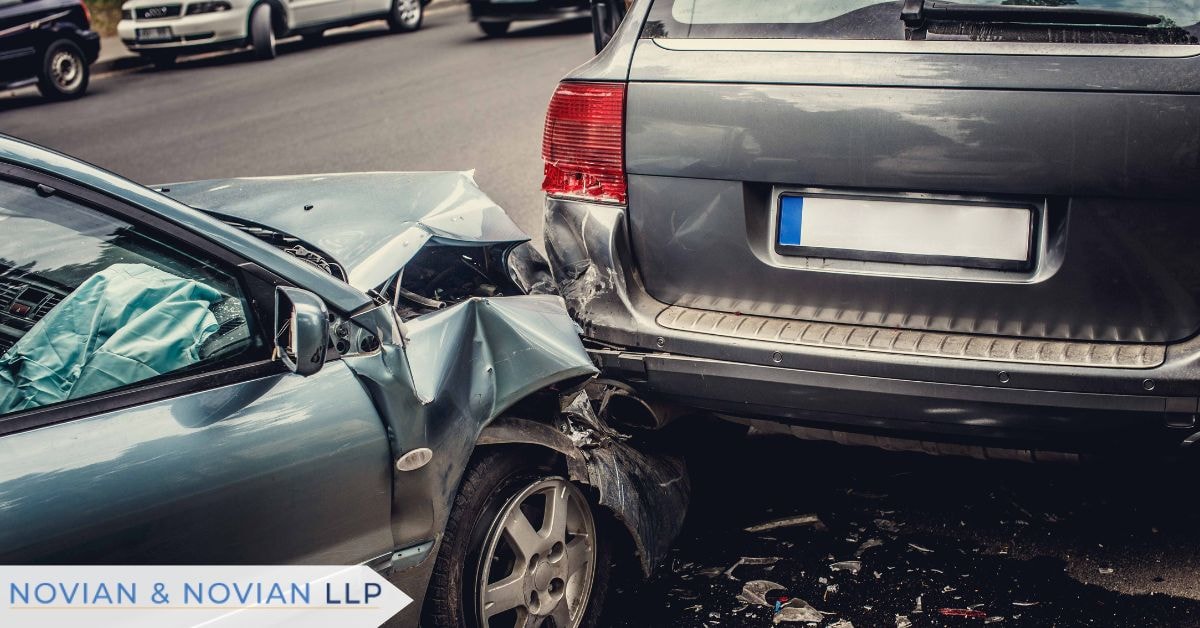
A rear-end collision occurs when one vehicle crashes into the back of another. According to the National Highway Traffic Safety Administration, rear-end collisions account for nearly 30% of all car accidents annually. These accidents are among the most common types of car accidents and often result from distracted driving, sudden stops, or a failure to maintain a safe following distance. Rear-end collisions can range from minor fender benders to serious crashes, causing significant damage.
Who Is Usually at Fault?
In most cases, the rear driver is considered at fault in a rear-end collision. This principle is based on the common expectation that drivers should maintain a safe following distance to avoid hitting the vehicle in front of them. Traffic laws emphasize the need for this safe distance to ensure that drivers can stop in time, even during sudden traffic changes.
While the rear driver is usually at fault, there are exceptions where they might not bear the responsibility. For instance, if the front driver makes an abrupt and unnecessary stop, known as a brake check, or stops suddenly without a valid reason, the fault could shift to them. Similarly, unforeseen circumstances like sudden mechanical failures, multi-car pile-ups, or collisions caused by external factors can complicate fault determination.
In our experience, insurance companies and legal representatives often conduct thorough investigations to determine liability. In our experience representing injury victims, disputes over liability frequently arise when drivers delay reporting the collision, fail to preserve photographs, or give recorded statements before understanding the full extent of their injuries.
Although rear drivers are responsible in most rear-end collisions, fault is never automatic. Insurance companies evaluate the specific facts of every accident, including traffic conditions, witness statements, vehicle damage, road hazards, and any available video footage before making a final liability determination.
How Evidence Won a Client’s Compensation
A client came to our office after being rear-ended at a stoplight. The other driver’s insurer initially argued that the client had stopped suddenly and attempted to reduce liability. Fortunately, the client had taken photographs of the vehicle positions, roadway, and visible skid marks before leaving the scene, and the police report supported the sequence of events.
Using that evidence, we were able to challenge the insurer’s position and pursue compensation for the client’s injuries and vehicle damage. Every case is different, and prior results do not guarantee future outcomes, but situations like this illustrate why preserving evidence immediately after a collision can make a meaningful difference.
The S.A.F.E. Method After a Rear-End Crash
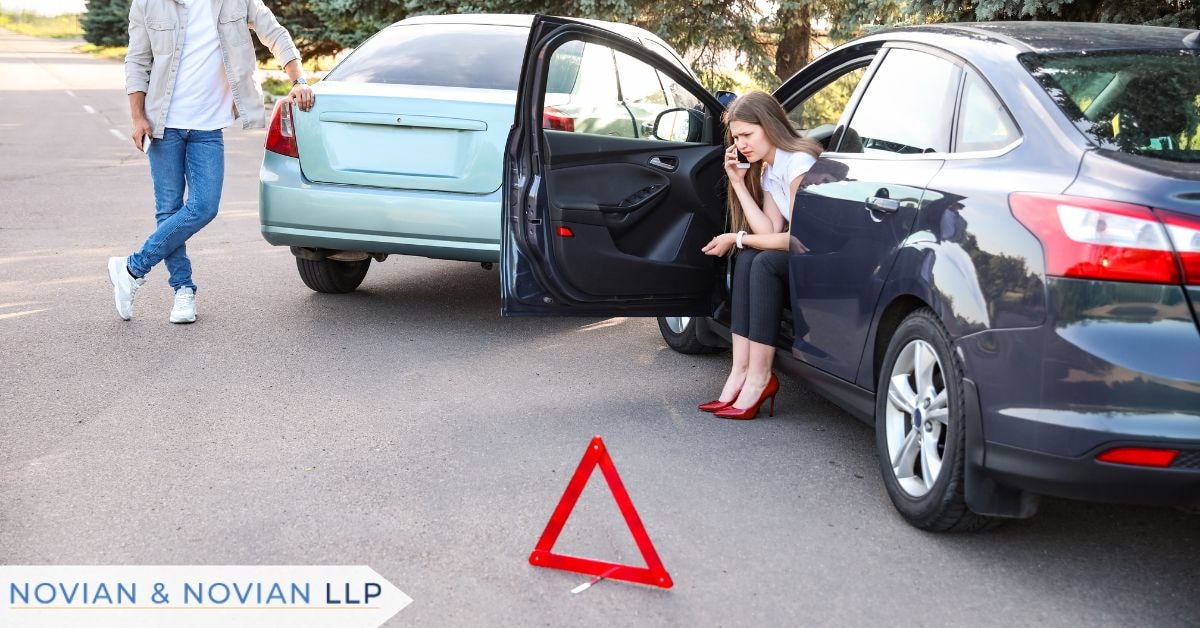
In our experience, the first few minutes after a rear-end collision are often the most confusing. To help people stay focused and avoid common mistakes, we recommend following the S.A.F.E. Method, a simple framework that prioritizes safety, documentation, and protecting your insurance claim.
- S – Secure the scene. Move vehicles if safe, turn on hazard lights, and call 911 if needed.
- A – Assess injuries. Check yourself and passengers for pain, dizziness, or delayed symptoms.
- F – File evidence. Photograph damage, gather witness information, and request a police report.
- E – Engage insurers carefully. Notify your insurer promptly and avoid recorded statements until you understand your injuries.
A rear-end collision can leave you shaken and uncertain about what to do next. The actions you take in the minutes that follow can affect your safety, medical recovery, and ability to recover compensation through an insurance claim. Staying calm and following a few important steps can help protect both your health and your legal rights.
“Many people assume the insurance company will automatically accept fault after a rear-end collision, but that is not always how claims work,” says Farhad Novian, trial attorney at Novian & Novian. “The strongest claims are usually the ones supported by photographs, prompt medical treatment, and thorough documentation from the very beginning.”
How Do You File a Car Accident Claim After Being Rear-Ended?
Filing a car accident claim follows a clear sequence. Move through it in order and keep records at each step. Acting promptly can help preserve important evidence and prevent unnecessary delays in the claims process. Keeping copies of all documents, receipts, photos, and communications with insurers will also make it easier to support your claim if questions or disputes arise.
- Step 1 – Check for injuries and call 911. Get medical help first. A police report also creates an official record of the crash.
- Step 2 – Document the accident scene. Photograph both vehicles, the road, and the damage. Note the time, location, and weather. Strong documentation supports your car insurance claim later.
- Step 3 – Exchange information with the other driver. Collect names, license numbers, plates, and policy details. Identify the insurance companies involved before you leave the scene.
- Step 4 – Report the crash to the at-fault driver’s insurer. Because the rear driver usually carries fault, you file against the defendant’s insurance company. This is the standard route for most car accident claims.
- Step 5 – Notify your own insurer too. Tell your auto insurance carrier what happened, even when the other driver was at fault. Your policy may cover repairs or medical costs while liability is sorted out.
When do you call the other driver’s insurer versus your own? Call the at-fault carrier to recover for damage they caused. Call your own carrier when you need faster repair payment, or when the other driver has no insurance.
What Are Your Insurance Options When You Are Rear-Ended?
Several types of coverage can apply after a rear-end crash. Which one pays depends on fault and on your own policy. Repair costs and medical bills are the most pressing concerns after a crash, so knowing your options helps you file with the right carrier. Liability insurance covers damage the at-fault driver caused. The other driver’s liability policy pays for your repairs and injuries, up to their maximum limits. Most car accident victims receive payment from this source.
Collision coverage pays for your vehicle repairs regardless of fault. You file with your own insurer, then they may recover from the at-fault carrier. This route can speed up repairs. Rental reimbursement coverage can also pay for car rentals while your vehicle is in the shop. Medical payments coverage, often called MedPay, covers medical bills for you and your passengers. It applies no matter who caused the crash.
When do you call the at-fault driver’s insurer versus your own? Call the defendant’s insurance company to recover for damage they caused. Call your own carrier for collision repairs, MedPay, or when the at-fault driver is uninsured. Uninsured motorist coverage steps in when the other driver has no liability policy.
Keep your insurance agent informed throughout. Liability carriers review fault before they pay, so clear documentation speeds the decision. A well-documented file helps your agent push for a reasonable amount. The table below compares the main coverage types. Use it to see who pays and when to call after a rear-end crash.
| Insurance Type | Who Pays if You’re Rear-Ended? | When to Call |
|---|---|---|
| Liability Insurance | The at-fault driver’s insurance company pays for your vehicle damage, medical expenses, and other covered losses. | Contact the at-fault driver’s insurer to open a claim for property damage and any injuries. |
| Collision Coverage | Your own insurance company pays for repairs to your vehicle, subject to your deductible, regardless of who caused the accident. | Contact your own insurer if you want to begin the repair process immediately or if fault is still being determined. |
| Medical Payments (MedPay) | Your own MedPay coverage pays eligible medical expenses for you and your passengers, regardless of fault. | Contact your own insurer as soon as you or your passengers receive medical treatment after the accident. |
Medical payments coverage and bodily injury coverage work differently. To see how they compare, read our explainer on auto insurance medical payments versus bodily injury. Major insurers make claims filing straightforward. A large carrier like GEICO runs a dedicated claims line for reporting a crash. Contact your carrier’s published claims number to open the file.
If Someone Rear-Ends You, Whose Insurance Do You Call?
A rear-end car accident can leave you focused on your injuries, vehicle damage, and the claims process. Drivers must maintain a safe following distance to avoid collisions, so the rear driver is often considered at fault. After moving to a safe location and ensuring everyone’s well-being, you should gather information.
This includes insurance details, contact details, the other driver’s license plate number, and photos showing vehicle positions, road conditions, and nearby traffic signs. Whether you contact your own insurer or the other driver’s insurance company depends on the circumstances of the crash and the coverage available.
When to Contact Your Own Insurance Company
Even if you were not at fault, you should notify your own insurance company promptly after a rear-end collision. Doing so allows your insurer to document the accident, explain your policy benefits, and provide coverage for medical expenses, vehicle repairs, or a rental car if the at-fault driver’s insurer delays or disputes payment. Your insurer can also communicate with insurance adjusters on your behalf and pursue reimbursement from the responsible driver’s carrier when appropriate.
When reporting the crash, be prepared to provide the time and location of the accident, a description of what occurred, the other driver’s insurance information, contact details, license plate number, police report number, and photographs of the damage and accident scene. Providing complete documentation early can help streamline the claim process and reduce unnecessary delays.
When to Contact the Other Driver’s Insurance Company
In most rear-end accidents, the at-fault driver’s insurance company is responsible for paying for property damage, medical bills, lost income, and other covered losses. Filing a claim with their insurer is often the quickest way to recover these damages, particularly when liability is clear and the rear driver admits fault.
However, some collisions involve shared responsibility. In states that follow comparative or contributory negligence rules, fault may be divided based on the facts of the crash. For example, a lead driver who stops abruptly without reason or fails to signal properly may bear some responsibility, which can reduce the amount recoverable from the other driver’s insurance company. In these situations, insurers and their adjusters typically conduct a detailed investigation before determining how much compensation is available.
How Do Insurance Claims Work After a Rear-End Collision?
Filing a claim after a rear-end crash usually runs on two tracks. You open a collision claim either with the at-fault driver’s insurer or with your own insurer, and sometimes both at once. The insurer assigns a claim number and an adjuster, then investigates the facts. Keep your claim number and policy number handy for every call. Insurance companies may take up to 15 days to contact you after you report, so do not read silence as a denial.
You will spend time on the phone. Most large insurers run dedicated claims lines. The GEICO claims phone number, for example, reaches a 24/7 team that issues a claim number on the first call. We have pulled the GEICO claim number and other common insurer contacts into the table below. The numbers below are the main claims and roadside lines for several large US insurers, taken from each company’s official site. Insurers change these from time to time, so confirm the number before you call.
| Insurance Company | Claims Phone Number | Roadside Assistance Number | Claims Website |
|---|---|---|---|
| GEICO | 1-800-841-3000 | 1-800-424-3426 | geico.com/claims |
| State Farm | 1-800-732-5246 (800-SF-CLAIM) | 1-877-627-5757* | statefarm.com/claims |
| Progressive | 1-888-671-4405 | 1-888-671-4405 (same line or mobile app) | progressive.com/claims |
| Allstate | 1-800-255-7828 (1-800-ALLSTATE)* | 1-877-597-3393* | allstate.com/claims/file-track |
| USAA | 1-800-531-8722 (800-531-USAA) | 1-800-531-8555* | usaa.com/support/insurance/claims |
| Liberty Mutual | 1-800-225-2467 (800-2CLAIMS) | 1-877-762-3101 | libertymutual.com/claims-center |
Do not give a recorded statement before you understand your injuries, because adrenaline and delayed symptoms can lead you to understate them. Keep every document, including the claim number, the repair estimates, and your medical records. Aim for a fair settlement that covers all of your costs, not the first figure an adjuster floats. Also, if the insurance company denies the claim or comes back low, ask for the reason in writing and consider talking to a lawyer.
What Happens if the At-Fault Driver Is Uninsured or Underinsured?

Sometimes, you may find yourself in a car accident with an at-fault driver who is either uninsured or underinsured. In our experience, uninsured motorist coverage is designed to protect you when the at-fault driver has no insurance. This type of coverage typically kicks in to cover medical expenses, lost wages, and damages to your vehicle that the at-fault driver’s insurance would have paid.
Underinsured motorist coverage, on the other hand, applies when the at-fault driver’s policy limits are insufficient to cover the full extent of your damages. In these cases, your own insurance can step in to bridge the gap between the at-fault driver’s coverage and your actual costs.
We have found that the primary difference between uninsured and underinsured motorist coverage lies in the at-fault driver’s level of insurance. If the at-fault driver has no insurance at all, uninsured motorist coverage applies. If the at-fault driver has some coverage but not enough to fully compensate you, underinsured motorist coverage will help cover the remaining costs.
There are also optional insurance policies, such as comprehensive and collision coverage, that can provide additional financial protection in the event of an accident with an uninsured driver. Comprehensive coverage pays for damages to your vehicle caused by non-collision events like theft or natural disasters, while collision coverage applies to damages resulting from an accident, regardless of fault.
Having these policies in place ensures that you can recover financially even if the at-fault driver is uninsured or underinsured. While these coverages may increase your premium, they offer invaluable peace of mind, especially if you live in an area where uninsured drivers are common.
How Can You Simplify the Claims Process?

To simplify the claims process, you should keep detailed records of all communications. This includes communication with insurers, repair shops, and even medical providers. This documentation will support your claim and help avoid misunderstandings.
Understanding the details of your policy is equally important. You need to familiarize yourself with the types of coverage you have, such as collision, medical payments, and liability insurance. Knowing what your policy covers will help you manage expectations and take appropriate steps when filing a claim.
If the claims process becomes overwhelming or if disputes arise, consulting with a personal injury attorney may be beneficial. An experienced attorney can guide you through the process, negotiate with insurance companies, and ensure that you receive the compensation you deserve.
What if the At-Fault Driver’s Insurance Denies My Claim?
If the at-fault driver’s insurance denies your claim, you still have options. Start by reviewing the denial letter carefully to understand the reasons for the refusal. Sometimes, claims are denied due to a lack of evidence, policy exclusions, or disputes over liability. Gathering additional evidence, such as witness statements or expert opinions, can strengthen your case.
In some cases, you may need to file a claim with your own insurance under your uninsured or underinsured motorist coverage. If negotiations with the insurer fail, pursuing legal action may be necessary. Hiring a personal injury attorney can help ensure that your rights are protected and that you recover the compensation you’re entitled to.
Can Your Insurance Rates Increase If You Are Not at Fault?
A not-at-fault rear-end crash can still show up on your record, and drivers often ask whether it will cost them. The honest answer is that it depends on your state and your insurer. Some states limit what carriers can do. A handful, including California, bar insurers from raising your rates solely because you were in a crash that was not your fault. Most states have no such rule, so an insurer is allowed to weigh any claim into your premium, even a not-at-fault one.
Rates usually hold steady when fault is clear, the other driver is identified and insured, and you file only a third-party claim against them. Rates are more likely to move when you use your own collision coverage, when fault is shared or unclear, or when you file several claims in a short span.
You can protect your insurance history. Report the crash promptly, document that the other driver caused it, and let your insurer pursue the at-fault carrier so the loss lands on the right policy. If your premium jumps after a clearly not-at-fault crash, ask your insurer to explain it in writing, and shop other carriers. If your costs run well beyond what insurance will pay, it also helps to understand how much you can sue someone for a car accident.
How Can Legal Help Assist With Rear-End Accident Claims?
An insurance claim can turn complicated fast, especially with injuries. A personal injury lawyer manages the process so you can focus on recovery. Here is how legal help works. An attorney handles the insurance companies involved on your behalf. They gather evidence, calculate your damages incurred, and negotiate with the liability carriers. Insurers often open with a low figure, and a lawyer pushes for a reasonable amount. Past results do not guarantee future outcomes.
A lawyer also proves fault when the other driver disputes it. Although the rear driver is at fault in the vast majority of these crashes, some cases get contested. Our overview of when a rear-end collision is not your fault in California explains how fault is decided.
Novian & Novian, LLP represents injured clients across Los Angeles. We handle cases on a contingency fee basis. If we do not recover for you, you do not pay a fee. The initial consultation is free, with no upfront cost. Past results do not guarantee future outcomes. Call (323) 455-2498 or (310) 553-1222 for a free case evaluation.
Need a Personal Injury Lawyer?
Many articles simply advise drivers to exchange insurance information and call the other driver’s insurer. This guide goes further by explaining how liability investigations actually work, when your own insurance may provide faster benefits, how uninsured motorist coverage applies, and the practical steps our attorneys have found help preserve stronger injury claims.
At Novian & Novian, our team of personal injury attorneys is dedicated to delivering results through strategic advocacy that protects your interests. We also provide personalized attention to each case and strive to build a relationship based on trust and transparency with all clients. Schedule a free consultation with us today!
Frequently Asked Questions
A few questions come up again and again after a rear-end crash. We did our best to answer them.
Should I Contact My Insurance if I Am Not at Fault?
Yes, notify your own insurer even when the other driver caused the crash. Most policies require prompt notice, and your coverage may help while liability is resolved.
How Does Insurance Work if You Are Rear-Ended?
The at-fault driver’s liability insurance usually pays for your repairs and injuries. Your own collision or MedPay coverage can also apply, depending on your policy.
Do I Call the Other Person’s Insurance Company if They Hit Me?
Yes, you file a claim with the at-fault driver’s insurer to recover for the damage. Report the crash, provide your documentation, and keep a copy of every exchange.
Do I Need to Tell My Insurance Company if Someone Hits Me?
Yes, report the crash to your own insurer promptly. Failing to notify them can create coverage problems, even when you are not at fault.
I Got Rear-Ended. What Do I Do First?
Check for injuries and call 911 if anyone is hurt. Then exchange license, registration and insurance details with the other driver, which California Vehicle Code § 16025 requires, and photograph both cars. If anyone was injured, a report to the CHP or local police is due within 24 hours. Our guide on what to do when you get rear-ended walks through the first day step by step.