Quick answer
Stay calm, document each incident, and meet privately to hear the employee out before agreeing on a resolution plan with regular follow-up. Discipline or termination should come last, backed by records. California's FEHA and its retaliation protections mean a worker who reports harassment, wage problems or safety issues cannot be demoted or fired for speaking up.
Many small businesses struggle with how to handle a disgruntled employee in California, particularly because California law and employment law impose strict rules around workplace conduct, termination, and discrimination. In our experience working with employers, the first step is recognizing the employee’s concerns, assessing the situation carefully, and responding with a structured process that protects your organization, supports a respectful workplace culture, and helps maintain legal compliance. When handled correctly, many situations involving unhappy employees can be resolved through thoughtful conflict resolution, communication, and clear company policies.
Maintaining a positive work environment and effectively handling disgruntled employees are essential for any business. With over 35 years of experience, Novian & Novian specializes in compliance and legal representation for employers. Our experienced employer defense attorneys can help you navigate complex employment issues, ensuring your company remains compliant and protected. Schedule a free consultation with us today!
In this blog, we will shed more light on the issue of disgruntled employees and possible causes. We will also talk about how to handle a disgruntled employee and how to avoid possible situations.
Table Of Contents
- What is a Disgruntled Employee?
- Legal Considerations When Handling Disgruntled Employees in California
- How to Handle a Disgruntled Employee
- Handling Escalations with Employees
- Types of Escalating Behaviors and Recommended Employer Responses
- Preventing Future Issues with Employees
- Need to know how to Handle a Disgruntled Employee?
- FAQs
- What Are My Rights As An Employer When Dealing With a Disgruntled Employee in California?
- How Can I Protect My Business From Retaliation Claims?
- When Should I Involve Legal Counsel With a Disgruntled Employee?
- What Documentation is Required To Defend Against Wrongful Termination Claims?
- Are There Alternative Dispute Resolution Options in California Employment Conflicts?
What is a Disgruntled Employee?

A disgruntled employee is an individual who is unhappy or dissatisfied with their job or work environment. This discontent can stem from various sources, leading to a range of negative behaviors that can impact both their own productivity and the overall workplace atmosphere.
That said, when frustration continues without proper conflict resolution, it can begin affecting the wider workplace. For instance, a disgruntled worker may begin filing repeated complaints, expressing hostility toward management, or accusing the organization of discrimination or unfair treatment under California law. In some cases, unresolved frustration may even lead to allegations of a hostile work environment or other employment law claims, which is why it is crucial for employers to respond carefully and ensure compliance with the law.
As Sean Bozarth, Senior Counsel at Novian & Novian, explains: “A disgruntled employee isn’t always someone acting maliciously, but often an employee who feels their concerns are being ignored. The key for employers is to address issues early, document incidents, and follow a clear process that complies with California employment law.”
Typically, the signs of a disgruntled employee become visible through changes in behavior or conduct. For example, a previously engaged employee may begin spreading negativity about the company, criticizing management, or making derogatory remarks about co workers or customers. Other warning signs may include increased absenteeism, withdrawal from team collaboration, confrontational communication, or declining productivity and job performance.
In some cases, we have seen situations where a frustrated worker starts escalating minor complaints into formal claims, particularly if they feel ignored. For instance, one employer we advised noticed an employee who repeatedly missed deadlines and began openly criticizing leadership in front of other employees and even a customer during meetings. After reviewing the documentation, the company realized the root issue involved unclear expectations and lack of management feedback. Once addressed through direct communication and additional support, the situation improved significantly.
What Causes a Disgruntled Employee?
In our experience working with California employers, employee dissatisfaction rarely comes from just one issue. It is usually a combination of workplace stress, communication breakdowns, and unresolved employee concerns. When these problems are ignored, they can affect other employees, damage a respectful workplace culture, and expose a business to legal risks under California law.
Research also shows that workplace dissatisfaction is widespread. According to the U.S. Government Accountability Office, more than 48% of workers who reported workplace harassment never formally complained, often because they feared retaliation or believed management would not respond effectively. This statistic highlights why it is important for employers to create a supportive workplace culture where workers feel safe raising concerns before problems grow worse.
One of the most overlooked causes of employee dissatisfaction involves personal issues outside the workplace. An employee dealing with family stress, financial problems, or health concerns may struggle to focus on their job, which can lead to frustration, absenteeism, or declining behavior and conduct in the office.
For instance, we once worked with a small business owner whose employee had suddenly become withdrawn and confrontational with co workers. After management opened a conversation and offered employee assistance programs, they learned the individual was dealing with serious family issues. Providing access to support resources helped stabilize the situation and prevented further complaints or workplace conflict.
Another common cause of a disgruntled employee is excessive workload or unclear expectations. When workers face constant pressure, unrealistic deadlines, or unclear company policies, it can quickly lead to employee dissatisfaction and declining productivity.
According to the Occupational Safety and Health Administration (OSHA), workplace stress can significantly impact employee health and productivity, costing businesses billions of dollars annually in lost productivity and absenteeism. For employers, this means that failing to address workload issues can affect both workplace safety and the overall performance of the organization.
In our experience, managers should regularly assess workloads and communicate expectations clearly. Sometimes, a simple adjustment in responsibilities or additional training can prevent frustration from escalating into more serious workplace complaints.
Unresolved disputes between co workers or between an employee and management can also lead to long-term resentment. When conflicts are ignored, they can escalate into accusations of unfair treatment, discrimination, or even a hostile work environment.
For example, we advised a California employer whose team members had ongoing disagreements about job responsibilities. Over time, one employee began documenting every interaction and threatening a legal claim. After reviewing the situation, we recommended a structured conflict resolution process, clear role definitions, and documentation of meetings and incidents. Addressing the issue early helped the company maintain compliance with employment law and prevented the situation from escalating further.
Another frequent cause of unhappy employees is feeling undervalued. When workers believe their contributions are overlooked or that there is no opportunity for advancement within the company, they may disengage from their job.
In some cases, frustration about career growth leads employees to question the fairness of management decisions, which can trigger formal employee grievances or internal complaints. For many small businesses, this is where managers must take a proactive role by offering mentorship, feedback, and professional development opportunities.
California’s strong worker protections also influence how employee dissatisfaction develops and how employers must respond. State laws regarding wages, overtime, workplace safety, and discrimination provide employees with multiple avenues to raise concerns if they feel mistreated.
For instance, the California Department of Industrial Relations reports that employees can file wage claims when employers fail to pay wages or benefits owed, triggering an investigation by the Labor Commissioner’s Office. This means employers must carefully ensure compliance with wage laws, overtime rules, and break requirements to reduce the risk of disputes with a disgruntled employee or a potential former employee pursuing legal action.
Finally, management style and overall workplace culture play a major role in whether frustrations grow into serious problems. Organizations that lack clear communication channels or a clear process for addressing employee concerns often see more complaints, higher turnover, and lower morale among other employees.
In our experience, businesses that train managers, encourage open dialogue, and create a supportive workplace culture are far less likely to face serious conflicts. Simple practices such as documenting incidents, addressing employee grievances early, and outlining next steps for resolving disputes, can help employers protect their business and prevent small issues from turning into legal risks.
Legal Considerations When Handling Disgruntled Employees in California

California has some of the most protective employment law regulations in the country, which means employers must be careful when responding to employee grievances, workplace complaints, or potential misconduct. In our experience advising many small businesses, the biggest mistakes happen when an employer reacts emotionally rather than following a structured process that protects the business, respects the employee’s concerns, and helps ensure compliance with California law.
One of the most important laws is the California Fair Employment and Housing Act (FEHA), which prohibits workplace discrimination, harassment, and retaliation based on protected characteristics such as race, gender, disability, age, religion, and more. If a disgruntled employee believes they were treated unfairly because of one of these protected categories, the situation can quickly turn into a legal claim.
Employers should also be aware of the California WARN Act, which requires advance notice when large layoffs or business closures occur. While this law may not apply to every business, failure to comply during layoffs could create additional legal risks, especially if a former employee alleges the termination was handled improperly.
California also has strong retaliation protections, meaning an employee cannot be punished for raising legitimate concerns about workplace violations, safety, wage issues, or discrimination. For instance, if an employee files a complaint about a potential hostile work environment, and the employer responds by demoting or terminating them shortly afterward, it may lead to a retaliation claim under employment law. Because of these legal complexities, we often recommend employers seek guidance from an experienced employment lawyer before taking serious further actions such as disciplinary measures or termination.
How to Handle a Disgruntled Employee

According to industry research from the Society for Human Resource Management, the average cost to defend an employment lawsuit can exceed $75,000, even before potential settlement or damages are considered. That financial risk combined with the reputational damage to a company is why it is necessary for employers to take early action when they notice signs of employee dissatisfaction or disruptive behavior.
As Sean Bozarth, Senior Counsel at Novian & Novian, explains: “When employers notice early signs of frustration or conflict, the worst thing they can do is ignore it. Addressing concerns early, documenting incidents, and following a clear process is the best way to protect both the workplace and the business.”
Below is a step-by-step approach we often recommend when employers need to address a disgruntled employee.
Step 1: Assess the Situation Calmly
The first step is to assess the situation carefully before taking any further actions. When an employee appears unhappy or begins raising complaints, it can be tempting for management to react quickly, but acting too quickly can create legal risks.
Instead, we recommend taking time to understand the employee’s concerns and evaluating whether the issue stems from workplace conflict, workload challenges, misunderstandings, or even personal issues outside the office. For instance, if an employee suddenly becomes withdrawn or argumentative with co-workers, the underlying cause might be stress rather than misconduct. Approaching the situation calmly helps maintain professionalism and prevents the conflict from becoming worse.
Step 2: Document Interactions and Incidents
Proper documentation is one of the most important ways an employer can protect their organization. When dealing with a disgruntled employee, make sure to document all relevant incidents, conversations, and performance issues.
For example, you should record:
-
Dates and times of meetings
-
Specific behavior or conduct issues
-
Any written complaints or employee grievances
-
Actions taken by managers or management
This written documentation creates a clear process that demonstrates the employer acted responsibly and fairly. If the situation escalates into a legal claim, these records can be critical evidence that your company policies were followed and that you worked to ensure compliance with employment law.
Step 3: Schedule a Private Conversation
After gathering initial information, schedule a one-on-one meeting with the employee in a private setting such as a conference room or quiet office. Creating a safe and confidential environment helps the person feel comfortable sharing their perspective.
During this meeting, communicate openly and listen carefully. Allow the employee to explain their concerns without interruption. In some cases, employees simply want to feel heard.
For instance, we once advised a small business owner whose worker had become increasingly confrontational during team meetings. When the manager finally held a private conversation, the employee explained that unclear expectations were causing frustration. Once responsibilities were clarified, the tension within the workplace improved significantly.
Step 4: Work Together on a Resolution Plan
Once you understand the root cause of the employee dissatisfaction, the next step is to develop a realistic plan to resolve the issue. In some cases, the solution may involve adjusting responsibilities, clarifying expectations, or addressing conflicts with co workers through conflict resolution strategies. In other situations, additional support may be needed.
For example, employers may consider:
-
Providing additional training or mentoring
-
Offering access to employee assistance programs
-
Clarifying expectations through updated company policies
-
Addressing workplace communication issues among workers
The goal is to create a supportive workplace culture where employees feel valued while ensuring the business continues to operate effectively.
Step 5: Monitor Progress and Follow Up
Even after implementing a resolution plan, managers should conduct regular follow-up meetings with the employee. These check-ins allow management to review progress, discuss any new incidents, and adjust the plan if necessary.
Maintaining open communication helps prevent new employee grievances from developing and reinforces a respectful workplace culture across the organization. It also helps other employees feel confident that workplace complaints are taken seriously.
Step 6: Consider Next Steps if the Situation Does Not Improve
Unfortunately, not every situation improves. If the employee’s behavior continues to disrupt the workplace, employers may need to consider disciplinary consequences, including a formal warning or ultimately a termination meeting.
However, before moving forward with termination, it is often wise to seek guidance from an experienced employment attorney. An employment lawyer can review the situation, evaluate potential risks, and help ensure your process complies with California law.
Handling Escalations with Employees

Addressing issues with a disgruntled employee can sometimes escalate to the point where formal warnings or disciplinary measures are necessary. It is important to handle these situations in a professional manner and be consistent with company policies to maintain a positive work environment and avoid potential legal repercussions.
The steps for formal warnings or disciplinary measures are:
-
Initial Documentation: This is the first step for you as an employer where you need to document all instances of disgruntled behavior, noting dates, times, and specific actions. This creates a clear record that supports any further actions.
-
Verbal Warning: It could get to the point where you need to communicate issues clearly with the employee and give a verbal warning. At this point, make sure the employee understands the consequences of continuing with the behavior. It is important that this be done as a private meeting in a conference room or private office.
-
Written Warning: If the behavior continues, you need to issue a formal written warning. This should detail the unacceptable behavior, reference previous verbal warnings, and outline the expected changes and consequences for failing to improve.
-
Suspension: In cases of severe or repeated issues, a temporary suspension might be necessary. This gives the employee time to reflect on their behavior and consider the changes needed to avoid termination.
-
Performance Improvement Plan (PIP): As the employer, you will need to implement a performance improvement plan (PIP) that sets clear, measurable goals and provides the employee with the resources needed to improve. You should also have regular check-ins with the employee to monitor progress and provide feedback.
Types of Escalating Behaviors and Recommended Employer Responses
Below is a comparison table outlining common escalating behaviors associated with a disgruntled employee and the appropriate steps an employer should take to address the situation while maintaining compliance with California law. In our experience advising many business owners, recognizing these behaviors early allows management to intervene before conflicts escalate into serious employment law issues or legal claims.
|
Behavior Type |
Description |
Recommended Response |
Legal Considerations |
|---|---|---|---|
|
Verbal Complaints or Frequent Criticism |
The employee regularly expresses dissatisfaction with the job, company policies, or management. Complaints may be raised during meetings or shared with co workers and other employees. |
The first step is to communicate with the employee in a private meeting to understand the employee’s concerns. Employers should encourage conflict resolution, listen carefully, and clarify expectations while reinforcing a respectful workplace culture. |
Employers must ensure the employee is not facing retaliation for raising legitimate employee grievances, such as complaints about workplace safety, wages, or discrimination under California law. |
|
Passive-Aggressive Behavior |
The employee may ignore instructions, miss deadlines, or subtly undermine team efforts without direct confrontation. This type of behavior often reflects ongoing employee dissatisfaction or frustration with management decisions. |
Managers should assess the situation and provide coaching or additional training. Clear expectations should be documented, and employers should maintain proper documentation of incidents and conversations to create a clear process for improvement. |
Documentation is important if disciplinary consequences become necessary later. Written records help protect the organization by demonstrating that the employer attempted to resolve the issue fairly. |
|
Open Hostility or Confrontational Conduct |
A disgruntled employee may become argumentative, confront co workers, or openly challenge supervisors in the office. This can disrupt the workplace, create tension among workers, and affect productivity. |
Employers should intervene promptly through structured conflict resolution. This may include mediation, written warnings, or implementing employee assistance programs to support the individual if personal issues are contributing to the problem. |
Employers must act consistently and follow established company policies to ensure compliance with employment law and avoid claims of unfair treatment or discrimination. |
|
Spreading Negativity or Damaging Morale |
The employee frequently criticizes the company, discourages other employees, or spreads rumors about management decisions. This can weaken a supportive workplace culture and impact team morale. |
Employers should address the behavior quickly by discussing expectations for professional conduct and reinforcing a respectful workplace culture. A written performance improvement plan may also help guide the employee toward positive change. |
If negativity escalates into harassment or contributes to a hostile work environment, the employer must take prompt action to maintain workplace safety and limit legal risks. |
|
Threatening Behavior or Serious Misconduct |
In more severe cases, the employee may make threats, intimidate co workers, or engage in disruptive actions that raise safety concerns in the workplace. |
Immediate management intervention is required. Employers should document all incidents, secure the workplace, and consider disciplinary action or a termination meeting if necessary. In some instances, outside legal representation or law enforcement may be required. |
Serious threats may expose the business to liability if ignored. Consulting an employment lawyer or attorney can help determine the appropriate next steps and reduce legal risks for the organization. |
Termination as a Last Resort
When all other measures have failed, termination may be the only option. It is best to handle this process legally and professionally to avoid legal action and maintain a respectful workplace culture.
The process of termination starts by reviewing company policies to ensure that the termination process aligns and is documented properly. Then, compile all records of warnings, meetings, and attempts to address the issues. This documentation is crucial for defending against wrongful termination claims. Before proceeding with termination, you should consult with legal counsel or HR to ensure compliance with employment laws, including the wrongful termination statute of limitations.
The termination meeting should be held in a private setting. During this meeting, clearly communicate the reasons for termination and ensure the conversation remains professional. You should also provide information about severance, benefits, and any outplacement services. This helps maintain a respectful tone and can ease the transition for the employee. Importantly, keep detailed records of the termination process, including the meeting, reasons for termination, and any documents provided to the employee. Documentation is your best protection here — learn the right way to write up an employee before issues escalate.
As an employer, you must be conscious about taking all these necessary steps when dealing with employee terminations as potentially violent situations can arise from mishandling the issue. When an employee gets laid off inappropriately a lot of negativity can sprout, resulting in threats and violence being directed at you the employer, or other employees. According to the Violence Project, a research center dedicated to reducing violence through research, of the 53 mass workplace shootings that occurred between 1966 and 2021, 70% of them were due to employment issues, such as termination.
At Novian & Novian, we understand the complexities and sensitivities involved in handling disgruntled employees and potential terminations. Our experienced legal team can help you navigate these challenges and ensure compliance with labor laws to avoid legal action. Our goal is to help you maintain a positive and legally sound workplace. Contact us today for a free consultation.
Preventing Future Issues with Employees

To maintain a positive work environment and prevent future issues with disgruntled employees, you will need to implement proactive strategies. These will foster a supportive workplace culture, and make employees feel engaged, valued, and motivated.
Some proactive strategies include:
-
Foster a culture of open communication and feedback: As an employer, you should encourage employees to voice their concerns, ideas, and feedback without fear of retribution. This can be accomplished through regular team meetings, suggestion boxes, and anonymous surveys. You should also train managers and team leaders to listen actively to employee grievances. This helps in identifying and addressing issues before they escalate.
-
Recognize and reward employee achievements: It is important for employers to acknowledge and celebrate employee achievements and milestones. This can be through awards, shout-outs during meetings, or company-wide announcements. Recognition boosts morale and encourages a positive work environment.
-
Provide regular training on conflict resolution and stress management: You have a duty as an employer to equip employees with the skills to handle conflicts constructively. Regular workshops on conflict resolution can help in reducing workplace tensions and promoting harmony. You should also offer training sessions on stress management techniques. This includes mindfulness practices, time management strategies, and providing access to employee assistance programs.
-
Encourage career development and growth opportunities: Employers should offer opportunities for continuous learning and development to employees. This can include training sessions, workshops, and access to online courses.
Need to know how to Handle a Disgruntled Employee?
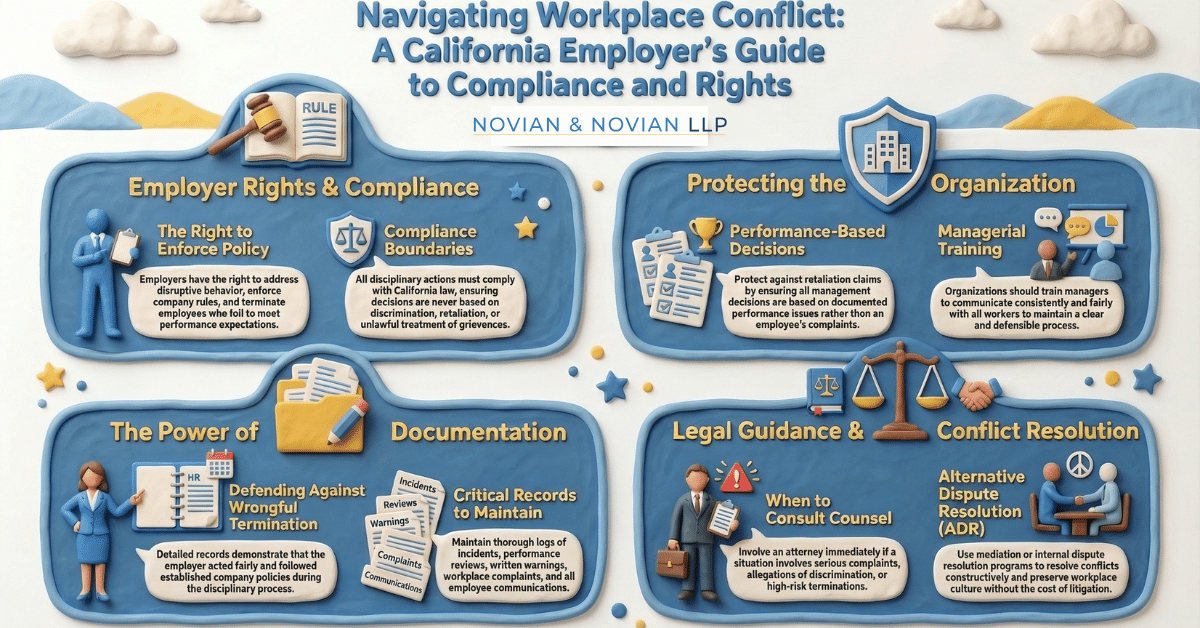
Handling a disgruntled employee requires a structured and empathetic approach. This includes active listening, acknowledging and documenting concerns, investigating thoroughly, developing an action plan, and implementing and monitoring.
Addressing employee grievances promptly can make all the difference in preventing a negative work environment and ensuring a productive workplace. Typically, unresolved issues can lead to disengaged employees, spreading negativity, and even legal action. By taking proactive steps, you foster a supportive work environment where employees feel engaged, valued, and motivated.
If it gets to the point where you have to respond to a legal claim, ensure that you work with a professional attorney. The work of an employer defense attorney is to ensure that the best interest of the employer is put forward.
For businesses that need assistance with employee relations or ensuring compliance with labor laws, Novian & Novian offers expert legal support. We run one of the best Los Angeles employer defense practices, and our business attorneys specialize in employer defense and can help you navigate complex employment issues to maintain a legally sound workplace. Contact us now for a free consultation.
FAQs
Below are answers to some common concerns business owners, managers, and many small businesses often ask when trying to address workplace complaints, protect their organization, and move forward while maintaining compliance.
What Are My Rights As An Employer When Dealing With a Disgruntled Employee in California?
As an employer, you have the right to enforce company policies, address disruptive behavior, and take disciplinary actions, including termination, if the employee violates workplace rules or fails to meet performance expectations. However, you must ensure compliance with California law, meaning decisions cannot be based on discrimination, retaliation, or unlawful treatment of employee grievances.
How Can I Protect My Business From Retaliation Claims?
To protect your business, make sure all decisions involving a disgruntled employee are based on documented performance issues or policy violations rather than the employee’s concerns or complaints. We recommend maintaining thorough documentation, following a clear process, and training managers to communicate consistently and fairly with workers.
When Should I Involve Legal Counsel With a Disgruntled Employee?
It is often wise to consult an employment lawyer or attorney when the situation involves serious complaints, allegations of discrimination, or potential termination that could expose your company to legal risks. Early guidance from experienced legal representation can help assess the situation and determine the safest next steps for your organization.
What Documentation is Required To Defend Against Wrongful Termination Claims?
Employers should keep detailed documentation of incidents, performance reviews, warnings, workplace complaints, and communications with the employee throughout the disciplinary process. These records help demonstrate that the employer acted fairly and followed company policies, which can be crucial if a former employee files a wrongful termination claim.
Are There Alternative Dispute Resolution Options in California Employment Conflicts?
Yes, many workplace conflicts can be resolved through conflict resolution methods such as mediation or internal dispute resolution programs before they escalate into litigation. In some instances, these options help employers and employees address concerns constructively while preserving a supportive workplace culture and avoiding costly legal disputes in the future.
Your content goes here. Edit or remove this text inline or in the module Content settings. You can also style every aspect of this content in the module Design settings and even apply custom CSS to this text in the module Advanced settings.